Currently Empty: $0.00
What’s the Difference Between Pneumatic and Steel Drum Rollers
A paving crew finishes a fresh asphalt lift and rolls it with a steel drum, then wonders why the surface looks tight but still shows hairline cracking after a few weeks. The mat needed a kneading pass to seal the surface, and the steel drum alone never gave it one. A pneumatic roller would have worked the aggregate together and closed those voids. That single gap between the two machines is the whole reason this comparison matters. Pick the wrong roller for the job, and you compact the surface but never truly finish it. The choice between a pneumatic roller vs steel drum roller comes down to how each one puts pressure into the material. A steel drum presses down with a hard, flat face, using weight and often vibration to crush and compact. A pneumatic roller rides on rubber tires that flex and knead the surface, sealing it as they pass. Both are core compaction equipment, and both belong in the family of road roller types you will see on nearly every paving and grading job. Here is how they differ and when each one earns its place. Another important factor is the condition of the material being compacted and the final result the project requires. Some surfaces need the strong downward force of a steel drum to achieve proper density, while others benefit from the flexible kneading action of a pneumatic roller to improve sealing and create a more uniform finish. Weather, material type, layer thickness, and job specifications all influence which roller performs best. The most experienced operators choose based on the outcome they need rather than simply using the machine that is available. Matching the roller type to the application helps prevent weak spots, reduces costly repairs, extends pavement life, and ensures the finished surface performs the way it was designed to. A well-chosen roller does more than compact material; it helps create a stronger, more durable surface from the ground up.
The Core Difference in How They Compact
The whole comparison turns on one thing: how the machine transfers force into the ground. A steel drum roller uses a rigid steel cylinder that presses straight down with the machine’s weight, and many models add vibration to send energy deeper into the material. This makes it effective for compacting thicker lifts, dense bases, and aggregate layers by reducing air pockets and creating a firm, even surface. A pneumatic roller works differently. It uses rows of rubber tires that flex under load, creating a kneading action that works the material together instead of only pressing it flat. The tires follow surface changes, improve contact between particles, and help close small voids left behind during compaction. The heat generated by the tires also helps seal asphalt surfaces and improve the final finish. There is also a surface-manipulating effect worth knowing. Pneumatic rollers are excellent for sealing and tightening a surface, while steel drums are better for achieving density and a smooth finish. Understanding the material, job conditions, and final result you need will help you choose the right roller more effectively than any single specification.
Ground Pressure and What It Means for Your Job
Ground pressure is where these two machines split the clearest, and it explains why crews often run both. A steel drum delivers high pressure across a narrow contact strip, concentrating force to break down and densify material. Add vibration and that energy reaches deeper, which is why steel drums handle thick base courses and stiff subgrade so well. A pneumatic roller spreads its weight across several tires, and you can adjust that pressure by changing tire inflation or adding ballast. Lower pressure gives a gentle, sealing pass on a finished surface, while higher pressure works material harder underneath. That adjustability is a real advantage when you need to match the pass to the lift you are compacting. Equipment manufacturers publish contact pressure figures for exactly this reason, and comparing them before you rent or buy is worth the effort. The takeaway is simple. Steel drums push concentrated force straight down to achieve density, while pneumatic tires spread pressure across a wider area and create a kneading effect that improves sealing and uniform coverage. Neither approach is automatically better because each one solves a different compaction problem. A steel drum may be the right choice when you need deep compaction and a firm base, while a pneumatic roller may deliver better results when surface tightness, flexibility, and finish quality matter most. The pressure numbers only tell part of the story, so the best choice comes from matching the roller’s force pattern to the material, layer thickness, and final surface performance you need.
Which Surfaces Each Roller Handles Best
Match the roller to the surface, not the machine you happen to own. Each one has jobs where it clearly wins and jobs where it fights the material.
Asphalt and Finished Surfaces
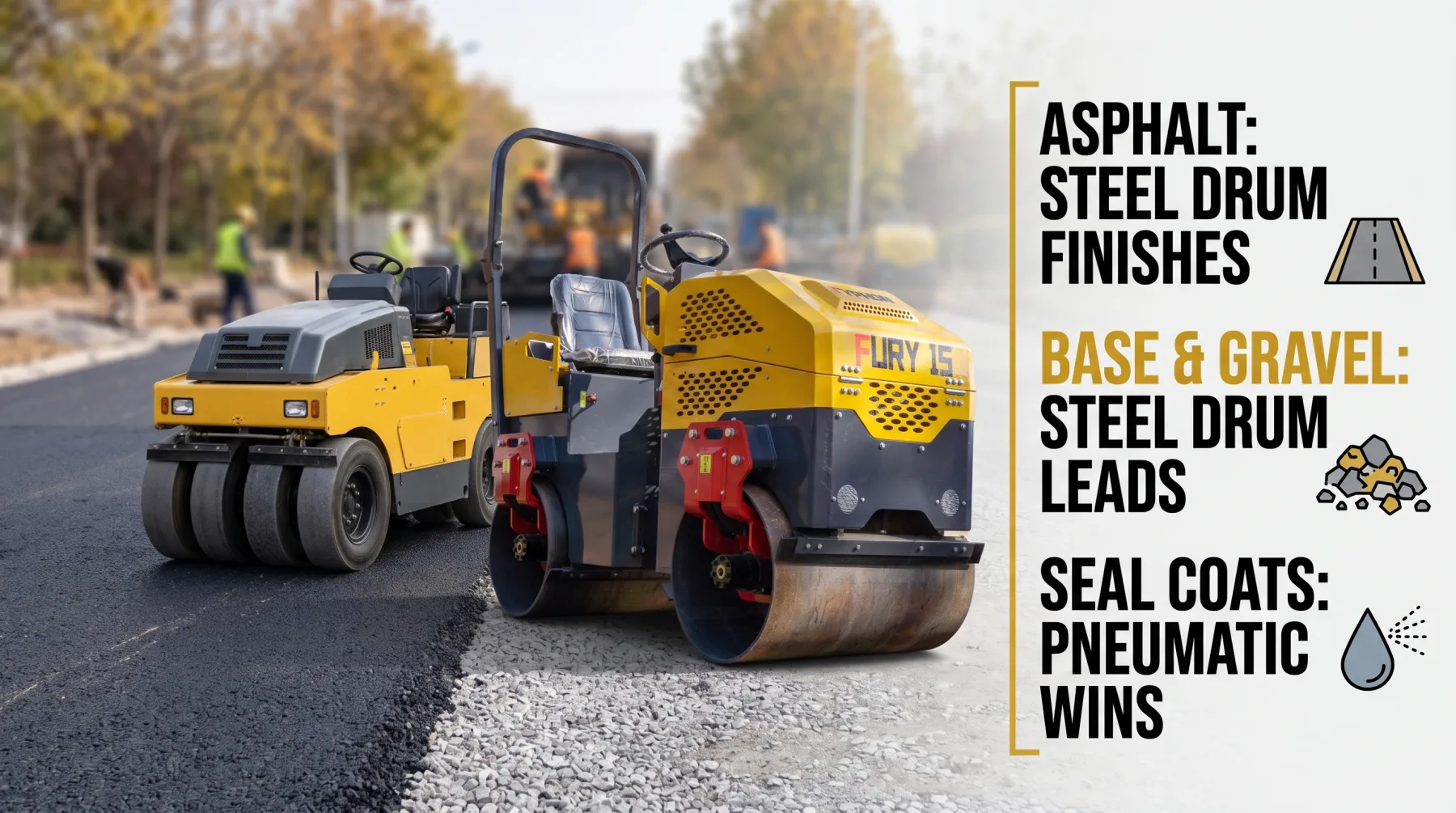
When it comes to choosing the right roller for asphalt, the honest answer is that many paving projects achieve the best results by using both machines in the correct sequence. A steel drum roller, especially a vibratory model, is typically used for breakdown and finish rolling because it applies strong compaction force, improves density, and leaves behind a smooth, tight mat. A pneumatic roller is often used for the intermediate pass, where its flexible tires knead the asphalt mix together, improve aggregate contact, and help seal the surface by closing small voids. Skipping this step can leave a surface that appears compacted but still contains weak areas where water can enter and cause premature cracking or wear.
Subgrade, Base, and Gravel
For subgrade preparation and thick base courses, the steel drum roller usually takes the lead because its weight and vibration deliver the deep compaction force needed to stabilize soil, gravel, and crushed stone layers. The rigid drum applies pressure directly into the material, helping remove air pockets and create a stronger foundation for the layers above. A pneumatic roller can still provide value on granular bases and gravel surfaces, especially when the goal is to tighten the material and improve surface uniformity. Choosing the correct roller and pass order for each layer is what creates a stable finished structure, making it important to understand how each machine performs before rolling begins.
Mixed and Seal Coat Work
Pneumatic rollers shine on seal coats, chip seals, and surface treatments where the goal is to embed, seal, and improve the surface rather than simply increase density. The rubber tires provide consistent pressure across the material, helping press aggregate into the binder while avoiding the marks or crushing effect that a steel drum may create. For crews handling maintenance work, resurfacing projects, and finishing applications, a pneumatic roller often provides the final touch needed to create a durable surface with better resistance against water, wear, and weather damage. Knowing when to use tire action instead of drum pressure can make the difference between a surface that looks finished and one that performs for years.
Job Fit and Cost Considerations
Match the machine to the work you do most, not the widest range of jobs you can imagine. The best roller is the one that fits your regular applications and helps you achieve the results your projects demand. Choosing based on your typical materials, surfaces, and job conditions will improve efficiency, reduce unnecessary costs, and make sure the machine is working where it performs best. Choose a steel drum roller if most of your work involves subgrade preparation, base courses, thick asphalt lifts, or finish rolling where density and a smooth surface are the main priorities. Vibratory steel drums handle a wide range of paving and grading applications, making them one of the most common choices on construction sites. They also tend to have a simpler maintenance routine because they do not require tire inflation, rotation, or replacement like pneumatic rollers. Choose a pneumatic roller if your projects depend on sealing asphalt mats, intermediate passes, chip seals, or surface treatments where kneading action and surface tightness are more important than deep compaction. The flexible rubber tires help close small voids, improve material bonding, and create a more durable finish. The trade-off is higher maintenance since tires require regular inspection, proper inflation, and replacement over time, but the improved surface quality can make that extra upkeep worthwhile. When it comes to operating costs, steel drum rollers often have an advantage for general compaction work because of their lower tire-related maintenance needs. Pneumatic rollers may require more attention, but they provide benefits in applications where long-term pavement performance matters. For many paving operations, the best approach is not choosing one machine over the other but using each roller during the pass where it delivers the greatest value. A well-planned combination of both machines often creates the strongest and most reliable finished surface.
Conclusion
Both machines are compact, so the choice comes down to how the material needs to be worked. A steel drum roller presses concentrated force straight down, often with vibration, making it the pick for subgrade, thick base courses, and smooth finish rolling. A pneumatic roller rides on flexing rubber tires that knead and seal the surface, which makes it the better tool for intermediate asphalt passes, chip seals, and surface treatments. Ground pressure, surface type, and pass order decide the winner far more than any single spec. For most paving work, the smartest setup uses both in sequence rather than forcing one to do everything. Match the roller to the material in front of you, weigh the maintenance and cost trade-offs against your typical jobs, and when you are ready to source dependable compaction equipment, reach out to a trusted equipment specialist who can pair reliable machines with the results your projects depend on.
Frequently Asked Questions
What is the main difference between a pneumatic and steel drum roller?
A steel drum roller presses down with a hard, flat cylinder for density, while a pneumatic roller uses flexing rubber tires that knead and seal the surface.
Which roller is better for asphalt?
A full paving job often uses both, with a steel drum for breakdown and finish rolling and a pneumatic roller for the intermediate pass that seals the mat.
When should I use a pneumatic roller instead of a steel drum?
Use a pneumatic roller for sealing asphalt mats, chip seals, and surface treatments where kneading and sealing matter more than crushing dense base material.