Currently Empty: $0.00
What Attachments Can You Add to a Standard Forklift?
A warehouse crew spends half the morning nudging pallets back and forth, inching the forklift left and right to line up with tight racking. Every load takes three or four tries, and the operator burns time and fuel just squaring up. A shift lead finally bolts on a side shifter, and suddenly the same job takes seconds. No more repositioning the whole machine, just a quick slide of the forks. That single change is the whole reason forklift attachments matter. The right one turns a standard lift truck into a machine built for your exact job. A standard forklift does one thing well out of the box: it lifts and moves palletized loads. But swap or add the right attachment, and that same machine handles rolls, drums, bulky bins, and jobs the bare forks were never meant to touch. Knowing which forklift attachments exist, what each one does, and when it earns its keep helps you get more work out of a machine you already own. Here is a rundown of the most common options and how to match them to the work in front of you. The biggest advantage of attachments is not just adding more capability, but improving efficiency and safety for specific tasks. Instead of forcing operators to work around the limits of standard forks, the right attachment allows the forklift to handle materials more securely, reduce unnecessary repositioning, and complete jobs with better control. Whether you are moving unusual loads, working in a specialized industry, or trying to get more value from existing equipment, choosing the correct attachment can make a standard forklift far more versatile without needing another machine.
How Forklift Attachments Work
Most attachments mount to the forklift carriage, the plate at the front where the forks hang. Some slide in place of the forks, while others clamp onto the forks or bolt to the carriage and add hydraulic function. Many powered attachments tie into the truck’s auxiliary hydraulics, so before you buy, confirm your machine has the hydraulic ports and flow to run what you want. The payoff is simple: the right attachment can reduce handling time, improve load control, protect products, and allow one forklift to complete tasks that would normally require specialized equipment. A well-chosen attachment can make daily operations faster and more flexible, especially in warehouses, manufacturing facilities, yards, and construction environments where material types change frequently. The trade-off is that attachments add their own weight and can affect the forklift’s lifting capacity, visibility, and balance. Always check the forklift’s rated capacity with the attachment installed, not just the original rating of the truck, before moving any load.
The Most Common Forklift Attachments
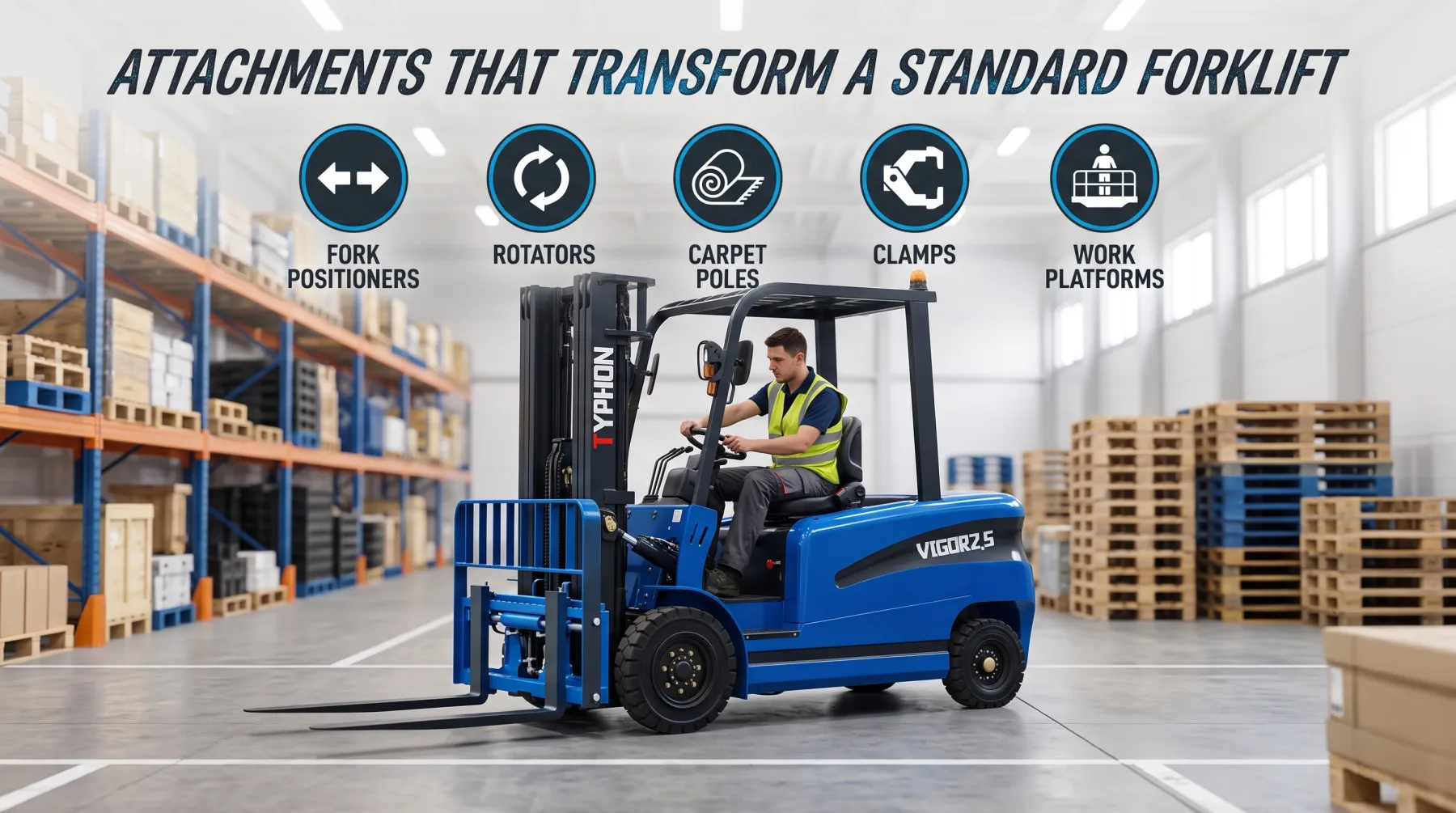
This is where a standard forklift becomes a more versatile material-handling tool. Each attachment is designed to solve a specific challenge, from improving pallet placement to safely moving unusual materials. Understanding what each option does helps you choose attachments that actually improve your workflow instead of adding equipment you rarely use.
Side Shifters
A side shifter allows the operator to move the forks left and right hydraulically without repositioning the entire forklift. It is one of the most common attachments because it solves a problem operators face on almost every job: small alignment adjustments. Instead of repeatedly driving forward, backing up, and adjusting the truck to line up with a pallet or rack opening, the operator can simply shift the forks into the correct position and place the load accurately. This attachment earns its place anywhere precision and speed matter, which includes warehouses, distribution centers, loading docks, and storage facilities with tight racking. A side shifter reduces unnecessary machine movement, speeds up loading cycles, lowers the chance of damaging pallets or products, and reduces operator fatigue during long shifts. For many operations, it is one of the simplest upgrades that delivers a noticeable improvement in everyday productivity.
Fork Positioners
A fork positioner takes the side shifter idea a step further by letting the operator spread or narrow the forks hydraulically from the seat. On a bare machine, adjusting fork spacing means climbing down and sliding them by hand, which nobody wants to do a dozen times a day. If your loads come in different pallet sizes, a fork positioner pays for itself fast. The operator matches the fork width to each load on the fly, which speeds up mixed-load work and keeps pallets stable during the lift. Warehouses and distribution centers that handle varied products lean on this one heavily.
Rotators
A rotator spins the forks or a clamp a full turn, so the operator can tip or invert a load. It is built for dumping. Think of emptying bins, hoppers, or containers of loose material without lifting and pouring by hand. Food processing, recycling, and manufacturing plants use rotators to dump parts, waste, and product quickly and safely. If your work involves emptying containers on a regular basis, this attachment turns a slow, awkward task into a clean, one-operator job.
Carpet Poles and Boom Attachments
A carpet pole is a single long shaft that slides through the core of a rolled load, like carpet, tubing, coiled wire, or textiles. Instead of trying to balance a roll on flat forks, the pole runs through the center and carries the load securely. Boom or jib attachments work on a similar idea for suspended loads, letting the forklift lift with a hook at the end of an extended arm. Flooring suppliers, textile warehouses, and manufacturers handling coiled material rely on carpet poles. If rolls are a daily part of your work, this attachment removes the guesswork and the risk of a load rolling off the forks.
Clamps
Clamps grip a load from the sides instead of lifting it from underneath, which means you can move product that never sat on a pallet. There are several types, each built for a specific material. Carton clamps handle appliances and boxed goods, paper roll clamps move large rolls without crushing them, and drum clamps grab barrels securely. Clamps shine when your product ships without pallets or can’t take fork pressure from below. The trade-off is that clamping force has to match the material, since too much crushes the product and too little drops it. For operations moving appliances, paper, drums, or baled goods, the right clamp is often the difference between fast handling and constant damage.
Work Platforms
A work platform, sometimes called a man basket, mounts to the forks and gives workers a raised, enclosed space for elevated tasks. It turns the forklift into a temporary lift for reaching high shelves, changing lights, or short maintenance jobs.
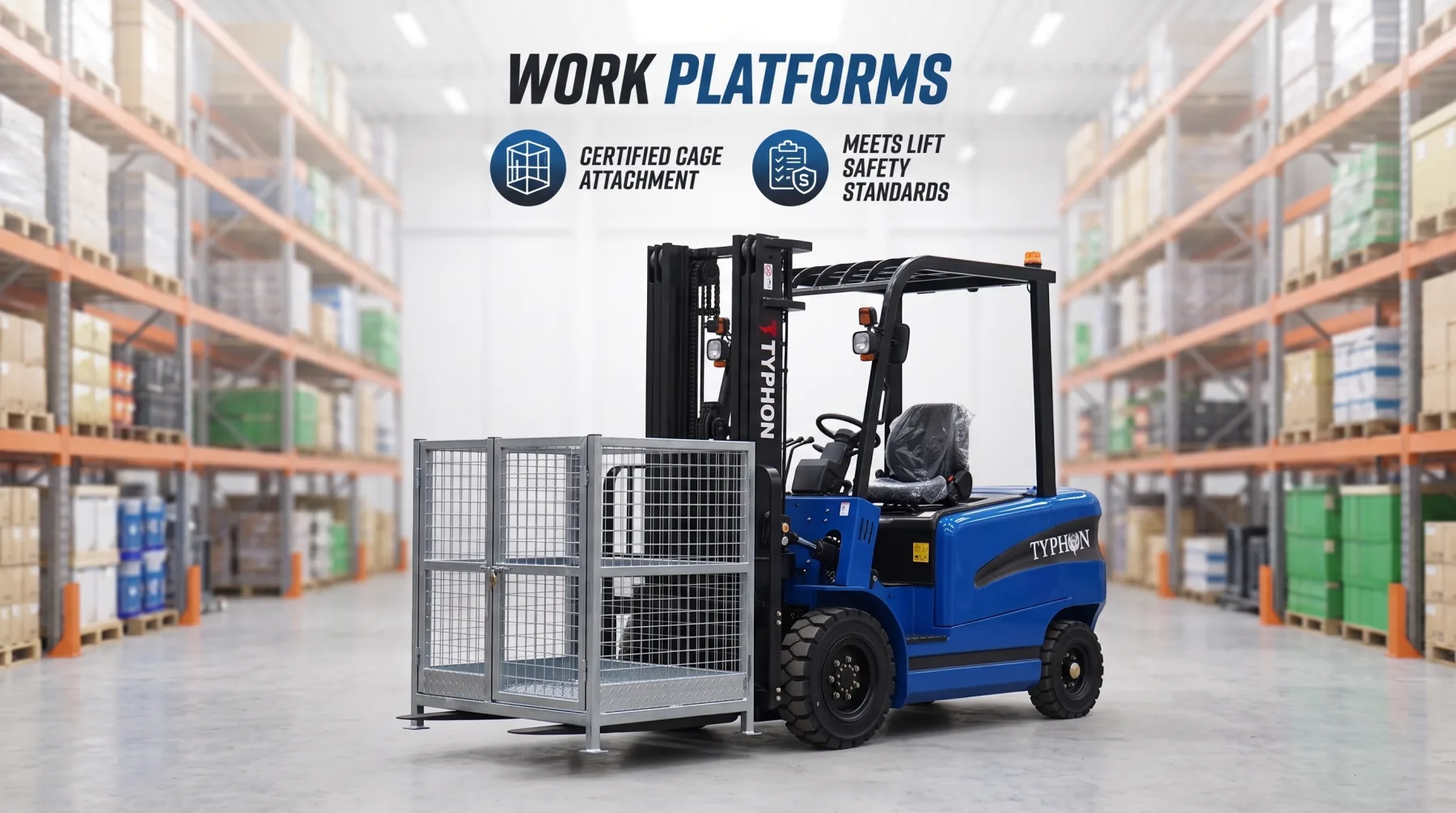
This one comes with the strictest rules. Platforms must be built for the job, secured properly, and used within safety guidelines, since you are lifting people rather than products. Always follow the required standards for elevating personnel before you use one. Used correctly, a platform saves you from renting a separate lift for occasional high work.
Specialty Material Attachments
Beyond the common options, plenty of attachments target specific materials and industries. Push-pull devices handle slip-sheet loads that skip pallets entirely, saving storage space and pallet cost. Multi-pallet handlers move two or more pallets at once to speed up high-volume loading. Fork extensions add length for oversized or deep loads, while snow plows and brooms let a yard forklift double as a maintenance machine in the off-season. The point is that almost any handling problem has an attachment built to solve it. Matching the right tool to your material is where knowing pays off before you spend a dollar.
Matching the Attachment to Your Work
Match the attachment to the work you do most, not the widest range you can imagine. The best attachment is the one that solves a problem you hit every day, not one that sits idle waiting for a rare job. Start with your product. If everything moves on standard pallets and your only headache is alignment, a side shifter alone may transform your day-to-day. If your loads come in different sizes, add a fork positioner. If you handle rolls, coils, or textiles, a carpet pole earns its keep. When a product ships without pallets or can’t take fork pressure, a clamp built for that material is the answer. Then check three things before you commit: Hydraulics: Does your forklift have the auxiliary ports and flow to run a powered attachment? Capacity: How much does the attachment weigh, and how much does it cut your rated load? Always work from the derated capacity, not the original number. Frequency: Will you use it often enough to justify the cost, or would renting one for the occasional job make more sense? For attachments you only need now and then, weighing your keeps your spend lean. And whatever you add, confirm it’s rated and approved for your specific truck against the manufacturer’s guidance before it goes to work.
Conclusion
A standard forklift is really a platform waiting for the right attachment. Out of the box it moves pallets, but adds a side shifter and every load lines up faster. Add a fork positioner and mixed pallet sizes stop slowing you down. Rotators dump containers cleanly, carpet poles carry rolls securely, clamps handle products that never touched a pallet, and work platforms turn the machine into a temporary lift for high tasks. Specialty attachments cover almost every material and job beyond that. The key is matching the attachment to the work you actually do, then confirming your truck has the hydraulics and capacity to run it safely. Start with the problem you hit most often, check the load chart and hydraulic requirements, and follow the safety rules for anything that lifts people. When you’re ready to outfit a forklift for the jobs your crew runs every day, reach out to a trusted equipment specialist who can pair the right attachment with the results your projects depend on.
Frequently Asked Questions
Do forklift attachments reduce the truck’s lifting capacity?
Yes. Most attachments add weight and shift the load center, which lowers the forklift’s rated capacity, so always work from the derated number on the load chart rather than the original rating.
What is the most useful forklift attachment for a warehouse?
A side shifter is often the most useful because it lets the operator align forks with a pallet or rack slot without repositioning the whole truck, saving time on nearly every cycle.
Can any forklift use hydraulic attachments?
Only if it has the auxiliary hydraulic ports and adequate flow, so check your machine’s setup first and confirm the attachment is rated and approved for your specific truck before use.