Currently Empty: $0.00
Scissor Lift Weight Capacity and What You Can Safely Carry Up
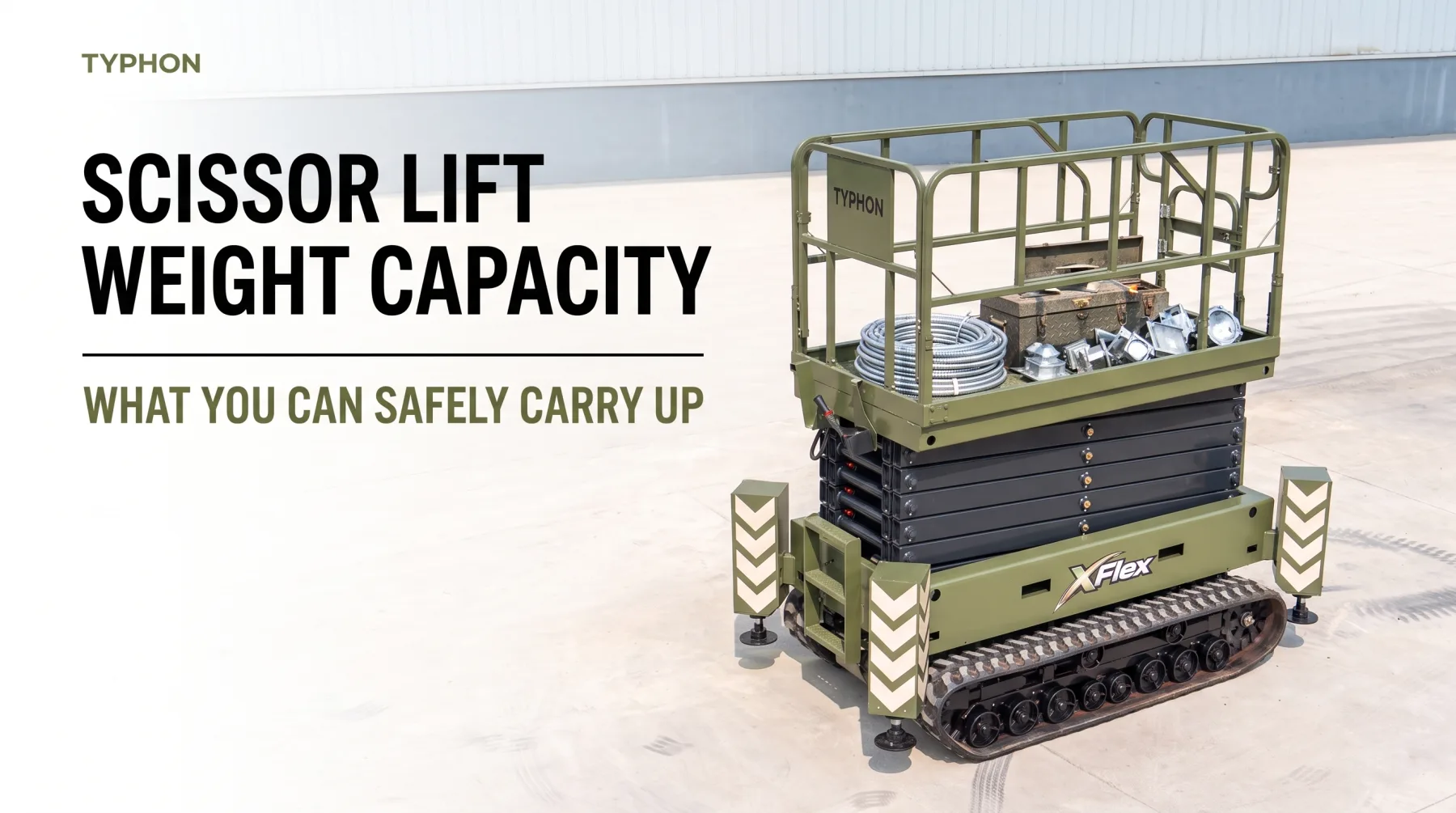
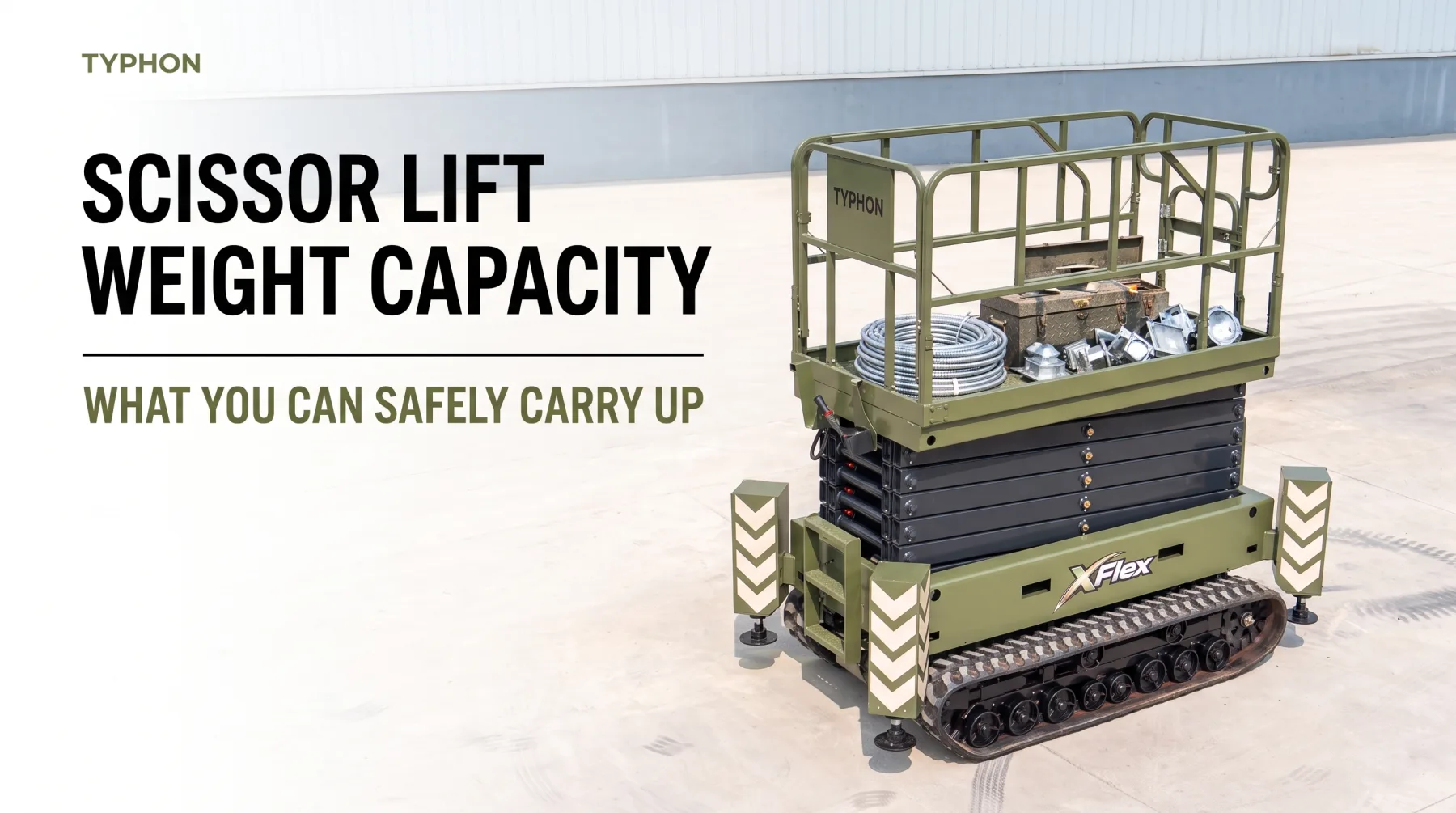
Two electricians load a scissor lift for a ceiling job, tossing on a spool of conduit, a toolbox, a compressor, and a stack of light fixtures before both climb aboard themselves. Twenty feet up, the platform feels fine, so nobody thinks twice about the pile of gear crowding the deck. What they never checked was the rated capacity plate reading 500 pounds, and the two of them plus their haul cleared 650 before the first fixture went in. The machine didn’t tip that afternoon, but it strained the lift mechanism, tripped an overload cutout mid-shift, and left a crew standing idle while a supervisor sorted out why. That close call is exactly why understanding weight capacity matters before anyone rides the platform up.
Knowing what a scissor lift can safely carry comes down to reading a few numbers correctly and respecting them every single time. Overloading is one of the leading causes of scissor lift tip-overs and mechanical failures, yet nearly every case traces back to a load nobody actually added up. This guide walks through why rated capacity matters, how to read the capacity plate, what counts toward the load, how platform size and extensions change the limit, the conditions that quietly reduce safe capacity, and practical habits for staying within bounds. Here’s what to confirm before the deck leaves the ground.
Why the Rated Number Is Non-Negotiable
Rated capacity is the maximum total weight a scissor lift is engineered to carry safely, and the manufacturer sets it with the machine’s stability and structure in mind. That figure isn’t a suggestion or a soft target; it’s the line past which the machine’s balance, hydraulics, and lift mechanism start working outside their designed limits. Treating it as a hard ceiling is the foundation of safe operation.
Exceeding the limit invites two distinct failures, both dangerous at height. Too much weight raises the machine’s center of gravity and shifts its balance, making a tip-over far more likely, especially during travel or on anything less than perfectly level ground. Overloading also strains the lift mechanism and hydraulics, which can trigger overload cutouts, damage components, or cause a sudden drop that no operator wants to experience elevated.
Regulations back the number for good reason. OSHA and manufacturer guidance both require operators to stay within the rated load, so an overloaded lift puts your crew at risk and your compliance record on the line at the same time. Respecting the rating protects the people on the platform and the business running the machine.
Key takeaway: Rated capacity is a hard engineering limit, not a guideline. Staying under it keeps the machine stable, the hydraulics healthy, and your crew compliant and safe.
Finding and Reading the Capacity Plate
Every scissor lift carries a capacity plate, usually mounted near the platform controls or on the guardrail, and locating it is your first job before loading. This plate spells out the numbers that govern safe operation, so knowing where it sits and what it says beats guessing every time. Understanding scissor lift lift mechanisms also means knowing that the lifting system is designed to safely raise only the rated platform capacity. Manufacturers place the capacity plate where the operator can easily see it because it’s meant to be checked before every use.
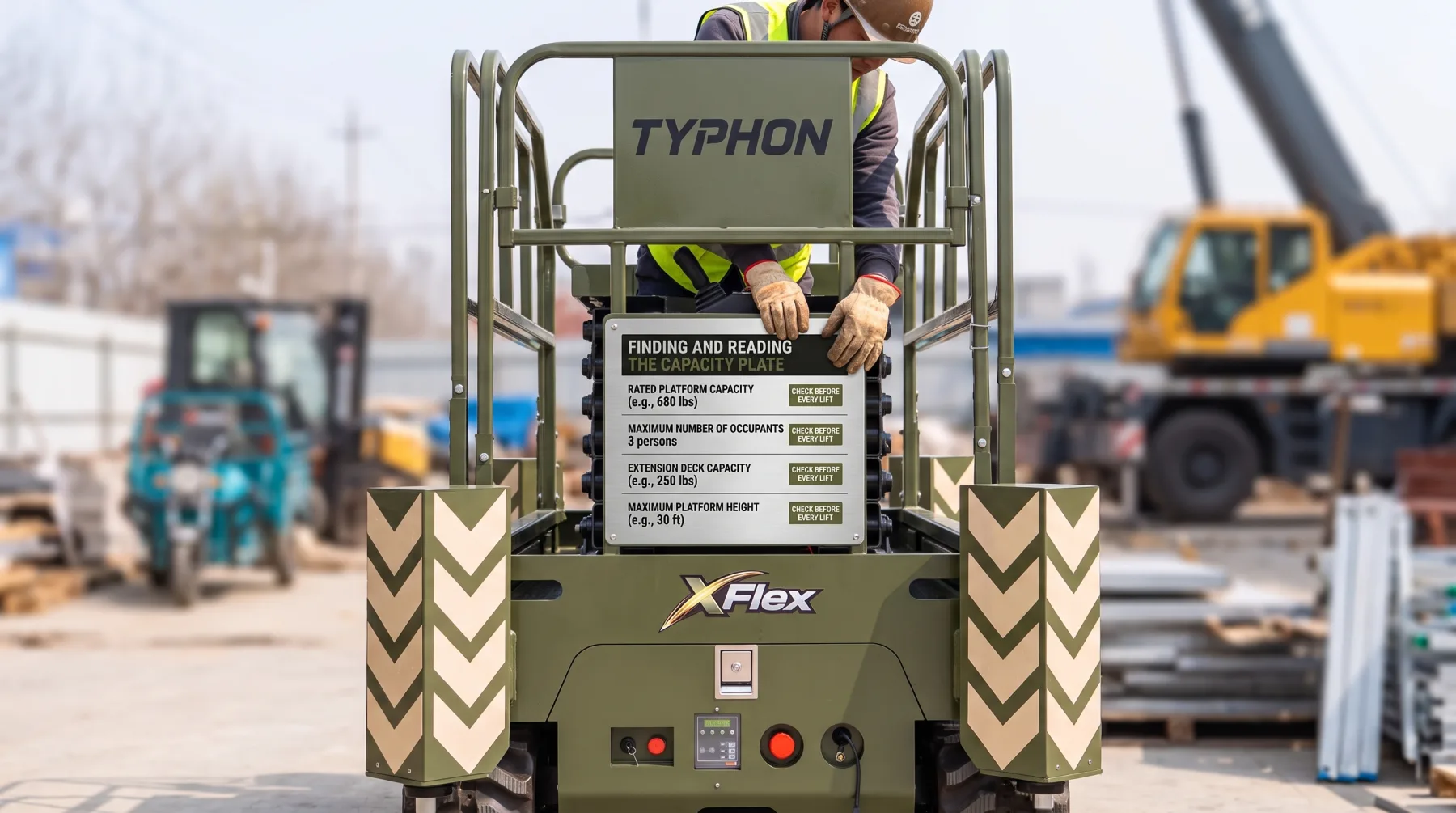
Reading the plate correctly means understanding what each figure covers. A typical plate lists several values you need to confirm:
- Rated (maximum) platform capacity: the total combined weight of people, tools, and materials the deck can hold.
- Maximum number of occupants: the count of people allowed on the platform at once.
- Extension deck capacity: a separate, lower limit for any slide-out extension, since it can’t carry as much as the main deck.
- Maximum platform height: the highest the machine is rated to lift safely.
Indoor versus outdoor ratings sometimes appear too, and they matter more than operators expect. Many machines carry a lower capacity or a “no outdoor use” note for windy conditions, because wind loads change what the machine can safely hold aloft. Confirming which rating applies to your environment keeps you from borrowing an indoor number for an outdoor job.
Key takeaway: Find the capacity plate before loading and read every figure it lists, not just the headline number. The occupant limit, extension capacity, and indoor/outdoor ratings all shape what you can safely carry up.
Adding Up Everything That Rides the Deck
Total load is where operators trip most often, because they picture only the people and forget the gear. The rated capacity covers everything on the platform combined: the operators, their tools, and every bit of material going up with them. Leaving anything out of the math is exactly how a crew that feels within limits quietly blows past them.
Running the numbers honestly means counting each category. Add the full body weight of every person riding, including their clothing, boots, and personal protective equipment. Tally the tools next, from a heavy toolbox and a cordless drill to a compressor or a welding rig, since a loaded tool bag alone can run 40 or 50 pounds. Finish with the materials, whether that’s pipe, fixtures, drywall, or a bundle of cable, because bulky supplies add up faster than they look.
Consider that opening scenario again: two workers averaging 200 pounds each already claim 400 of a 500-pound limit, leaving just 100 pounds for every tool and every piece of material combined. A single toolbox and a spool of conduit can swallow that margin whole. What this means: weigh or estimate the full load before you climb on, and when the total crowds the limit, make a second trip rather than gambling on a guess.
Key takeaway: Count people, tools, and materials together against the rated capacity, never just the operators. Add everything honestly, and split the load across trips when the total runs close to the limit.
How Deck Size and Slide-Outs Change the Math
Platform dimensions influence how weight sits on a scissor lift, and a bigger deck doesn’t always mean a bigger limit. The rated capacity governs total weight regardless of how roomy the platform feels, so a large deck can tempt a crew to load more than the machine can actually carry. Space to spread out is not the same as a license to pile on.
Extension decks introduce a separate, stricter limit that catches operators off guard. Slide-out extensions almost always carry a lower capacity than the main platform, because extending the deck shifts weight farther from the machine’s stable base and increases tipping leverage. A machine rated 700 pounds on the main deck might allow only 250 on the extension, and the plate spells that out for a reason.
Weight placement matters as much as total weight on any platform. Concentrating a heavy load in one corner or out on an extension shifts the center of gravity toward the edge, raising tip risk even when the total stays under the rating. Spreading the load evenly across the main deck, keeping the heaviest items centered, and using the extension only within its own limit all keep the machine balanced.
Key takeaway: A roomy deck doesn’t raise the rated limit, and extension decks carry a stricter one. Distribute weight evenly, center the heavy items, and never load an extension past its own posted capacity.
What Quietly Chips Away at Safe Capacity
Rated capacity assumes ideal conditions, and the real world rarely delivers them. Several factors reduce the weight a scissor lift can safely carry below its posted number, and operators who ignore them work with far less margin than they think. Recognizing these conditions is what separates a cautious crew from a lucky one.
Slopes and uneven ground top the list of hidden risks. Scissor lifts are built for firm, level surfaces, so even a slight grade shifts the machine’s balance and lowers the load it can safely hold elevated. Wind adds the same pressure outdoors, pushing against the raised platform and any material on it, which is why many machines cut their rated capacity or ban outdoor use entirely above a certain wind speed.
Machine age and condition erode capacity in ways a spec plate never shows. Worn hydraulics, tired seals, and aging structural components don’t perform like new, so an older lift run hard for years carries less safe margin than its rating suggests. A common mistake worth naming: assuming a machine’s stamped capacity holds true on a windy rooftop, a sloped lot, or a well-used older unit. Build in a buffer below the rating whenever conditions or the machine’s age work against you.
Key takeaway: Slopes, wind, and an aging machine all shrink the load you can safely carry below the plate’s number. Read the conditions honestly and leave yourself a margin whenever they turn against you.
Practical Habits for Staying Within Limits
Discipline keeps a crew under the limit far more reliably than good intentions, and a few habits make it routine. Building these into every lift means nobody has to eyeball a questionable load at height, where a mistake is hardest to fix. Consistency here pays off shift after shift.
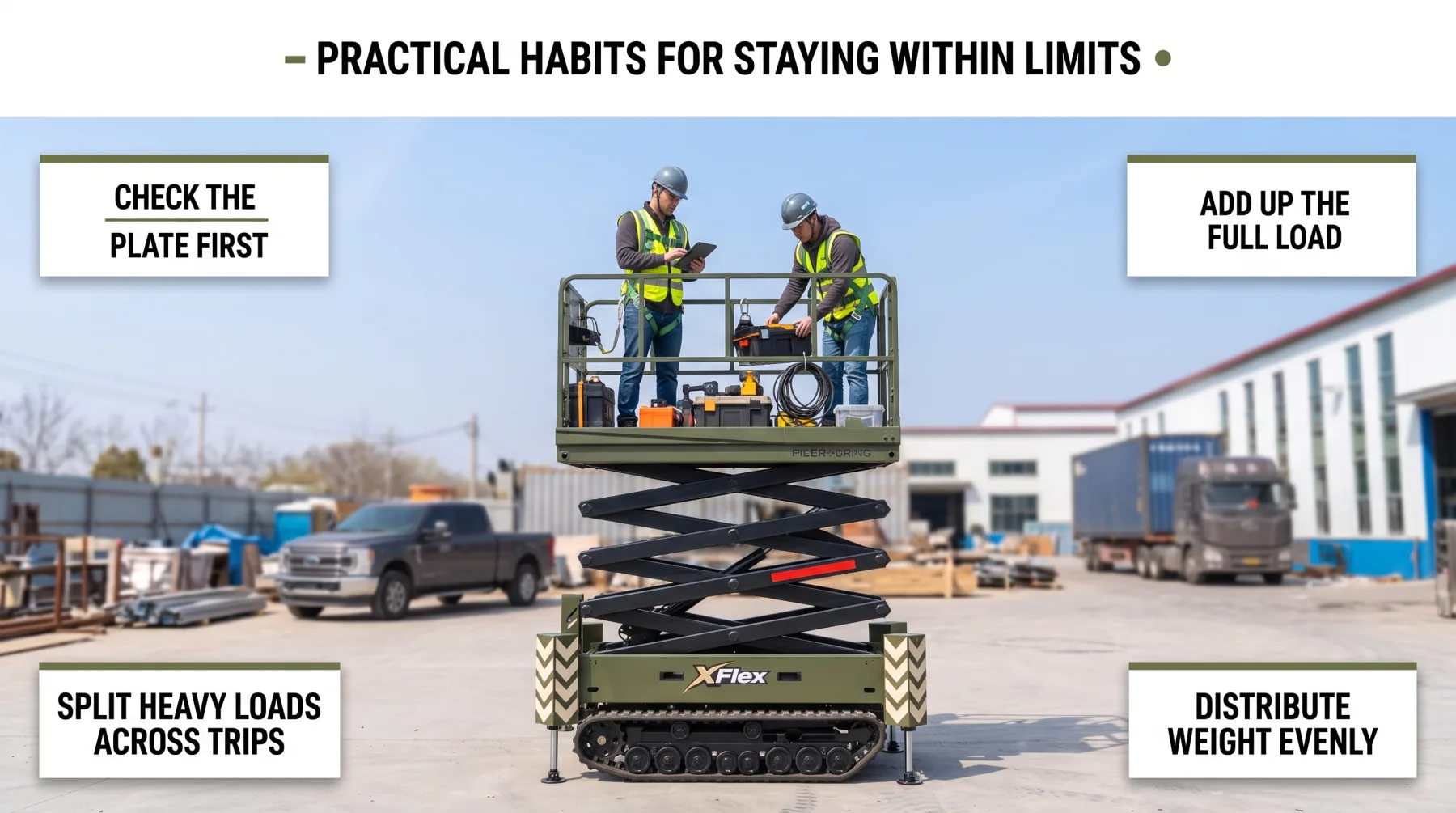
Run through these steps before every lift:
- Check the capacity plate first. Confirm the rated capacity, occupant limit, and extension capacity for the specific machine you’re using, since numbers vary widely between models.
- Add up the full load. Tally people, tools, and materials together, and leave a comfortable buffer rather than crowding the maximum.
- Split heavy loads across trips. When the total runs close, make two lifts instead of overloading one, which costs minutes but prevents failures.
- Distribute weight evenly. Center the heaviest items on the main deck and keep extensions within their own limit.
- Account for conditions. Reduce your load further on slopes, in wind, or on an older machine that no longer performs like new.
Communication ties the routine together on a busy site. Making sure every operator knows the machine’s limit, posting the load math where the crew can see it, and empowering anyone to call a stop when a load looks heavy all prevent the quiet overloading that catches teams off guard. Training every operator to the same standard keeps one rushed decision from putting the whole crew at risk.
Key takeaway: Check the plate, add up the load, leave a buffer, and split heavy loads across trips every time. Make the routine a habit the whole crew shares, and staying within limits becomes automatic.
Conclusion
Staying within a scissor lift’s weight capacity protects your crew, your machine, and your schedule, and it comes down to a handful of honest habits. Treat the rated capacity as a hard engineering limit, find and read the full capacity plate before loading, and add up people, tools, and materials together rather than counting only the operators. Remember that a big deck doesn’t raise the limit and that extension decks carry a stricter one, then adjust downward for slopes, wind, and the wear that comes with an aging machine. When a load crowds the maximum, split it across trips rather than gambling on a guess, and keep the load balanced and centered on the deck. Build these checks into every lift, and you sidestep the overloading that causes tip-overs and mechanical failures at height. Above all, share the numbers with your whole crew so nobody rides up on a load nobody actually counted. When you’re ready to put a dependable, well-maintained scissor lift to work, reach out to a trusted equipment specialist who can pair a reliable machine with the results your projects depend on.
Frequently Asked Questions
How much weight can a scissor lift hold? It depends on the model, with common scissor lifts rated anywhere from about 500 to 1,000 pounds or more for the total platform load. That rated capacity covers everything on the deck combined, including operators, tools, and materials, not just the people. Always check the capacity plate on your specific machine, since ratings vary widely and any slide-out extension carries its own lower limit.
What is included in a scissor lift’s weight capacity? The rated capacity covers the total combined weight of everything riding the platform: the full body weight of every operator, all their tools and equipment, and every piece of material going up with them. Personal protective gear, toolboxes, compressors, and supplies all count. Add every category together and keep the total under the rated limit, leaving a buffer for safety.
What happens if you overload a scissor lift? Overloading raises the machine’s center of gravity and shifts its balance, sharply increasing the risk of a tip-over, especially on slopes or during travel. It also strains the hydraulics and lift mechanism, which can trigger overload cutouts, damage components, or cause an unexpected drop at height. Beyond the safety danger, exceeding the rated load violates OSHA and manufacturer guidance, putting both your crew and your compliance record at risk.