Currently Empty: $0.00
Mini Excavator Digging Depth: How to Pick the Right Model
A drainage contractor rents a compact excavator to install a French drain, figuring any small machine would handle a residential backyard. The job calls for a trench four and a half feet deep to hit the right slope below the frost line, but the machine he booked tops out at a hair under four feet. His crew ends up finishing the last stretch by hand, standing in a muddy ditch with shovels while the rental clock keeps running and the homeowner watches. The machine wasn't broken, underpowered, or poorly maintained. It simply couldn't reach the one depth the job demanded, and nobody checked that number before the trailer showed up. That afternoon of hand-digging is exactly why digging depth deserves real attention before you pick a model.
Choosing a mini excavator starts with one question that too many buyers skip: how deep does it actually need to dig? Maximum digging depth decides whether a machine finishes a trench or leaves your crew reaching for shovels, and it varies widely across the size classes. This guide walks through what digging depth means and how it's measured, the typical depth ranges by machine size, how to match that depth to common job types, the other specs that work alongside it, the mistakes buyers make when they shop in depth alone, and the value the right choice returns. Here's how to pick a model that reaches your work.
Breaking Down What Digging Depth Really Means
Digging depth is one of the most important specifications when considering the many mini excavator uses beyond digging. It measures how far below ground the bucket can reach at full extension. Manufacturers publish this figure on every spec sheet, giving you a good baseline for comparing machines.
Keep in mind that the published depth assumes the machine is on firm, level ground. Slopes, soft soil, and the need to maintain a safe trench wall can reduce the depth you actually achieve in the field.
Bucket and arm configuration also make a difference. Some mini excavators offer longer dipper arms that increase digging depth and reach, making them more versatile for trenching, utility work, pond shaping, landscaping, and other jobs beyond basic excavation.
Key takeaway: Digging depth is the maximum vertical reach below grade, but real-world conditions and machine configuration affect actual performance. Choosing the right digging depth helps a mini excavator handle a wider range of jobs, not just digging.
Typical Depth Ranges Across the Size Classes
Size drives digging depth more than any other factor, so knowing the classes helps you match a machine to your trenches. Mini excavators generally span from under one ton up to roughly ten tons, and depth climbs steadily as weight increases. Here's how the common classes compare:
- **Sub-1-ton to 1.5-ton:** The smallest machines dig roughly 5 to 6 feet deep. Built to squeeze through gates and work in tight yards, they handle shallow trenches, planting, and light utility work.
- **1.5-ton to 2.5-ton:** These popular mid-compact machines reach around 7 to 8 feet, covering most residential drainage, irrigation, and landscaping jobs comfortably.
- **3-ton to 4-ton:** A step up in muscle, these dig roughly 9 to 11 feet, which suits deeper utility lines, small foundations, and heavier trenching.
- **5-ton to 6-ton:** These larger minis reach about 12 to 13 feet, handling demanding excavation that approaches the work of a full-size machine.
- **7-ton to 10-ton:** At the top of the compact range, these dig 13 to 15 feet or more, taking on foundation work and deep utility mains.
Numbers vary by manufacturer and arm configuration, so treat these ranges as a guide rather than a promise. A long-arm option on any class stretches the depth further, while a machine loaded with a thumb or specialty bucket may reach slightly less.
Key takeaway: Depth scales with machine weight, from about 5 feet on the smallest units to 15 feet or more on the largest minis. Pin your required depth first, then shop the class that clears it with room to spare.
Matching Depth to the Work You Actually Do
Job type points you toward the right depth faster than any spec sheet, so picture the work before you shop. Utility installation sets a hard floor, since water, sewer, and gas lines often sit four to six feet down to clear the frost line, and electrical or communication conduit may run shallower. Confirm the depth your local code and utility require, then choose a machine that reaches it comfortably.
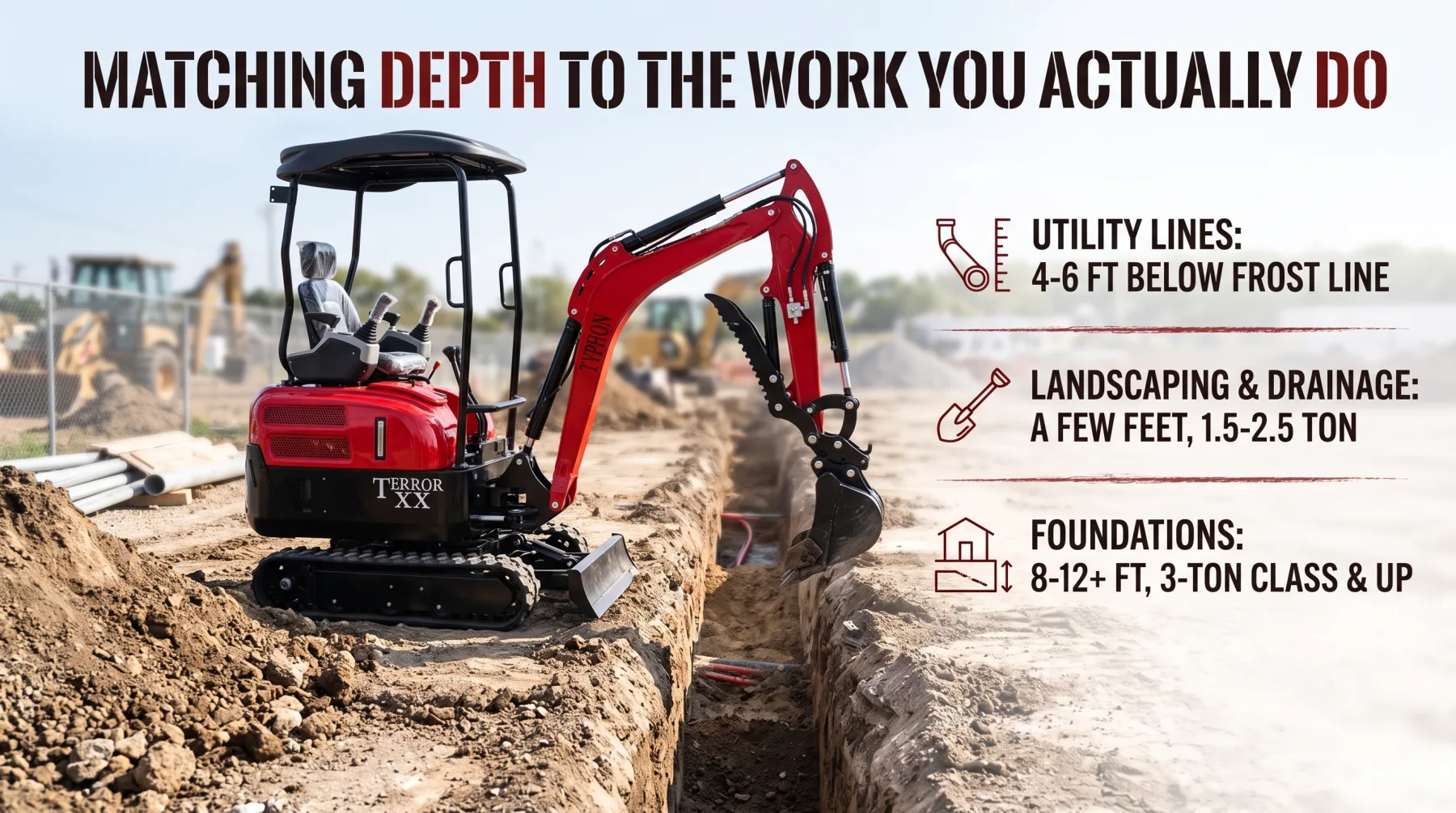
Landscaping and drainage work usually stay shallower, which opens the door to smaller machines. Planting trees, digging retaining-wall footings, grading ponds, and installing French drains rarely demand more than a few feet, so a 1.5-ton to 2.5-ton machine handles the bulk of residential yard work while still fitting through a side gate. Matching a compact machine to compact depth keeps you from hauling more excavators than the job needs.
Foundation and structural work pushes depth requirements up sharply. Digging basements, deep footings, and crawl spaces can demand eight to twelve feet or more, which points squarely at the 3-ton class and above. Consider a builder excavating footings for an addition below a frost line at four feet, plus a foundation drain another two feet down. That six-foot minimum rules out the smallest machines entirely and steers him toward a mid-size mini with margin to spare.
Key takeaway: Let the deepest task on your typical jobs set your depth requirement. Utilities and foundations push you toward larger classes, while landscaping and drainage often fit a compact machine that's easier to transport and maneuver.
Beyond Depth: The Specs That Work Alongside It
Digging depth alone never tells the whole story, so weigh it against the specs that shape how a machine actually performs. Reach matters just as much on many jobs, since maximum digging reach determines how far out the bucket extends horizontally. Loading a truck parked beside a trench, or digging without constantly repositioning, both depend on reach rather than depth.
Tail swing decides whether a machine fits your site at all. Conventional-tail machines swing their counterweight well past the tracks when rotating, while zero-tail-swing and reduced-tail-swing models keep the rear within or near the track width. Working alongside a building, a fence, or in a narrow trench favors a tight-tail machine that won't strike obstacles behind it as it turns.
Weight and transport tie the decision together. A heavier machine digs deeper and reaches farther, but it also demands a bigger trailer, a capable tow vehicle, and ground that won't rut under the load. Consider a landscaper who needs seven feet of depth but works behind houses reached only through four-foot gates. A larger machine would dig deeper, yet a compact zero-tail-swing model that fits the gate wins, because a machine that can't reach the work digs nothing at all.
Key takeaway: Balance digging depth against reach, tail swing, and transport weight. The best model clears your required depth while still fitting your site, your access, and your trailer, not the one with the deepest number on the brochure.
Where Buyers Go Wrong Shopping on Depth Alone
Overbuying in depth tops the list of mistakes, and it costs more than most buyers expect. Chasing the deepest machine in the catalog often lands a contractor with an oversized excavator that struggles to fit through gates, ruts soft lawns, and needs a heavier trailer for every move. More depth than the job requires buys weight and bulk you then fight on every site.
Ignoring real-world conditions causes the opposite problem. Reading the published maximum as a guarantee, some buyers pick a machine that clears their depth by only an inch or two, then come up short when soft ground, a sloped setup, or the need for a stable trench wall eats into that margin. Building in a cushion of a foot or more above your deepest requirement keeps you covered when conditions turn against you.
Forgetting the arm configuration burns buyers who compare numbers carelessly. A model's long-arm depth may look impressive on paper, yet the standard arm the dealer has in stock reaches a foot less. A common mistake worth naming: treating every published depth figure as identical when it depends on arm length, bucket choice, and ground conditions. Confirm exactly which setup a number reflects, and pad your requirement rather than betting on the theoretical maximum.
Key takeaway: Don't overbuy in depth you'll never use, and don't cut your margin razor-thin either. Confirm the arm configuration behind every number, and choose a machine that clears your deepest job comfortably without hauling more excavators than you need.
Weighing the Value of the Right Model, Owned or Rented
Cost is where the right depth choice proves its worth, and the return shows up on the first job. A machine matched to your typical work finishes trenches without hand-digging, awkward workarounds, or a second pass with a bigger machine, all of which drain labor hours and stall a schedule. The correct depth turns a job that would run over into one that finishes clean.
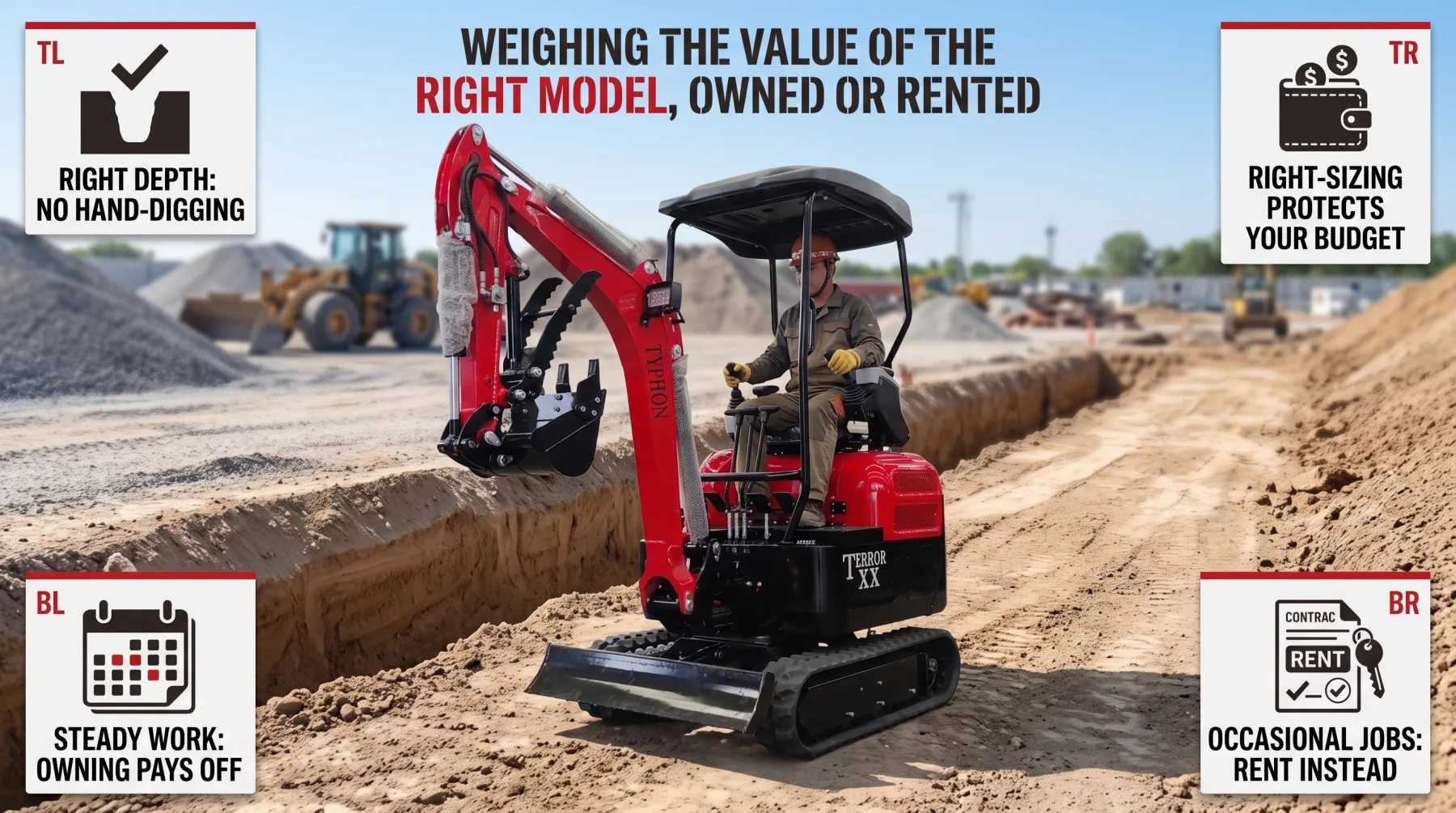
Right-sizing protects your budget in both directions. Buying more machines than you need ties up capital, raises fuel and transport costs, and leaves you maneuvering a heavy excavator through jobs a smaller one would handle faster. Buying too little forces rentals or hand labor to cover the gap, which quietly erases whatever you saved on the purchase. Matching the machine to your real depth requirement keeps the spend lean either way.
Deciding between owning and renting comes down to how often you dig at your target depth. Steady work at a consistent depth usually justifies owning the machine sized for it, since it stands ready on your schedule without a rental fee every time. Occasional deep jobs that fall outside your usual range often favor renting a larger machine for those windows rather than buying an excavator that mostly sits idle. Whichever route fits, keeping the machine on a steady maintenance routine protects the investment and the reach it delivers.
Key takeaway: The right depth spec pays back through finished trenches and lean equipment spend. Weigh how often you dig at your target depth against the cost of the machine, and let that frequency guide buying versus renting.
Conclusion
Picking the right mini excavator starts with the deepest task your work demands, because digging depth decides whether a machine finishes the trench or leaves your crew with shovels. Read the published depth as a firm-ground maximum, confirm which arm configuration it reflects, and pad your requirement for the real-world conditions that trim it. Match the size class to your job type, from compact machines for landscaping and drainage to 3-ton-and-up models for utilities and foundations, then weigh depth against reach, tail swing, and transport weight so the machine fits your site as well as your trench. Steer clear of overbuying on depth you'll never use, and never cut your margin so thin that soft ground leaves you short. Measure your deepest job, confirm the exact spec behind every number, and choose a model that clears it comfortably. When you're ready to put a dependable mini excavator sized for your work, reach out to a trusted equipment specialist who can pair a reliable machine with the results your projects depend on.
Frequently Asked Questions
How deep can a mini excavator dig? It depends on the machine's size. The smallest sub-1-ton to 1.5-ton machines dig roughly 5 to 6 feet, mid-compact 1.5-ton to 2.5-ton models reach about 7 to 8 feet, and larger 3-ton to 6-ton machines dig anywhere from 9 to 13 feet. At the top of the compact range, 7-ton to 10-ton machines reach 13 to 15 feet or more. A long-arm option on any class stretches those figures further.
How do I know what digging depth I need? Start with the deepest task on your typical jobs. Utility lines often sit 4 to 6 feet down to clear the frost line, foundations and footings can demand 8 to 12 feet, and most landscaping and drainage work stays under a few feet. Confirm the requirement for your deepest job, then add a margin of a foot or more, since soft ground and sloped setups can trim the depth a machine actually reaches.
Is more digging depth always better when choosing a mini excavator? No. Overbuying in depth lands you with a heavier machine that struggles to fit through gates, ruts soft ground, and needs a bigger trailer for every move. The best model clears your deepest job comfortably while still matching your site access, tail-swing needs, and transport limits. Balance depth against reach, weight, and maneuverability rather than chasing the deepest number on the spec sheet.