Currently Empty: $0.00
Drum Load and Contact Pressure in Soil Compaction
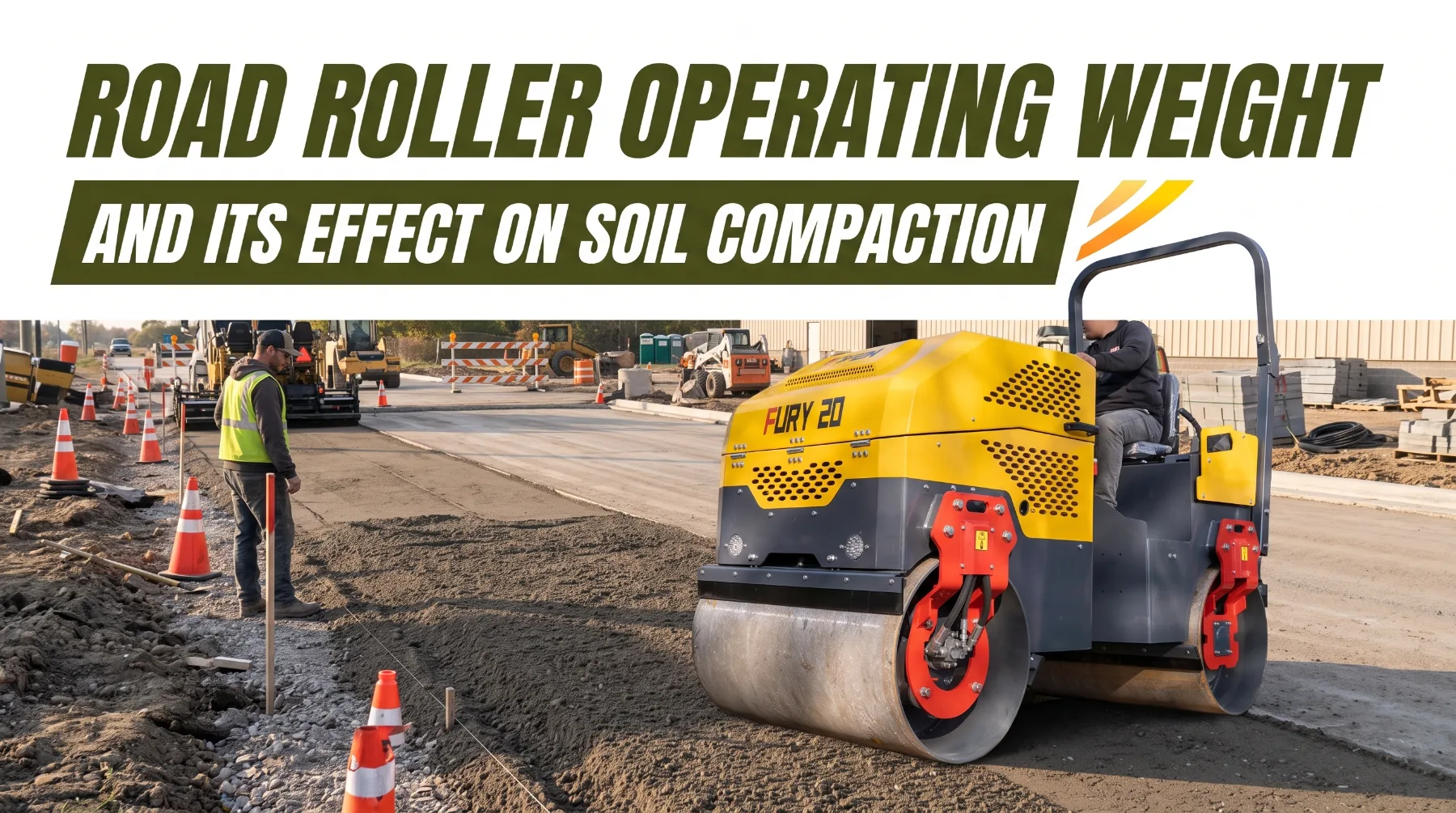
Preparing subgrade for a parking area can produce very different results across the same worksite. One section of soil may become firmer with each road roller pass, while another develops ruts and continues shifting beneath the drum. The machine has not changed, but the material and the way its force reaches the ground can produce a very different compaction response.
Drum load and contact pressure determine how the roller transfers force into the soil. Soil type, moisture content, vibration, layer thickness, and travel speed then influence how that force produces density. A material that responds well to the selected compaction method may tighten quickly, while unsuitable conditions can limit the effect of repeated passes.
Understanding these factors helps operators develop a more consistent compaction process. Matching drum load and vibration to the soil, maintaining suitable moisture conditions, controlling travel speed, and adjusting the number of passes can support more uniform density. Observing how the material responds throughout the work also helps identify when the selected method needs to be adjusted.
Understand Drum Load
Drum load is the portion of a roller’s weight carried by the compaction drum. Not all of a machine’s operating weight bears down on the soil through the drum. Part of it rests on the rear wheels or the frame, depending on the machine’s design. The weight the drum actually carries creates static force against the soil as the roller travels across the surface.
This distinction matters on the jobsite. Two rollers with similar operating weights can deliver very different drum loads if their weight is distributed differently. Drum load is often expressed relative to drum width, sometimes called static linear load, because this shows how concentrated the force is along the line where the drum meets the ground. A narrower drum carrying the same weight applies more force per unit of width than a wider one.
Drum load gives you a clearer picture of a roller’s compaction potential than operating weight alone. It is the static foundation that every other factor, including contact area, vibration, and rolling technique, builds on.
Key takeaway: Drum load is the portion of a roller’s weight carried by the compaction drum, and it produces the static force applied to the soil as the machine travels.
Contact Area Affects Pressure
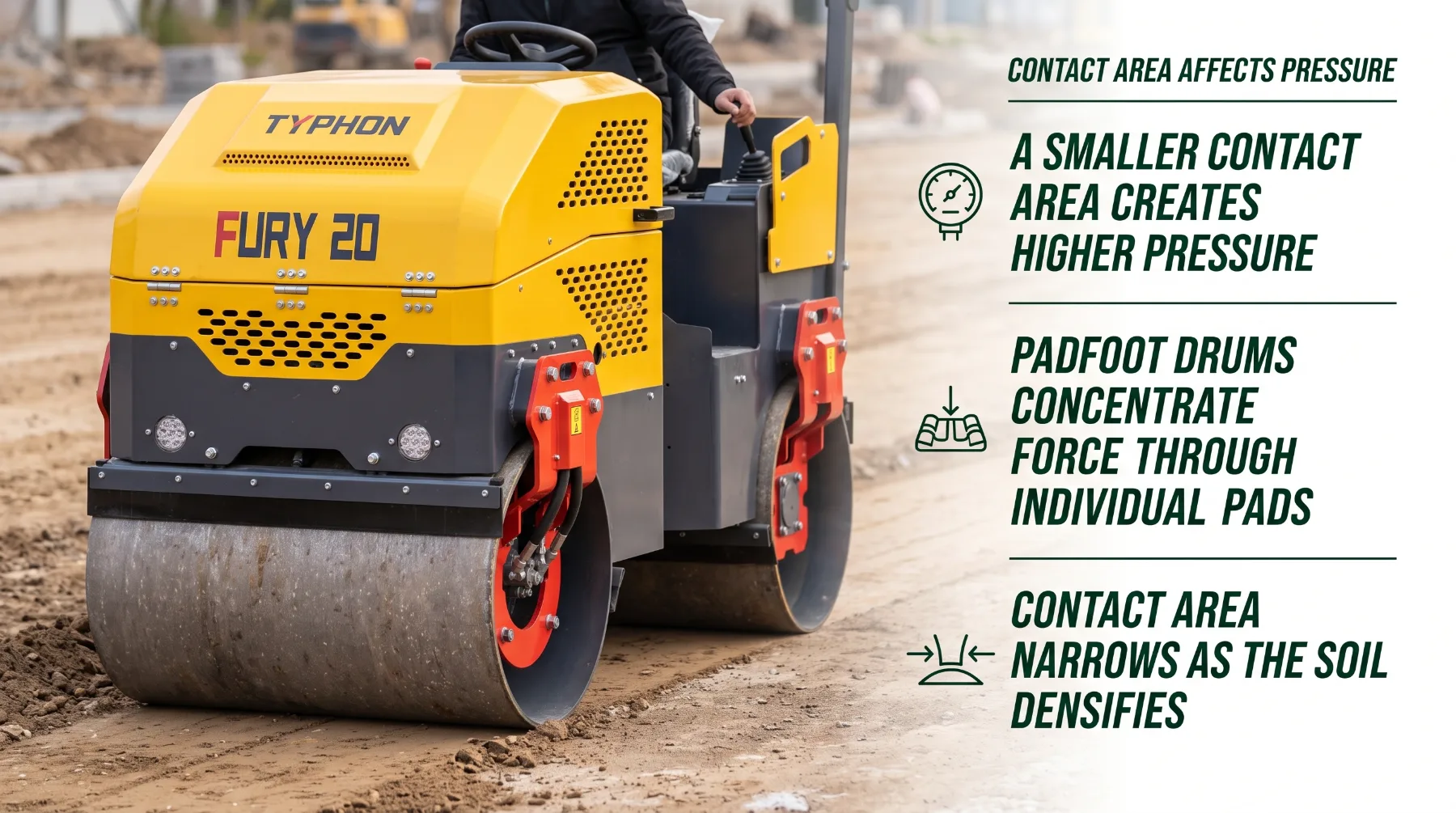
Contact pressure depends on two things: the force applied and the area over which that force is spread. A concentrated load over a small contact area creates higher pressure. The same load spread over a broader area distributes force differently and produces lower pressure at any given point.
Drum design has a direct effect on the contact area. A smooth drum contacts the soil along a band across its width. A padfoot drum concentrates force through individual pads, which creates much higher pressure at each contact point. This is one reason padfoot drums are commonly used on cohesive soils, where concentrated pressure and a kneading action help work the material.
Contact area also changes as compaction progresses. On loose or soft soil, the drum sinks in and contacts a wider area, so pressure is spread out. As the soil densifies, the drum rides higher, the contact area narrows, and pressure increases. That shift is a useful sign that the material is responding, and it explains why the same roller can act differently on the first pass than on the last.
Key takeaway: Contact pressure depends on the applied force and the area it covers, so drum design and soil condition both shape how concentrated the force is at the surface.
Soil Type Changes the Response
Clay, silt, sand, gravel, and mixed materials each have their own compaction characteristics. The same drum load and contact pressure can produce excellent results on one soil and poor results on another. Identifying the material is an essential step before you set up the roller.
Cohesive soils such as clay hold together and resist particle movement. They often respond well to concentrated pressure and kneading, which is why padfoot drums are a common choice. Granular soils such as sand and gravel have particles that can slide past one another. They typically respond well to vibration, which helps particles shift into a tighter arrangement. Silts and mixed materials can fall in between, and their behavior often depends heavily on moisture.
Many jobsites include more than one soil type, sometimes within the same work area. When material changes across the site, your compaction approach may need to change with it. Treating every section the same way can leave some areas well compacted and others falling short.
Key takeaway: Clay, silt, sand, gravel, and mixed materials respond differently, with some soils suited to static loading and others benefiting from vibration or dynamic compaction.
Moisture Influences Particle Movement
Water content plays a central role in how soil behaves under a roller. Moisture affects how easily particles move and how tightly they can pack together. Even with the right drum load and contact pressure, soil at the wrong moisture level can resist compaction.
Problems occur at both ends of the range. Material that is too dry may resist rearrangement, because particles lack enough moisture to slide into a denser arrangement. Material that is too wet loses stability. Excess water fills the spaces between particles, and the soil may pump, shove, or rut under the drum instead of densifying. In both cases, reaching the required density becomes difficult.
Most projects define a suitable moisture range for the material being placed, often based on laboratory testing. Working within that range gives the roller’s force the best chance to produce results. Checking moisture before and during compaction, and adjusting when needed, is one of the most reliable ways to avoid wasted passes.
Key takeaway: Soil that is too dry resists particle rearrangement, while excess moisture reduces stability, so working within a suitable moisture range is essential for reaching the required density.
Vibration Changes Force Transfer
Vibration adds dynamic energy beyond the static force created by the roller’s weight. As the drum vibrates, repeated movement transfers energy into the material, helping particles shift, settle, and pack together. This can allow compaction to reach deeper into a layer than static pressure alone.
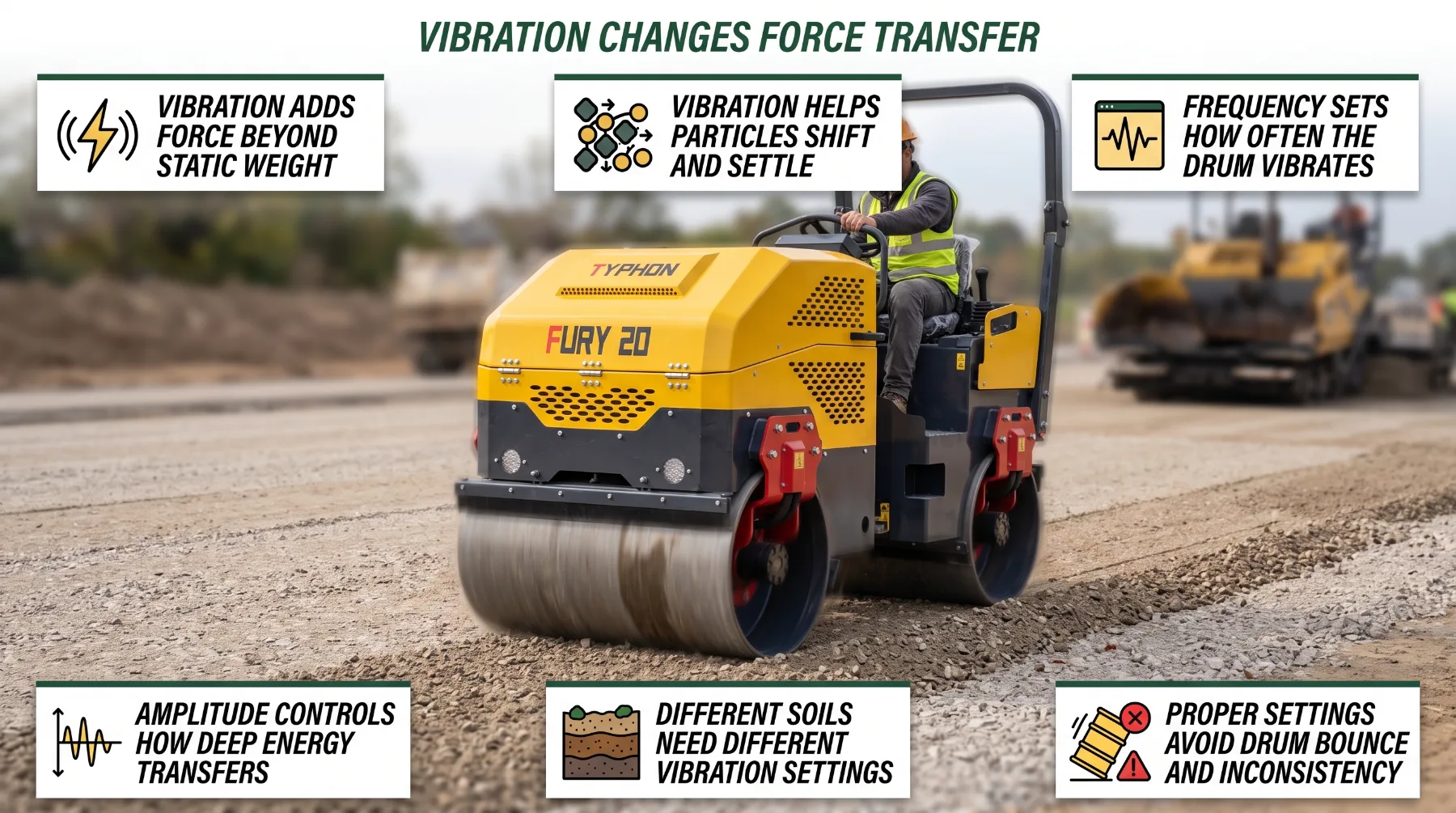
Frequency and amplitude determine how that energy is delivered. Higher amplitude generally produces stronger drum movement and can be useful for thicker layers, while lower amplitude is often better suited to thinner layers or material that is already approaching the required density. The correct setting also depends on the material, since granular soils typically respond differently from cohesive soils.
Using the highest vibration setting is not always the most effective approach. Excessive amplitude on stiff or already dense material can cause the drum to bounce, reducing consistent contact with the surface. Operators should select settings appropriate for the soil and layer thickness while following the manufacturer’s operating guidance.
Dynamic Energy: Vibration adds repeated force beyond the roller’s static weight.
Particle Movement: Vibrations help material particles shift and settle closer together.
Frequency: Determines how often the drum vibrates during operation.
Amplitude: Controls the amount of drum movement and influences how deeply energy is transferred.
Material Compatibility: Different soils respond differently to vibration, requiring suitable settings.
Vibration Control: Proper settings help maintain consistent force transfer and avoid drum bouncing.
Key takeaway: Vibration adds dynamic energy beyond static drum load, and suitable frequency and amplitude settings help transfer that energy into compatible materials.
Monitor the Surface During Passes
Compaction is an active process, and the soil provides feedback throughout it. Operators should observe how the material responds as passes progresses. Paying attention to the surface helps you confirm that your approach is working or recognize when it needs to change.
Several signs are worth watching. Rutting that stays deep or gets worse can point to excess moisture or unsuitable settings. Movement or shoving ahead of the drum may indicate unstable material. Surface texture can show whether the soil is tightening or staying loose. Changes in resistance, such as the drum riding higher or padfoot tips leaving shallower impressions, often signal that the soil is densifying. On the other hand, drum bounce can suggest the material has reached its limit for the current settings.
These observations support decisions, but they do not replace testing. Project specifications usually define required density and how to verify it. Use surface response to guide your rolling approach, then confirm results through the testing the project requires.
Key takeaway: Rutting, movement, surface texture, and changes in resistance show whether the rolling approach suits the soil, so observe the surface throughout compaction.
Conclusion
Drum load and contact pressure determine how a road roller transfers static force into the soil, but effective compaction depends on the interaction of load, contact area, soil type, moisture, vibration, and rolling technique. Drum load represents the portion of machine weight carried by the drum, while contact area determines how concentrated that force is at the surface. Cohesive, granular, and mixed soils respond differently to static and vibratory energy, making drum configuration and vibration frequency and amplitude important considerations, while suitable moisture conditions help the material respond effectively to compaction. Operators should evaluate drum or static linear load rather than operating weight alone, match the drum type to the material, confirm moisture conditions, establish a consistent rolling pattern and travel speed, and monitor rutting, surface movement, texture, and resistance during each pass. Final density should then be verified using the testing method specified for the project. Considering these factors together provides a practical basis for achieving consistent soil compaction and reliable density across the jobsite.
Frequently Asked Questions
What is drum load?Drum load is the portion of a roller’s operating weight transferred through the compaction drum to the ground. The remaining weight is supported by other machine components, so total operating weight does not show the force applied through the drum alone. Drum load creates static pressure and is often expressed as static linear load relative to drum width. Two rollers with similar operating weights can produce different compaction results depending on weight distribution. Checking drum load and static linear load gives a clearer view of static compaction capability.
Why is contact pressure important?Contact pressure shows how force is distributed where the drum meets the soil. A smaller contact area concentrates force and creates higher pressure, while a larger area spreads it out. Drum design also matters. Padfoot drums concentrate force through individual pads and provide a kneading action suited to cohesive soils, while smooth drums apply force across a wider contact band. Understanding contact pressure helps match the drum to the material and evaluate compaction performance.
Does moisture affect soil compaction?Yes. Moisture affects how easily soil particles move and pack together. Soil that is too dry may resist rearrangement, while excessive moisture can reduce stability and cause pumping, shoving, or rutting instead of densification. Many projects specify a suitable moisture range based on material testing. Keeping moisture within that range allows the roller’s drum load, contact pressure, and vibration to work effectively. Correcting moisture conditions is usually more effective than simply making additional passes.
Can vibration improve soil compaction?Yes. Vibration adds dynamic energy to the drum’s static force, helping suitable materials rearrange and settle into a denser structure. Sand and gravel generally respond well to vibration, while clay may benefit more from concentrated pressure and kneading from a padfoot drum. Frequency and amplitude control how deeply the energy is applied. Higher amplitude can suit deeper layers, while lower settings work better for thinner layers or material near target density. Excessive vibration can cause drum bounce or disturb dense material, so settings should match the soil and manufacturer’s recommendations.