Currently Empty: $0.00
How Much Does a New Mini Excavator Cost in 2026?
A landscaping contractor lands his first steady run of trenching and grading jobs and decides it's finally time to buy his own mini excavator instead of renting one every week. He starts shopping and finds machines listed anywhere from under $5,000 to well past $30,000, all called "mini excavators." Now he's stuck wondering whether the cheap one will hold up or whether the expensive one is more machine than his work needs. That spread is the whole reason this question matters. The price depends far more on what you're buying than on the label, and knowing what drives the number keeps you from overpaying or under-buying.
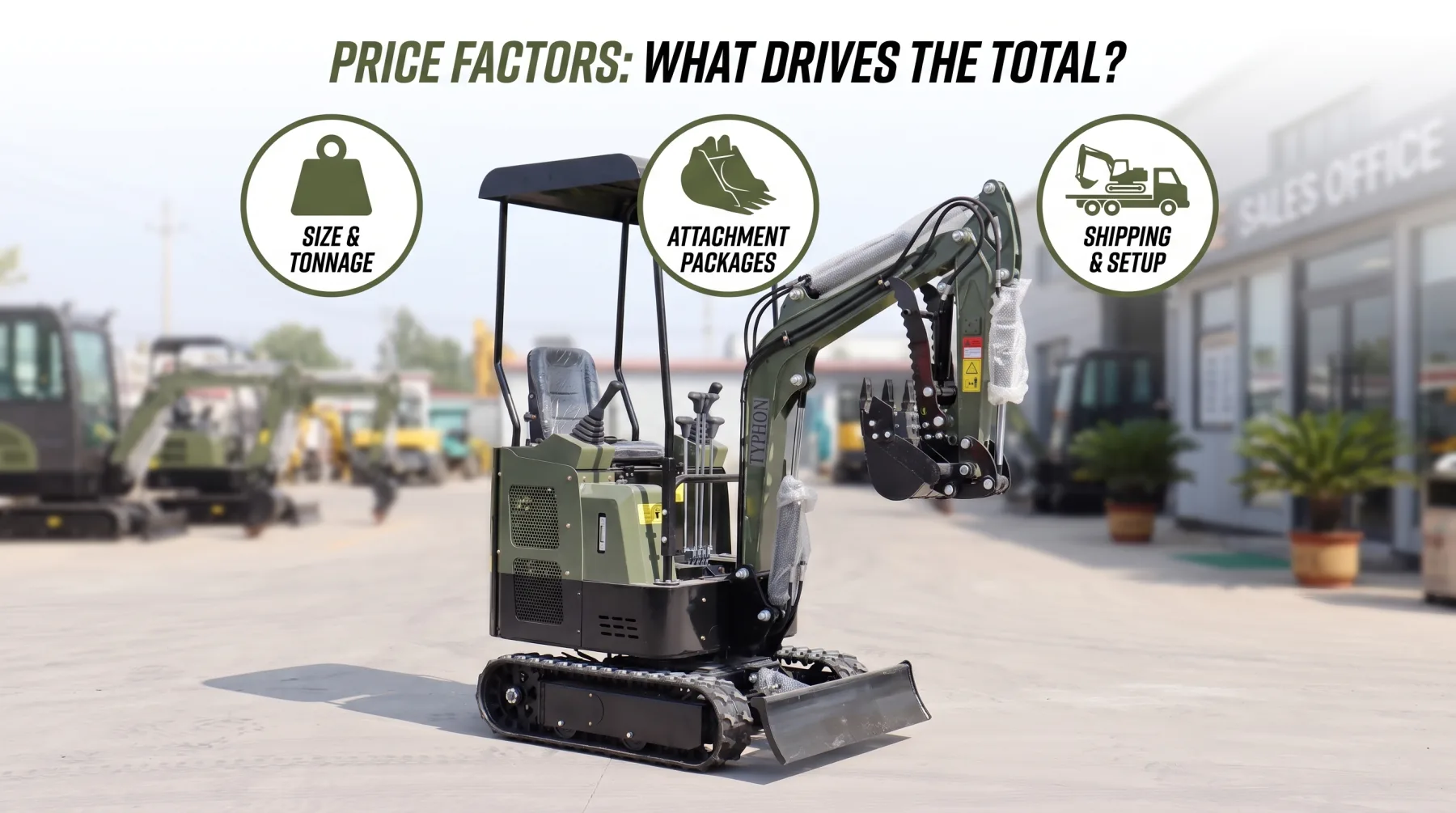
The cost of a new mini excavator in 2026 comes down to size, engine, cab, attachments, and brand. A one-ton gas machine with a basic bucket is a different animal from a four-ton diesel unit with an enclosed cab and a full attachment set, and the price reflects that gap. Understanding what each factor adds helps you match a machine to your work without paying for capability you'll never use. Here is how the pricing breaks down and what the ranges look like this year.
The price difference between mini excavators is usually tied to the level of capability built into the machine. A lower-cost model may be perfectly suited for light landscaping, small trenching jobs, or property maintenance, while higher-priced units often add more digging force, stronger components, better comfort, and greater attachment support for demanding work. The key is understanding which features actually improve your daily productivity and which ones you may never need. Looking at your typical projects, site conditions, and future workload helps you choose a machine that delivers the performance you need without paying for features that do not add value to your operation.
Size and Weight Class
Weight class is the biggest lever on price, so start there. A one-ton compact excavator is the entry point, built for tight yards, backyard trenching, and light utility work. It's small enough to move on a trailer behind a pickup and cheap enough that many owner-operators buy one outright. What it gives up is dig depth, reach, and lifting power, so it fits light work far better than heavy production digging.
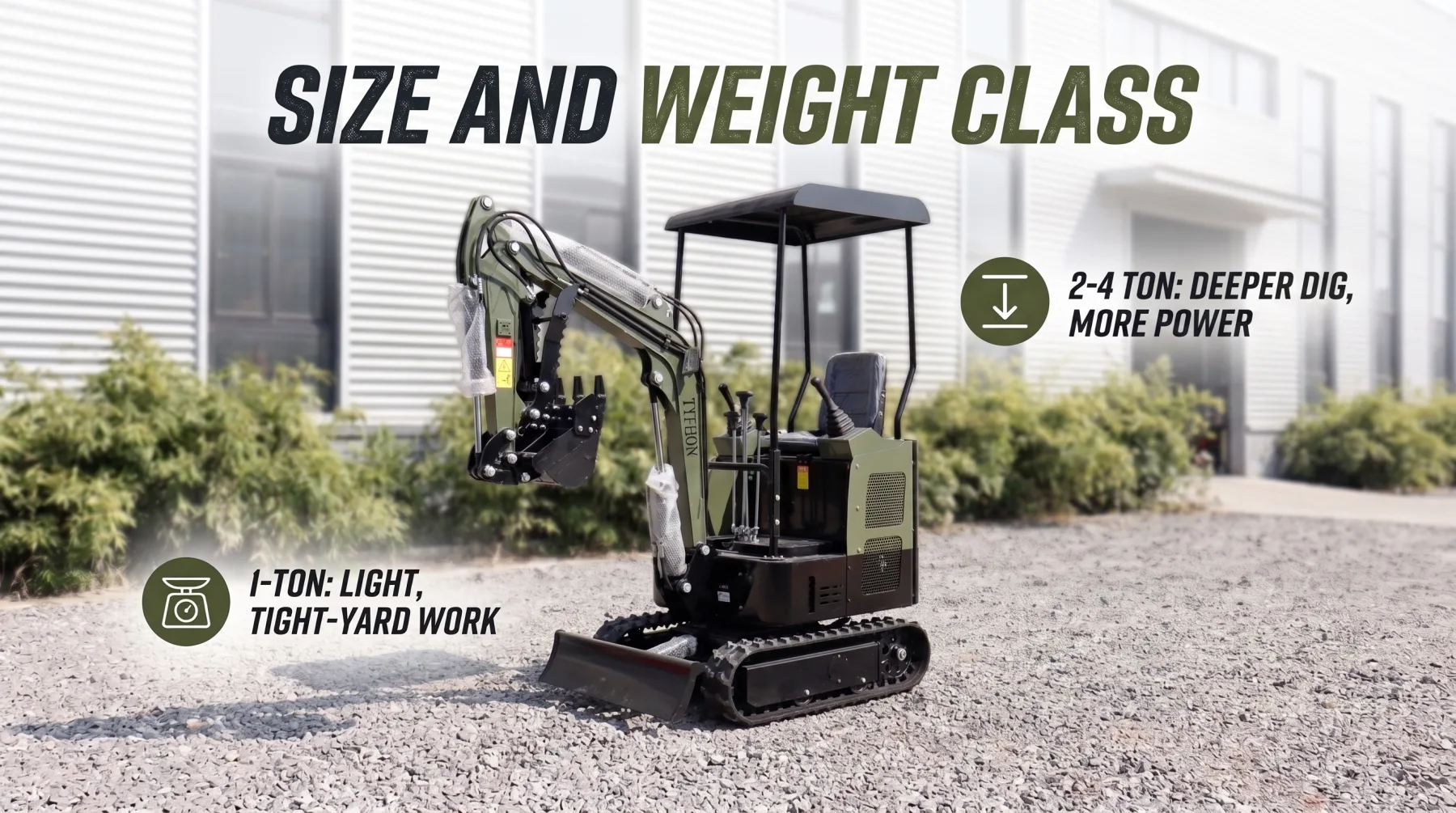
Step up into the two to four-ton mid-range and both the capability and the price climb. These machines dig deeper, reach farther, and lift more, which makes them the workhorse for utility crews, foundation work, and steady excavation. A four-ton unit costs noticeably more than a one-ton, but for contractors who dig every day it earns that difference back in speed and depth. Matching the class to your typical keeps you from buying too much or too little machine.
Engine Type: Gas vs Diesel
The engine shapes both the price and the kind of work the machine handles. Smaller mini excavators often run gas engines, frequently a Briggs & Stratton unit, which keeps the entry price low and suits light, intermittent use. Gas machines are common at the compact end and are a big reason a one-ton unit can land at a fraction of the cost of a larger diesel.
Diesel engines take over as the machines get bigger and the work gets heavier. A Kubota diesel, which shows up across a huge share of the market, costs more but delivers the torque, fuel efficiency, and durability that production digging demands. If you work the machine hard and often, a diesel is usually worth the higher upfront cost. Checking the engine rating against your workload tells you whether you're paying for muscle you'll actually use.
Cab Features
What surrounds the operator adds real money to the sticker. An open station, with just a seat and controls with a canopy, keeps the price down and works fine for short jobs in fair weather. Many compact and mid-range machines sell this way, and for a crew that digs in mild conditions it's often all they need.
An enclosed cab with heat and air conditioning is a different level of comfort and a different price. It pays for itself on machines that run all day in cold, heat, dust, or rain, since a comfortable operator works longer and better. That comfort carries a premium, though, so the enclosed-cab version of the same machine can cost thousands more than the open one. Decide based on how many hours the operator actually spends in the seat and in what conditions.
Attachment Bundles
Attachments swing the price more than many first-time buyers expect. A bare machine with a single bucket sits at the low end of its range, while a package bundled with a dozen or more attachments, including thumbs, augers, breakers, grapples, and multiple buckets, can add several thousand pounds to the total. Many machines on the market are sold exactly this way, as a base unit plus a full attachment set.
The bundle can be a genuine value if you'd buy those attachments anyway, since packaged pricing usually beats buying each piece separately later. The trap is paying for a stack of attachments you'll rarely touch. Figure out which two or three you actually need for your work, then weigh a bundle against a leaner setup. Knowing your equipment requirements before you shop keeps the total cost honest.
It's also worth considering how your needs may change over time. If your business is expanding into new types of projects, a bundle with a few extra attachments could provide greater versatility and save money in the long run. However, if your work is highly specialised, investing only in the attachments you use regularly is often the more cost-effective choice. Selecting the right combination ensures you get the best value without overspending on equipment that spends most of its time in storage.
Brand and New vs. Used
Brand shapes both price and what you get behind the sale. Established names tend to cost more upfront, but that premium often buys stronger dealer support, easier parts availability, and better resale value down the road. Value-focused and newer import brands come in lower, which can be the right call for lighter use, though it pays to confirm the support and parts situation before you commit, since a cheap machine that's hard to service gets expensive fast.
New versus used is the other big fork in the road. A new machine carries a warranty, a clean service history, and the latest engine and hydraulic updates, all of which cost more. A used mini excavator saves money upfront but asks you to weigh hours, wear, and maintenance history against the discount. For buyers deciding which way to go, weighing your against how often you'll run the machine helps settle it.
What Mini Excavators Cost in 2026
Here is where the ranges land this year, keeping in mind that engine, cab, and attachments move these numbers within each bracket. At the compact, entry-level end, a one-ton gas machine, often with a basic bucket or a small attachment set, generally runs from around $4,000 to $8,000. These are the machines that make ownership realistic for landscapers, homeowners, and light-duty crews who don't need deep digging power.
The mid-range is where most working contractors shop. A two to four-ton machine, typically diesel and often bundled with a set of attachments, commonly falls somewhere between roughly $10,000 and $20,000, depending on brand, cab, and how many attachments come with it. A well-equipped two-ton diesel with a full attachment package and an enclosed cab sits comfortably in this band, and it covers the widest range of real excavation work.
At the larger and better-equipped end, three to four-ton machines with enclosed AC cabs, diesel power, hydraulic thumbs, and premium features push from the low $20,000s up toward $30,000 and beyond. These are production machines for crews digging day in and day out, and the higher price reflects the durability, comfort, and capability that steady work demands. Before you settle on any number, compare current listings and specs against your workload so you buy the machine your jobs actually call for.
Conclusion
A new mini excavator in 2026 can cost anywhere from a few thousand dollars to over thirty thousand, and the spread comes down to a handful of clear factors. Size and weight class set the baseline, the engine choice between gas and diesel shapes both price and durability, and cab features, attachment bundles, and brand each push the total up or down from there. Compact one-ton gas machines land at the low end, mid-range two to four-ton diesels cover most working contractors in the middle, and larger, fully-equipped units top the range. The smart move is to match the machine to the work you actually do, so you pay for the capability your jobs need and nothing you won't use. Weigh new against used, decide which attachments truly earn their place, and when you're ready to buy a mini excavator built to last, reach out to a trusted equipment specialist who can pair a reliable machine with the results your projects depend on.
Frequently Asked Questions
How much does a new mini excavator cost in 2026? Prices generally run from about $4,000 to $8,000 for a compact one-ton gas machine, around $10,000 to $20,000 for a mid-range two to four-ton diesel model, and $20,000 to $30,000 or more for larger units with advanced features, enclosed cabs, and attachment packages.
Is a diesel mini excavator worth the extra cost over gas? For heavy, daily digging, yes. Diesel engines provide stronger torque, better fuel efficiency, and longer service life under demanding workloads. A gas machine can still be a smart choice for light landscaping, property maintenance, and occasional projects where maximum power is not required.
Do attachment bundles save money on a mini excavator? They can, because bundled attachments are often cheaper than purchasing each attachment separately later. The savings only make sense if those attachments match your regular work, so focus on the tools you will use most instead of paying for a package filled with equipment that sits unused.
What size mini excavator should I buy? The right size depends on the type of work you perform most often. Smaller one- to two-ton models are easier to transport and fit into tight spaces, while larger three- to five-ton machines provide more digging force and lifting capacity for heavier construction jobs. Choose based on your typical projects, access limitations, and the attachments you plan to run.