Currently Empty: $0.00
What Daily Skid Steer Inspection Steps Help Prevent Breakdowns
A skid steer that won’t start, leaks hydraulic oil, or throws a track in the middle of a job costs more than a repair bill. Crews sit idle, deadlines slip, and a small defect can turn into a major component failure. Many of these breakdowns show early warning signs that a quick daily inspection would catch.
A consistent pre-operation inspection finds wear, leaks, damage, and safety problems before they interrupt work. It takes only a few minutes at the start of each shift, and it supports reliable performance in construction, landscaping, agriculture, and material handling. The steps below give operators and fleet owners a practical routine. Always follow the manufacturer’s checklist in your operator’s manual, since procedures and service points vary by model.
Check Engine Oil and Coolant
Engine fluids are the first line of defense against costly engine damage. Low oil or coolant can lead to overheating, accelerated wear, and engine failure, often with little warning once the problem starts. Checking both before the first start of the day gives the most accurate reading, since oil has drained back into the pan and the engine is cool.
Park the machine on level ground, lower the lift arms fully, set the attachment flat on the ground, and shut off the engine before you begin. Pull the dipstick, wipe it clean, reinsert it, and read the level against the marks. Look at the oil’s condition as well. Milky oil can point to coolant contamination, while a strong fuel smell or metal particles call for further inspection.
Check coolant at the overflow reservoir and compare it with the level marks. Never remove a pressurized cooling-system cap while the engine is hot, since escaping coolant and steam can cause serious burns. While the engine compartment is open, look for drips under the machine, check the radiator and cooler fins for packed debris, and confirm the air filter restriction indicator isn’t showing a clogged filter. On dusty sites, cleaning the cooling package daily helps prevent overheating.
Key takeaway: Check engine oil and coolant on level ground with the engine cool, look for contamination and leaks, and never open a hot, pressurized cooling system.
Test Controls and Safety Systems
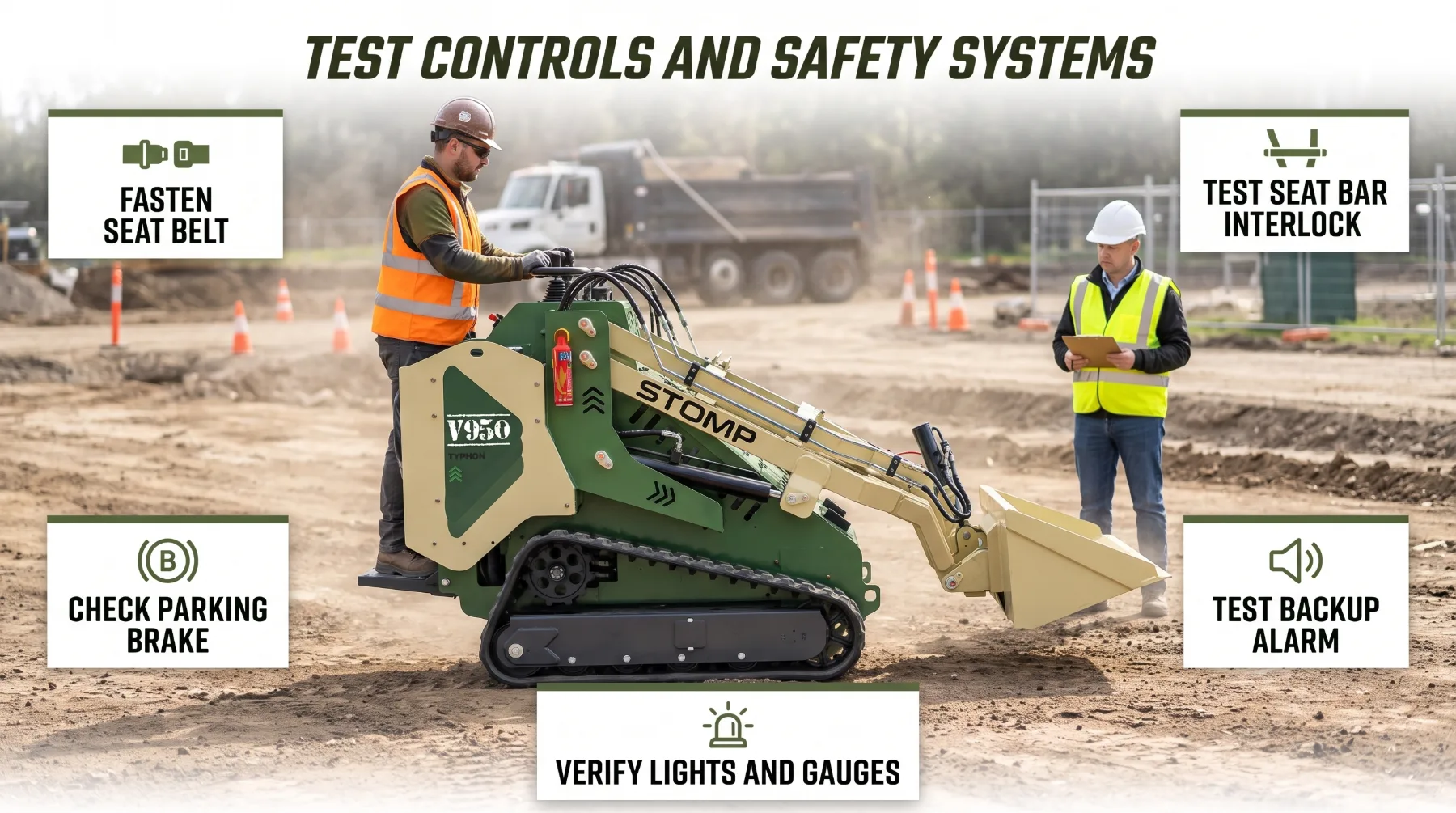
A skid steer’s safety systems protect the operator from some of the most serious hazards on a jobsite, including rollovers, crush injuries, and unintended machine movement. These systems must work every time. A quick functional test before work begins confirms that they will.
Start with the operator station. Inspect the rollover and falling object protective structure for cracks, bends, or missing hardware, and never drill, weld, or modify it. Confirm the seat belt latches and releases correctly and shows no fraying. Check that the seat bar or restraint lowers fully and that the operator-presence system works as designed. With the restraint raised, the lift, tilt, and drive functions should lock out according to the manufacturer’s design. Inspect the cab door, side screens, and windows for damage.
Once seated with the belt fastened, start the machine and watch for warning lights and gauge readings. Test steering, travel, lift, and tilt functions with smooth, slow movements. Confirm the parking brake holds, and check the horn, backup alarm, lights, and any cameras fitted to the machine. Know where the lift arm support device is stored and how to use it. Never work under raised lift arms unless they are properly supported according to the operator’s manual.
Key takeaway: Confirm the protective structure, seat belt, restraint bar, interlocks, brakes, alarms, and lights all work correctly before every shift.
Inspect Hydraulic Components
The hydraulic system powers lifting, tilting, steering on many machines, and attachment operation. A worn hose or loose fitting may seem minor in the morning, but it can fail under load later in the day. Hydraulic failures stop work immediately and can create slip, fire, and injection hazards.
Check the hydraulic fluid level according to the manufacturer’s procedure, which usually means the lift arms are fully lowered and the attachment rests flat on the ground. Then walk around the machine and inspect hoses, fittings, cylinders, and visible connections. Look for wet spots, fresh oil on the frame, cracked or bulging hoses, abrasion where hoses rub against metal, and loose or damaged fittings.
Pay close attention to the lift and tilt cylinders. Oil on a cylinder rod can indicate a worn seal, while scoring or dents on the rod can damage seals over time. Never run your hand along a hose to search for a leak. Pressurized hydraulic fluid can penetrate skin and cause severe injury. Use a piece of cardboard or wood instead, and wear gloves and eye protection. Low fluid or damaged lines affect lifting, steering, and attachment performance, so address problems before operating.
Key takeaway: Check hydraulic fluid level, inspect hoses, fittings, and cylinders for leaks and wear, and never use your hand to locate a pressurized leak.
Examine Tires or Tracks
Tires and tracks carry the full weight of the machine and its load. Their condition affects traction, stability, ride quality, and how evenly the machine wears. Problems here often grow quickly, especially on rough demolition sites or abrasive ground.
For wheeled skid steers, check tire pressure against the manufacturer’s specification. Uneven pressure can cause the machine to pull to one side and increase wear on drive components. Inspect the tread for heavy or uneven wear, look for sidewall cuts, bulges, and embedded debris such as rebar, nails, or rock. Confirm that lug nuts are present and tight, since a loose wheel can cause serious damage.
For tracked machines, check track tension according to the service instructions. A track that is too loose can derail, while one that is too tight accelerates wear on rollers, idlers, and sprockets. Inspect the track for cuts, missing lugs, and exposed cords. Look over rollers, idlers, and sprockets for damage, leaks, or unusual wear. Clean packed mud, gravel, and debris from the undercarriage at the end of each shift, since buildup adds strain and can freeze solid in cold weather.
Key takeaway: Check tire pressure, tread, and lug nuts on wheeled machines, or track tension and undercarriage components on tracked machines, and keep debris cleared.
Inspect the Attachment and Coupler
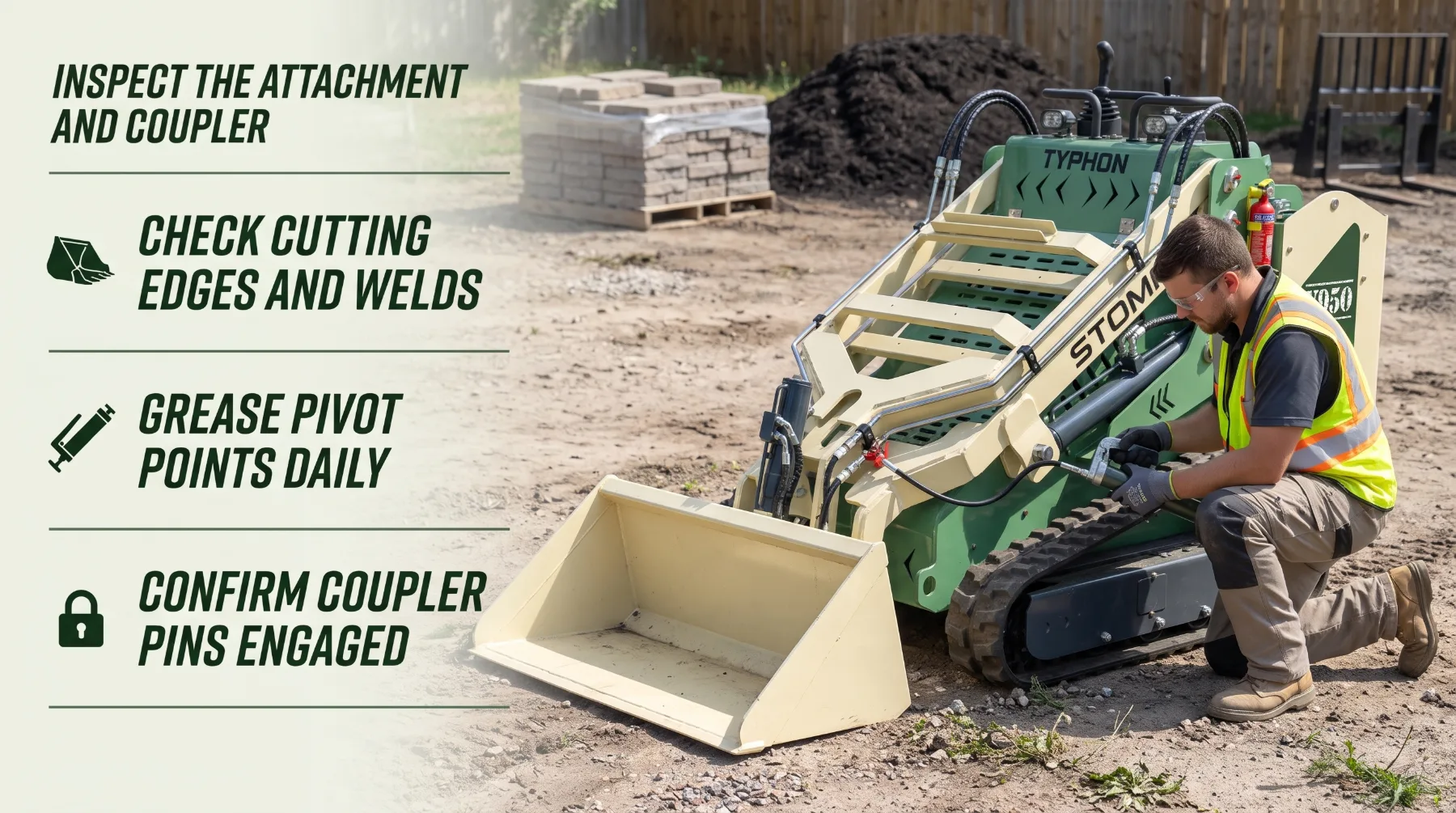
The attachment does the actual work, and the quick coupler holds it to the machine. A worn cutting edge reduces efficiency, while an improperly engaged coupler can allow an attachment to drop without warning. Both deserve close attention every day.
Inspect the attachment for damaged or worn cutting edges, bent teeth, cracked welds, and cracks around the mounting plate. Look for loose or missing pins and bolts. On hydraulic attachments, check hoses for wear and leaks, and make sure they are routed so they won’t be pinched or crushed during operation. Grease the attachment and lift arm pivot points at the intervals the manufacturer specifies. Many pivot points require daily greasing.
Before lifting any load, confirm the quick coupler is fully engaged. The locking pins or wedges should extend completely through the attachment’s mounting slots on both sides. Visually verify engagement rather than relying on a feeling or a sound, and test it by tilting the attachment slightly against the ground. Clean hydraulic couplers before connecting them, relieve hydraulic pressure according to the operator’s manual, and make sure each connection is fully seated.
Key takeaway: Inspect attachments for wear and damage, grease pivot points as required, and visually confirm that coupler pins are fully engaged before every lift.
Record Problems and Schedule Repairs
An inspection only prevents breakdowns when its findings lead to action. Without a record, small defects are easy to forget, and the next operator may not know the machine has a problem. Documentation turns daily checks into a reliable maintenance system.
Record the date, hour meter reading, and operator name on each inspection. Note leaks, unusual noises, vibration, warning lights, low fluids, and damaged components, even when they seem minor. Report defects to your supervisor or maintenance team before the machine returns to service. Many fleets use a printed checklist or a digital inspection app, and both work well when used consistently.
Do not operate equipment with a safety-critical defect, such as a failed seat restraint, an inoperative parking brake, a damaged protective structure, or a major hydraulic leak. Tag the machine out of service and follow your company’s lockout procedures until a qualified technician completes the repair. Over time, inspection records also reveal patterns, such as a hose that keeps failing or a track that keeps losing tension, which helps you schedule maintenance before a failure occurs.
Key takeaway: Document every inspection, report defects promptly, and tag out any machine with a safety-critical problem until it is properly repaired.
Conclusion
A daily skid steer inspection is essential for maintaining equipment reliability, protecting operators, and preventing unexpected downtime. A complete check should cover engine fluids, hydraulic hoses and connections, tires or tracks, operating controls, safety systems, and attachments. These routine checks take only a short time but can reveal leaks, loose components, worn parts, or other developing problems before they lead to costly repairs or unsafe operating conditions. Consistent inspections also help maintain productivity by reducing the risk of equipment failure during important jobs. Operators should make these checks part of every shift and follow the manufacturer’s inspection checklist for the specific skid steer model. Any unusual noise, fluid leak, damaged component, or control issue should be reported and addressed promptly. Keeping accurate inspection and maintenance records makes it easier to track recurring problems, monitor equipment condition, and plan servicing before major repairs become necessary. Machines with safety-related defects should remain out of service until properly repaired and cleared for operation. A disciplined inspection routine helps extend component life, maintain dependable performance, and keep skid steers ready for daily work over the long term.
Frequently Asked Questions
How often should a skid steer be inspected?
Operators should complete a pre-operation inspection before each shift or use. Scheduled maintenance should also follow the service intervals listed in the operator’s manual.
Why check hydraulic hoses daily?
Leaks and hose damage can lead to fluid loss, reduced performance, and safety hazards such as slips, fires, and injection injuries. Daily checks catch wear before a hose fails under load.
Should operators use a damaged attachment?
No. Damaged or improperly secured attachments should be removed from service until they are inspected and repaired by a qualified person.
What should happen when a warning light appears?
Follow the operator’s manual, stop the machine when required, and report the warning for proper diagnosis. Don’t continue working until the cause is identified.