Currently Empty: $0.00
Safe Road Roller Operation Near Workers and Construction Traffic
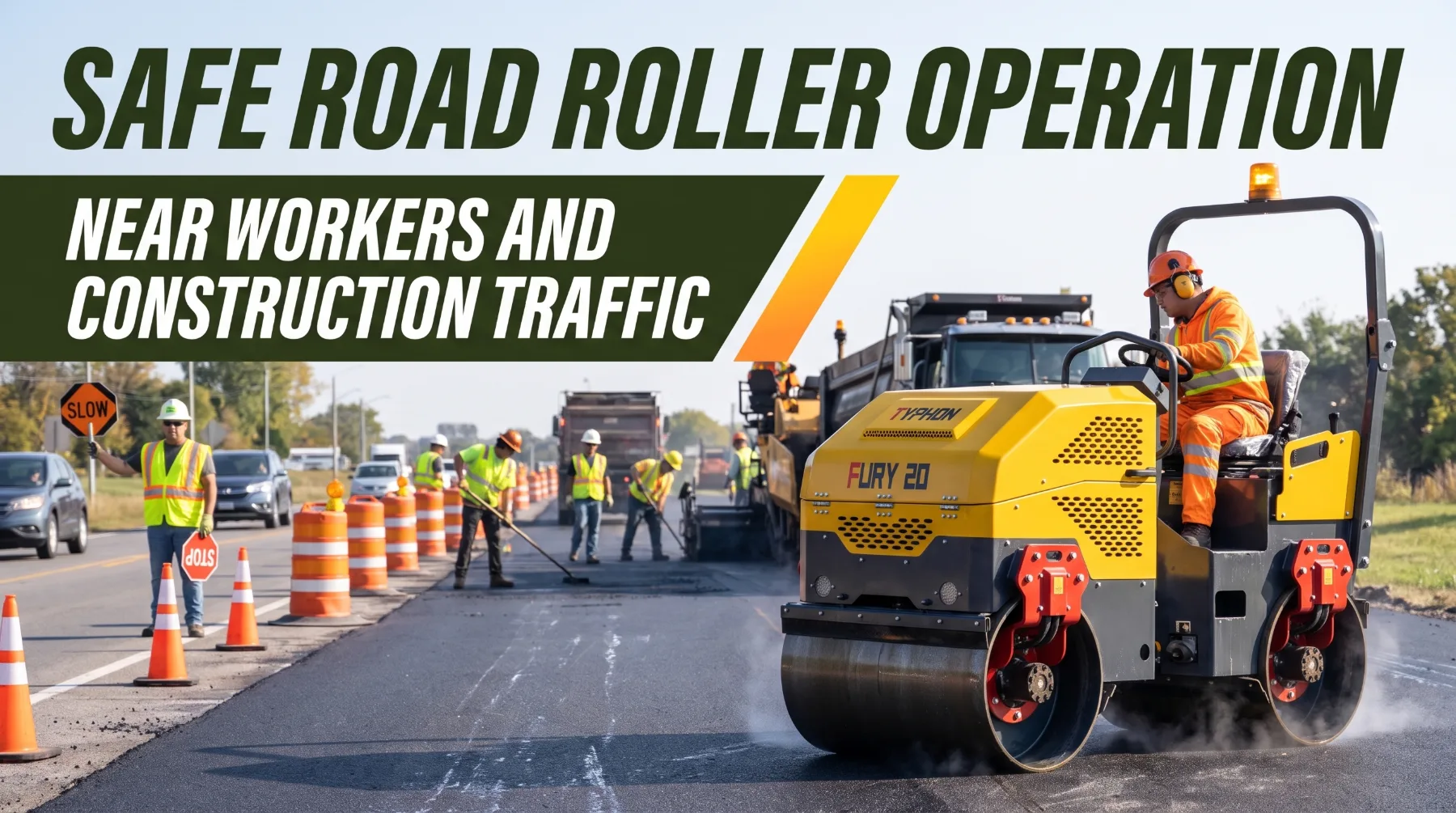
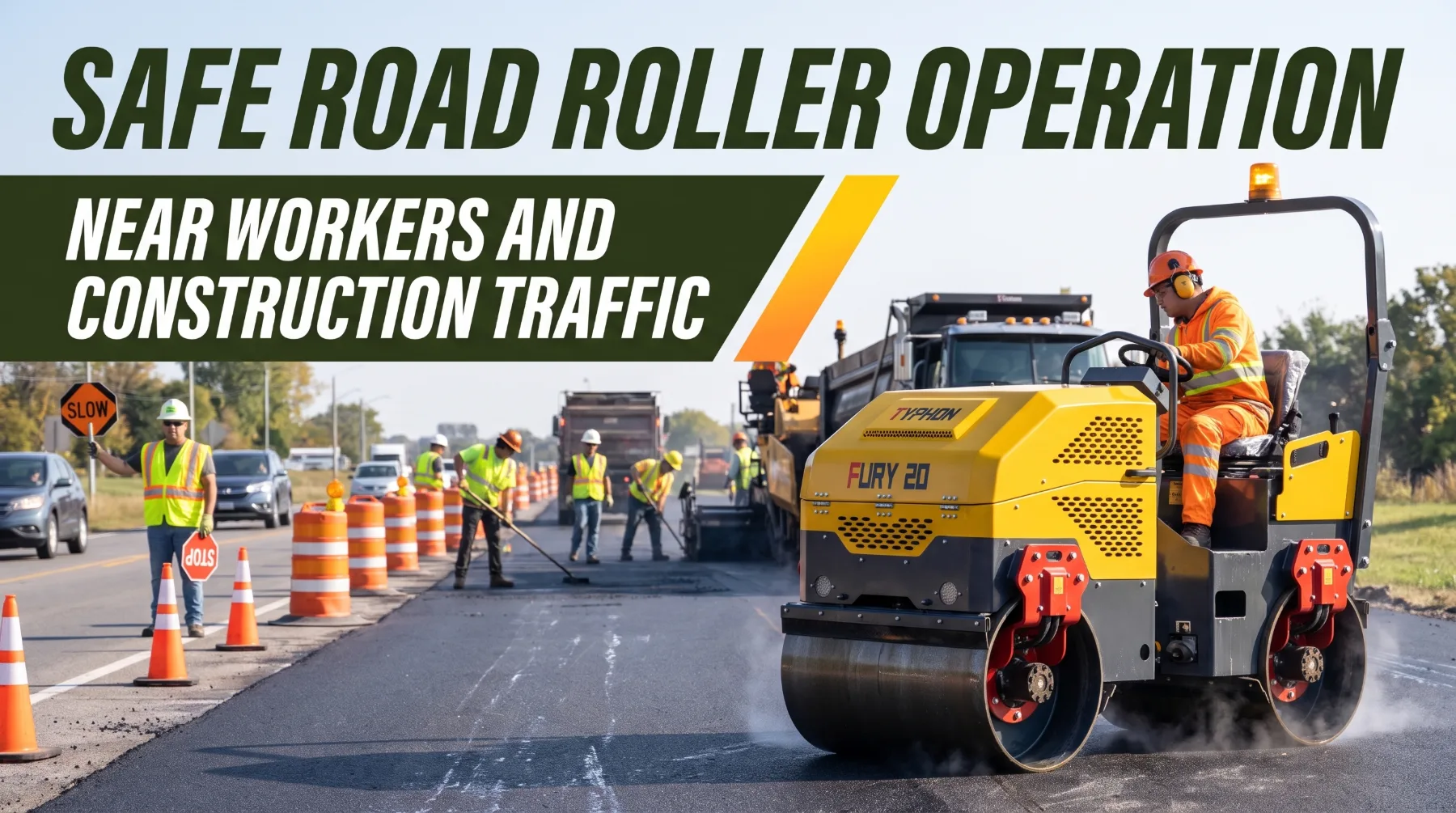
A paving crew is finishing a new lane on a busy arterial road. The paver lays hot asphalt, a breakdown roller follows close behind, and raking crews work along the joint. Dump trucks reverse to the paver while live traffic passes a few feet beyond the cones. The roller operator changes direction dozens of times an hour, often reversing toward the area where workers stand.
Road rollers are heavy, slow, and loud, and their operators often have limited visibility. Those traits make them among the most hazardous machines on a paving or earthwork site. Most roller incidents are predictable, and planning, inspection, communication, and disciplined operation prevent them. The steps below give operators, supervisors, and site managers a practical framework for safe roller operation around ground crews and construction traffic. Always follow the manufacturer's operator's manual, your company's procedures, and the regulations that apply in your location.
Establish a Traffic Management Plan
Safe roller operation starts before the engine runs. A clear traffic management plan decides where machines travel, where people walk, and where delivery vehicles enter, reverse, and leave. Without one, rollers, trucks, and ground crews share the same space, and every movement depends on someone noticing the hazard in time.
Define travel routes for rollers, pavers, and haul trucks, along with designated reversing areas and loading or unloading points. Mark pedestrian zones and walkways that keep ground crews out of machine paths wherever possible. Where workers must be close to equipment, such as raking joints or checking density, set clear rules about who may enter the area and how they signal the operator first. Barriers, cones, and delineators make these zones visible to everyone.
Work beside live traffic adds another layer. On road projects, temporary traffic control must follow the applicable standards, such as the MUTCD in the United States, along with any state or agency requirements. Plan buffer spaces between the work area and moving traffic, and use trained flaggers or traffic control personnel where required. Keep site access points clearly signed so delivery drivers know where to enter and where to wait.
Review the plan at the start of every shift. Conditions change as paving progresses, lanes shift, and new crews arrive. A short pre-shift briefing that covers travel routes, reversing areas, communication methods, and any changes since the day before keeps everyone working from the same plan.
Key takeaway: Plan travel routes, reversing areas, pedestrian zones, and traffic control before work begins, and review the plan with every crew at the start of each shift.
Complete Pre-Operation Checks
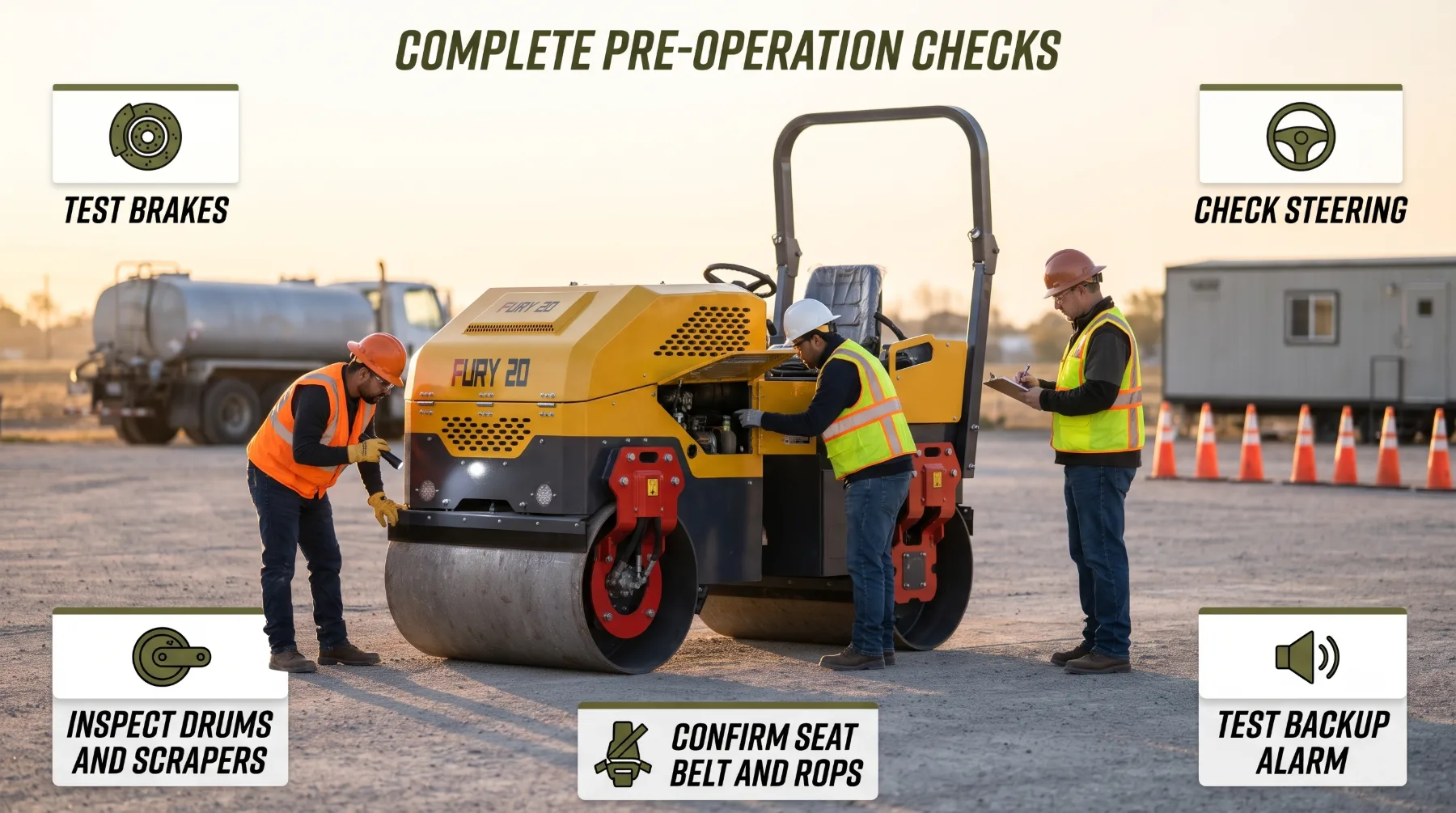
A roller that loses braking or steering near workers leaves little time to react. A thorough pre-operation inspection confirms that safety-critical systems work before the machine enters the work area. It takes only minutes and prevents many of the failures that lead to serious incidents.
Begin with a walk-around on level ground with the engine off. Inspect the drums or tires for damage, cracks, and buildup. Check that drum scrapers sit correctly and aren't worn or bent, since material stuck to a drum affects compaction quality and traction. On asphalt rollers, confirm the water spray or release agent system works and the nozzles aren't clogged. Look for fluid leaks under the machine, and check engine oil, coolant, hydraulic fluid, and fuel levels according to the manual.
Next, check the operator station. Inspect the rollover protective structure for damage, and never drill, weld, or modify it. Confirm the seat belt latches and releases correctly. Make sure steps, handholds, and the platform are clean, dry, and secure, since slips during mounting and dismounting cause many injuries. Clean the windows, mirrors, and any cameras so the operator has the clearest possible view.
Once seated with the belt fastened, start the machine and test the systems. Confirm that the service brakes stop the roller smoothly and the parking brake holds. Test steering through its full range, and check that the articulation joint moves freely without unusual noise. Verify that the horn, backup alarm, travel lights, work lights, and beacon all work. Test the emergency stop if fitted. Report any defect before the roller enters the work area, and keep machines with safety-critical faults out of service until a qualified technician repairs them.
Key takeaway: Check drums, scrapers, fluids, the protective structure, seat belt, brakes, steering, alarms, and lights before every shift, and keep any roller with a safety-critical defect out of service.
Maintain Awareness of Workers
Ground crews and rollers often work only a few feet apart. Rakers, screed operators, density testers, and supervisors move constantly around the mat, and their attention is usually on their own task. The operator can't rely on workers to watch the roller, and workers can't assume the operator sees them.
Operators should know where every crew member is positioned before moving, and check again before each change of direction. Rollers have significant blind spots, especially close to the drums and directly behind the machine. Mirrors and cameras help, but they don't remove those blind spots. When a worker disappears from view, the operator should stop until that person is located again.
Agree on communication methods at the pre-shift briefing. Hand signals should be standard across the crew and clearly understood by everyone. Two-way radios work well on large or noisy sites, provided operators can hear them over the engine and vibration. Ground workers should make eye contact with the operator or receive a clear acknowledgment before approaching the machine. Never assume workers can hear a roller approaching, especially beside a paver, milling machine, or heavy traffic, where backup alarms blend into the background noise.
High-visibility clothing that meets applicable standards is essential, and it matters even more during night work, dawn starts, and poor weather. Supplement it with good work lighting along the mat and at reversing areas. Workers should also stay clear of pinch points, including the gap between the drum and the frame and the area around the articulation joint, where turning can close the space quickly.
Key takeaway: Know where every worker is before moving, stop when anyone leaves your view, and use agreed signals or radios, because workers may not hear a roller approaching.
Control Speed and Reversing
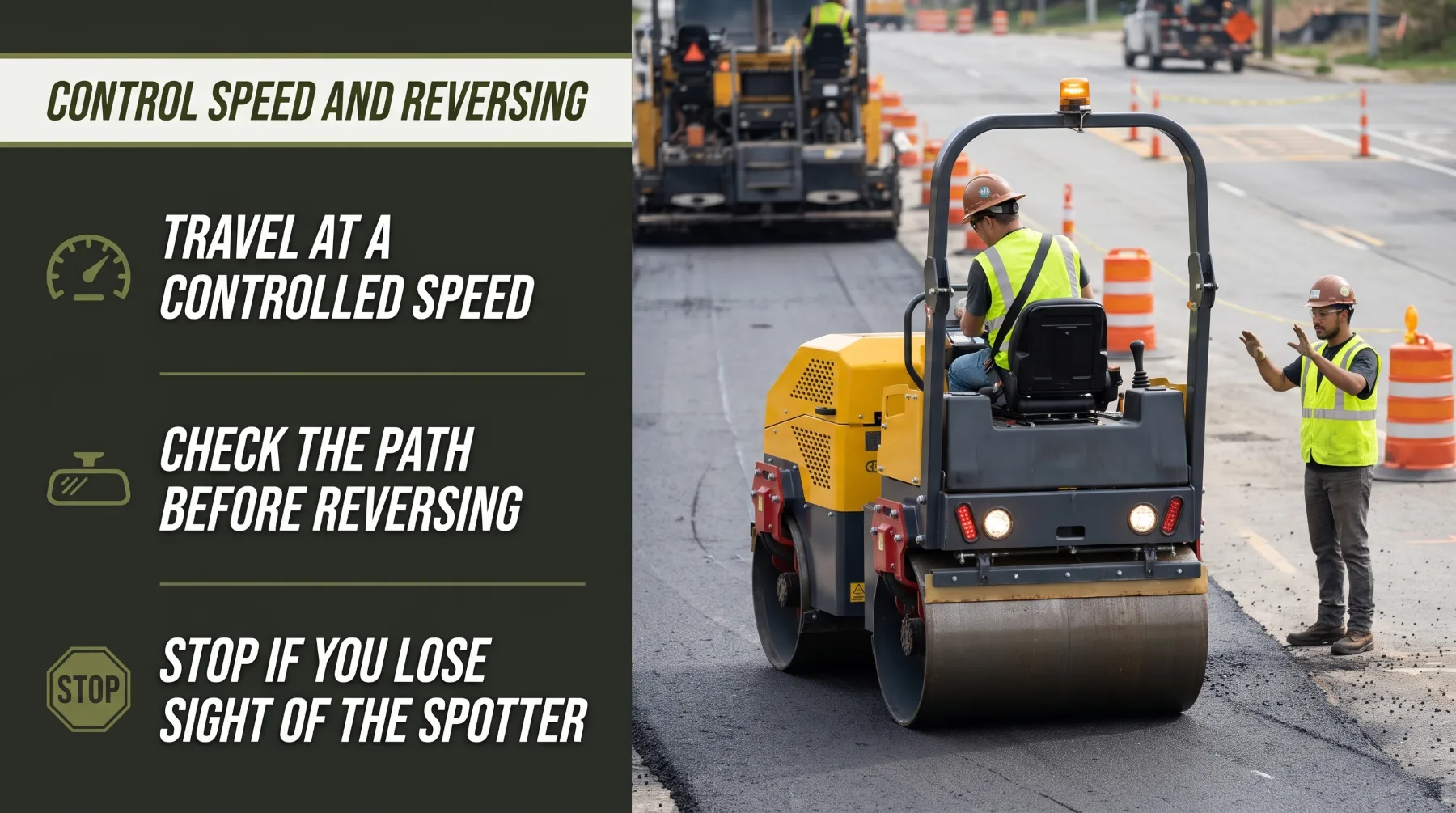
Rolling patterns involve constant back-and-forth travel, which means a roller reverses as often as it moves forward. Reversing combines limited rear visibility with frequent direction changes, and that combination makes it the leading cause of roller struck-by incidents. Controlled speed and disciplined reversing reduce that risk.
Choose a travel speed that suits surface conditions, visibility, and nearby personnel. Lower speeds also tend to produce better compaction results, so safety and quality usually point in the same direction. Slow down further on wet, loose, or freshly placed material, where stopping distances increase. Make direction changes smoothly instead of abruptly, since sudden reversals can mark a fresh asphalt mat and unsettle the machine.
Before every reversing movement, check the travel path in the mirrors and cameras, and look over your shoulder where the cab design allows. Make sure the backup alarm sounds. Where visibility is restricted or site procedures require it, use a trained spotter who stays in the operator's view at all times. The spotter should stand in a safe position outside the machine's travel path, use agreed signals, and have no other duties while directing the roller.
The most important rule for reversing is simple. If the operator loses sight of the spotter, the roller stops immediately and stays stopped until visual contact and communication are restored. The same applies when any worker or vehicle enters the travel path unexpectedly. Coordinate with haul truck drivers as well, so rollers and reversing trucks don't share the same space at the same time.
Key takeaway: Travel at a controlled speed, check the path before every reverse, use a trained spotter where visibility is limited, and stop whenever you lose sight of the spotter.
Work Carefully Near Edges and Slopes
Rollover is one of the most serious risks a roller operator faces. Many rollovers happen at unsupported pavement edges, embankments, soft shoulders, and trench lines, where the ground gives way under the weight of the drum. Others happen on slopes when the machine turns or travels across the grade.
Follow the manufacturer's limits for slopes, gradeability, and operation near embankments. Wherever possible, travel straight up and down slopes rather than across them, and avoid turning on a grade. Avoid sudden steering, braking, or direction changes that shift the machine's weight. Vibration can reduce stability on some slopes and loose surfaces, so follow the manual's guidance on when vibration should be used or switched off.
Keep a safe distance from unsupported edges, open excavations, and drop-offs. Soft shoulders, freshly placed fill, and saturated ground may look solid but collapse under a drum. When compacting near an edge, the site plan should define how close the roller may travel, and edge marking or delineators help the operator judge that distance. Inspect ground conditions before work begins, and again after rain or other changes. When the edge strength is uncertain, stop and consult the supervisor.
The rollover protective structure and seat belt work together. In a rollover, the belt keeps the operator inside the protected zone. An unbelted operator may be thrown from the seat and crushed by the machine. Always wear the seat belt, and never try to jump from a roller that starts to tip. Stay in the seat, hold on, and lean away from the direction of the fall.
Key takeaway: Respect slope and edge limits, travel straight up and down grades, stay well back from unsupported edges, and always wear the seat belt so the protective structure can protect you.
Park and Secure the Roller
A parked roller can still cause harm if it rolls, blocks traffic, or is left in an unsafe position. Correct parking at breaks, during shift changes, and at the end of the day protects workers, passing traffic, and the machine itself.
Park on firm, level ground outside traffic lanes, travel routes, and pedestrian walkways. Avoid parking on hot, freshly placed asphalt, since a stationary drum can leave depressions in the mat. Stay clear of trench edges, slopes, and soft shoulders. Where a roller must remain near live traffic, protect it with the cones, barricades, or lighting your traffic control plan requires.
Follow the shutdown procedure in the operator's manual. In general, stop the machine fully, place controls in neutral, switch off vibration, and apply the parking brake. Lower any equipment as instructed, let the engine idle down if the manual requires it, and then shut it off. Remove the key so unauthorized people can't start the machine. Use wheel chocks when site procedures or machine guidance require them, especially when parking on any grade.
Dismount carefully, facing the machine and keeping three points of contact on the steps and handholds. Never jump from the platform. Before maintenance, cleaning, or transport, engage the articulation lock where fitted, since an unlocked articulation joint can swing and crush anyone standing between the frames. Report any defects noticed during the shift so the next operator starts with a safe machine.
Key takeaway: Park on firm, level ground away from traffic and edges, follow the manual's shutdown steps, remove the key, chock when required, and use the articulation lock before maintenance or transport.
Conclusion
Safe road roller operation near workers and construction traffic depends on planning, inspection, communication, and controlled movement. A clear traffic management plan separates people from machines. Pre-operation checks confirm that brakes, steering, drums, and alarms work. Constant awareness of ground crews, disciplined reversing with trained spotters, and careful work near edges and slopes prevent the incidents that cause the most serious injuries. Proper parking keeps the site safe even when the roller isn't moving.
Build these practices into every shift, not just the first day of a project. Hold a short briefing before work starts, follow the manufacturer's checklist for your specific machine, and make stopping the default response whenever visibility or communication breaks down. That consistent approach protects your crews, keeps passing motorists safe, and helps every paving and compaction job finish on schedule.
Frequently Asked Questions
Should workers stand close to a moving road roller?
No. Workers should remain outside designated equipment travel and operating zones. When someone must approach, they should first get a clear acknowledgment from the operator.
When should a spotter be used?
Use a trained spotter when visibility is restricted, when reversing near workers or vehicles, or whenever site procedures require one. The spotter should stay in the operator's view at all times.
Why is reversing especially hazardous?
Rollers reverse constantly during compaction, and operators have limited rear visibility. Workers and vehicles can enter the travel path without warning, and backup alarms may be drowned out by surrounding noise.
What should an operator do if a worker enters the path?
Stop the machine immediately. Resume only after the area is clear and communication with the worker or spotter has been restored.