Currently Empty: $0.00
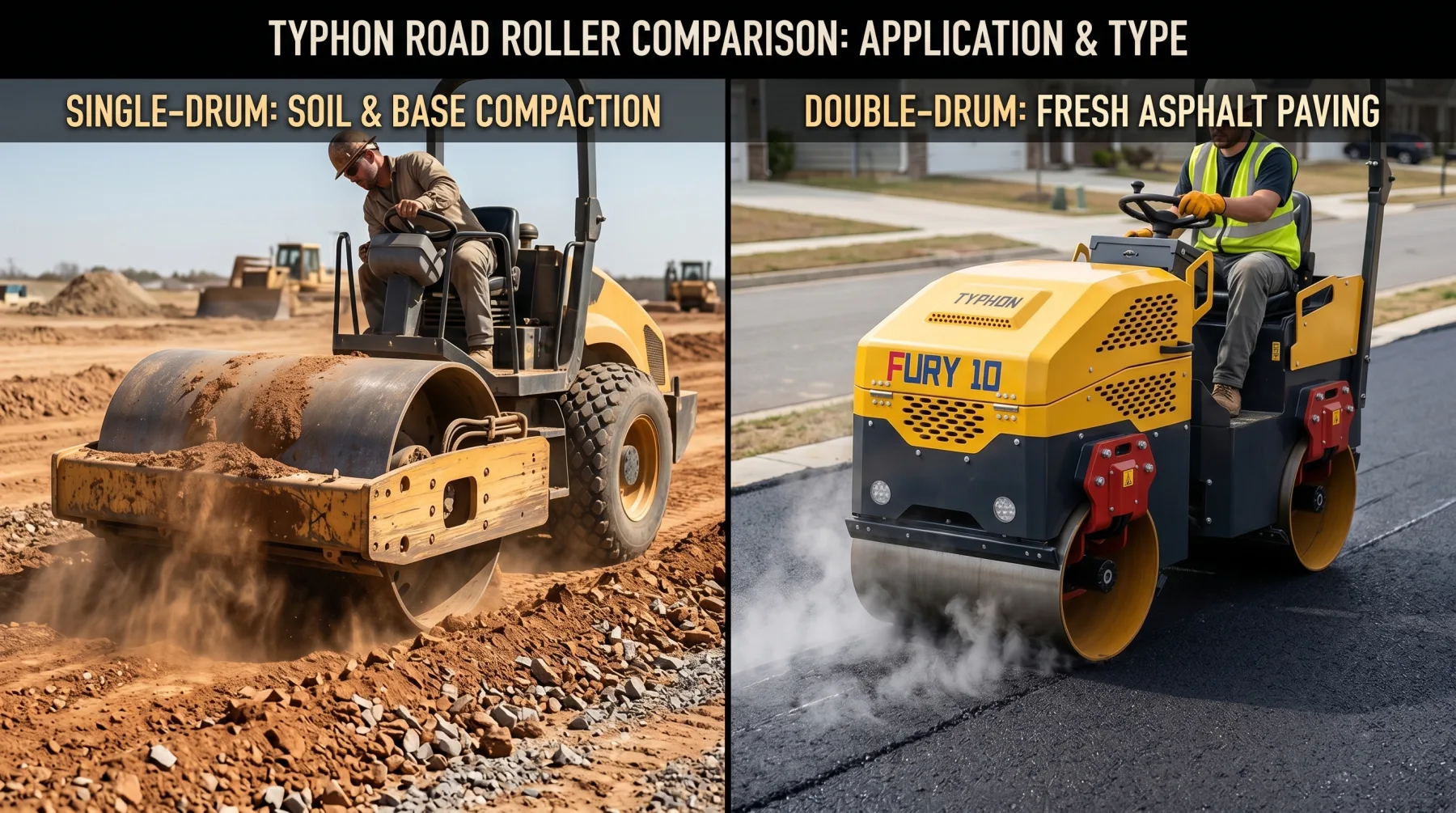
Decision Making on Single Drum or Double Drum
Choosing the wrong roller for your job site can cost you far more than just money. It can easily result in failed compaction tests, expensive contractor callbacks, and a surface finish that simply will not hold up to heavy traffic or harsh weather. When deciding between a single drum and a double drum roller, there is no universal “better” option, the right choice depends entirely on the specific type of material your crew works with most.
While both of these machines are designed to compact materials, they are engineered for completely different environments. A single drum roller is a powerhouse built for heavy-duty earthwork, aggressively packing deep into loose soil, dirt, and aggregate to create an unyielding foundation. In contrast, a double drum roller is precision-built to smooth, flatten, and finish hot-mix asphalt. If you invest in the machine that perfectly matches your daily projects, it will quickly pay for itself through faster operation, fewer required passes, and a flawless final product.
To help you generate the best return on your equipment investment, let’s break down exactly how each of these compactors works, where their capabilities differ, and which one makes the right financial sense for your business.
What a Single Drum Roller Is and How It Works
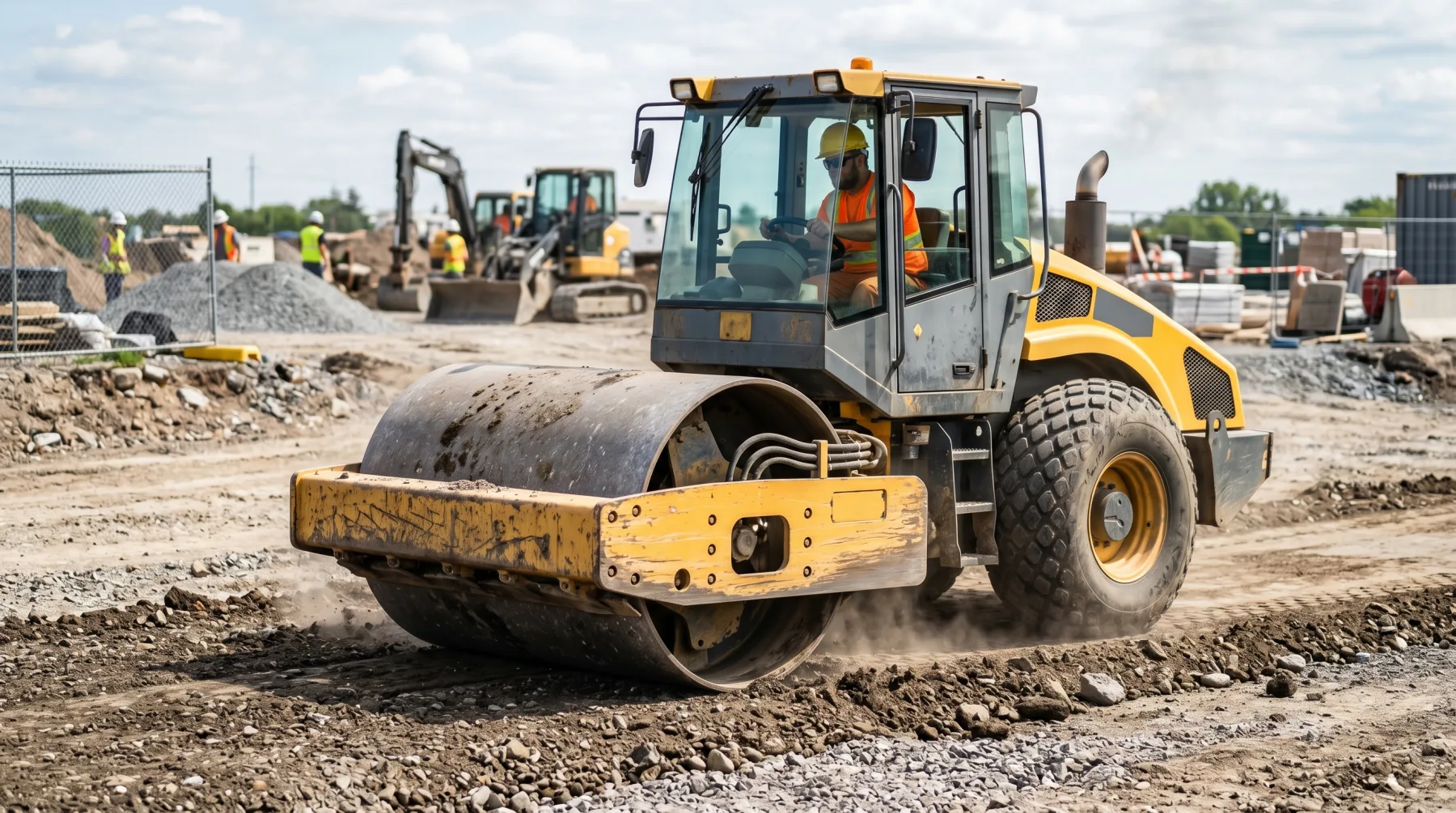
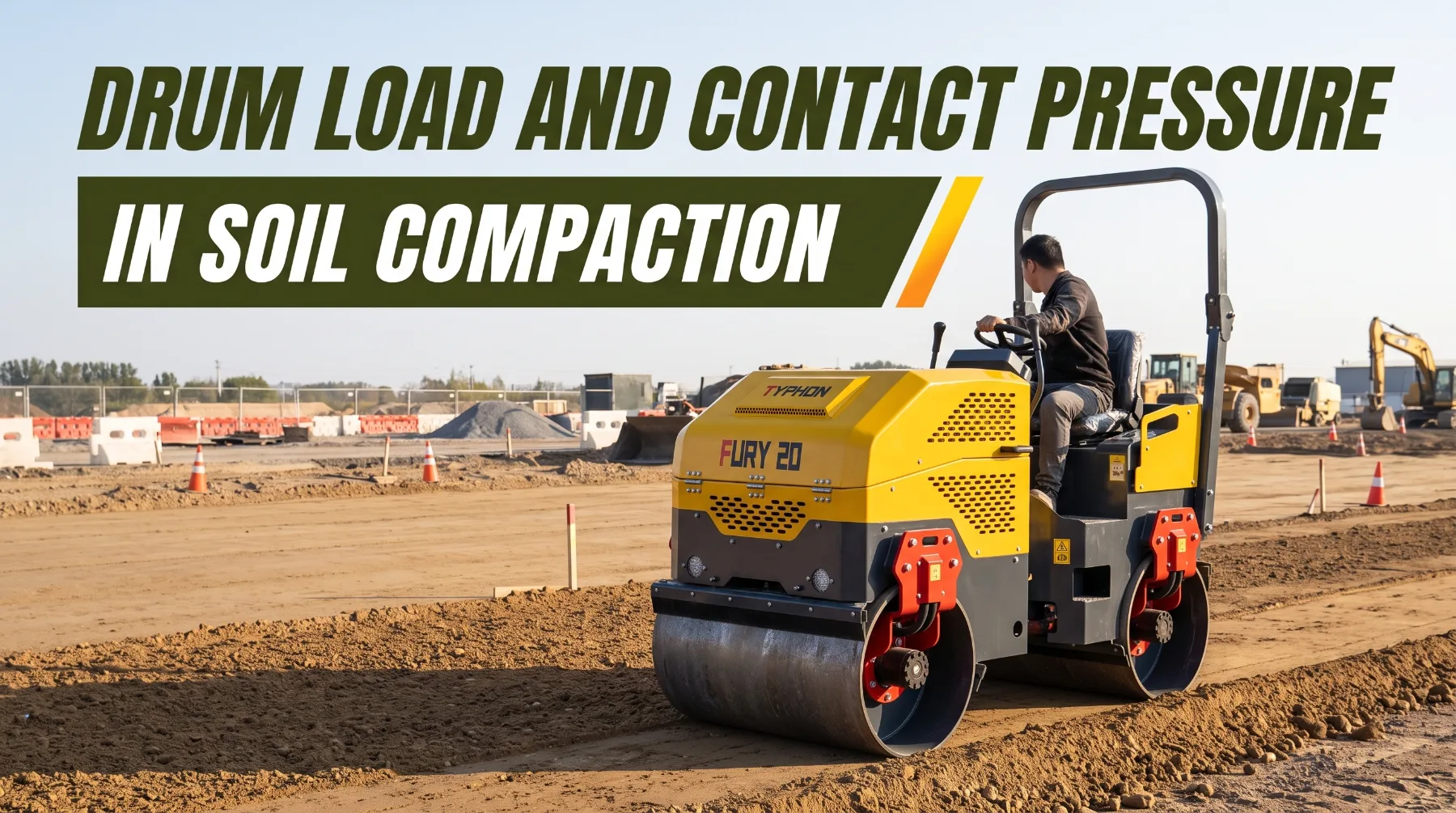
A single drum roller is a heavy construction machine built for preparing the ground. It has a large steel wheel, called a drum, at the very front. At the back, it has thick rubber tires. The front drum does all the heavy pressing, while the back tires grip the ground and push the machine forward.
This setup is made to pack dirt and rocks deep down. The heavy steel drum focuses all of its weight onto the ground. At the same time, the drum shakes or vibrates. This shaking pushes energy deep into the earth. It squeezes dirt, gravel, and crushed stone tightly together. This action creates a very strong and solid base. Every good road or paved surface needs this solid base before the real work begins.
The rubber tires at the back are very important. They give the machine excellent grip on loose dirt, bumpy areas, and steep hills. This strong grip is exactly what you need when you are driving over messy dirt piles to prepare the ground. A machine with only smooth drums would slip and get stuck. The rubber tires make sure the single drum roller can drive anywhere to finish the tough prep work.
What a Double Drum Roller Is and How It Works
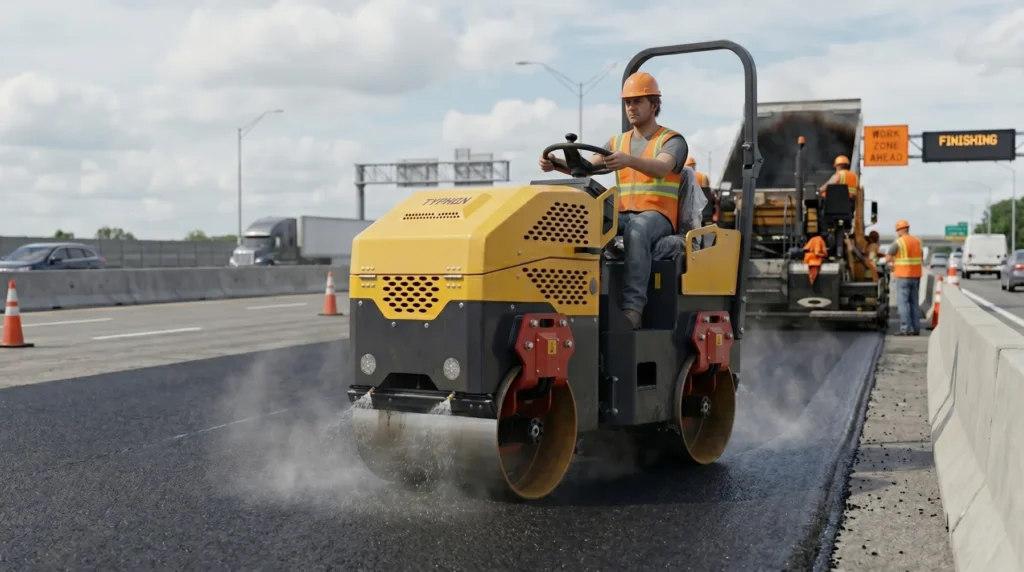
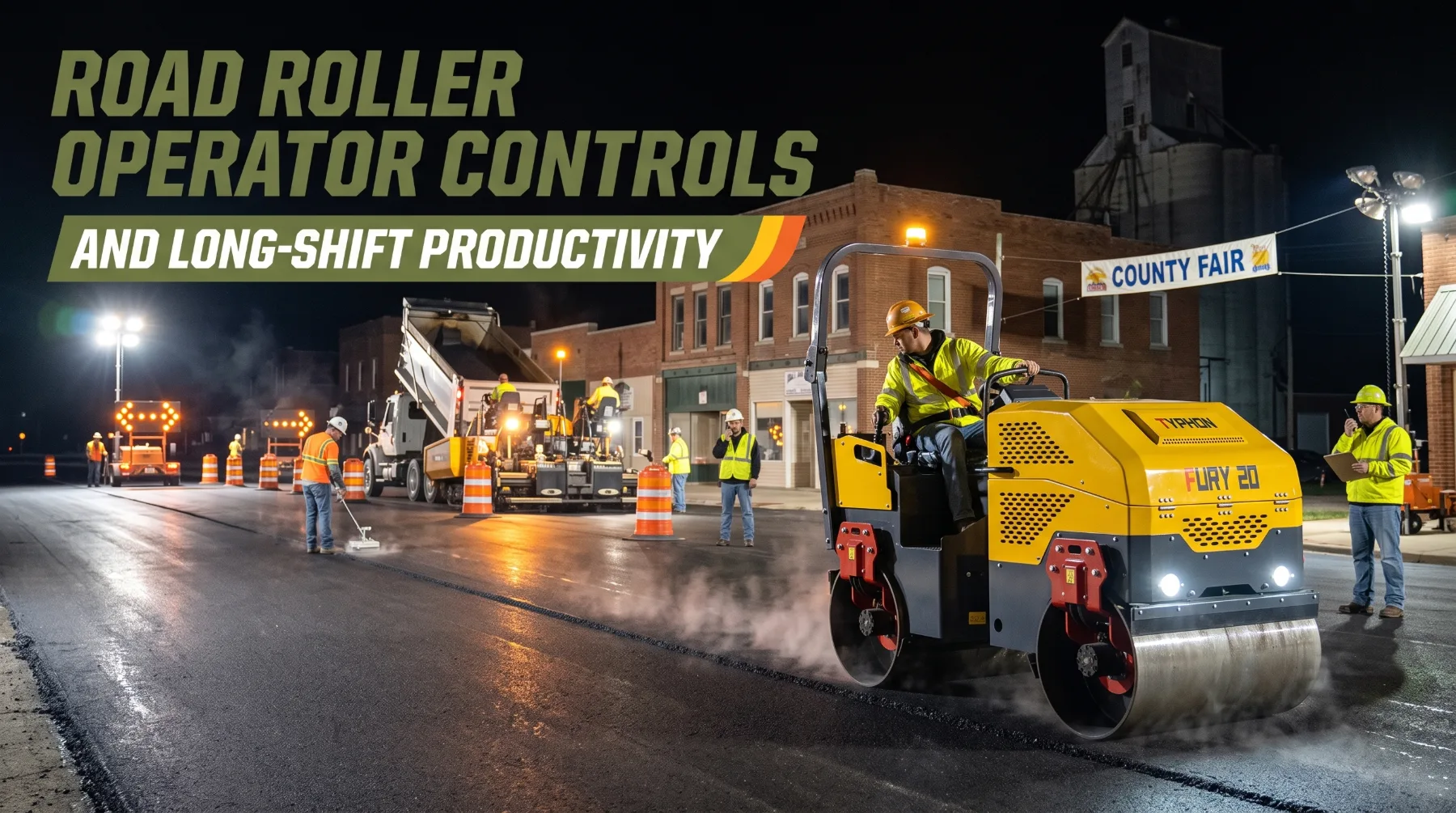
A double drum roller is often called a tandem roller. Instead of rubber tires in the back, it has a large steel drum at the front and a second steel drum at the rear. Both of these heavy metal wheels shake and press down on the surface as the machine drives forward and backward.
Having two smooth steel drums makes this machine perfect for creating a very flat and even finish. Every time the machine drives over an area, it packs the material down twice. First, the front wheel rolls over the ground, and then the back wheel follows right behind to press it again. This double pressing action is exactly what you need to squeeze hot asphalt tightly together. It leaves a smooth, clean, and professional surface behind.
Because both wheels are smooth steel, this roller does not grip loose dirt or muddy ground very well. Instead, it is built to roll gently over solid materials that are already flat. That makes it the perfect choice for finishing paved driveways, large parking lots, and long roads where a beautiful look and a strong surface are both very important.
Key Differences That Affect Your Results
Both machines press materials down, but the way they are built creates very different results on the job. Here is how they compare on the details that matter most.
Number of Drums: The biggest difference is easy to see. A single drum roller has one steel wheel in the front and rubber tires in the back. A double drum roller uses two steel wheels, one in the front and one in the back. This design changes how the machine grips the earth and what materials it can press.
Pressing Power and Depth Single drum machines deliver deep and heavy power. They focus all their weight and shaking energy to pack thick layers of dirt and rocks. This reaches deep underground to build a strong foundation. Double drum machines spread their weight over two wheels to create an even surface. They are made for smoothing the top layer instead of pushing power deep into the ground.
Movement and Grip A double drum machine turns easily on flat areas, which is great for road work. However, its smooth metal wheels will easily slip on loose dirt. The rubber tires on a single drum machine give it excellent grip on mud, hills, and bumpy ground. When the earth is messy, the single drum keeps rolling without getting stuck.
Best Materials for Each Machine Here is the rule to remember for your projects. A single drum roller is best for dirt, gravel, sand, and preparing the bottom base layer. A double drum roller is strictly for hot asphalt and creating a perfectly smooth final surface.
Which Applications Suit Each Roller Best
The best way to pick the right machine is to match the roller exactly to the kind of work you do every day. Each machine has a clear and specific job.
You should pick a single drum roller when your work is mostly about making a strong base under the pavement. It is the best machine for getting the base layers ready before paving starts. This includes tough jobs like preparing road foundations, getting building sites ready, filling trenches, and big earthmoving projects. If you spend your days pressing down loose dirt, gravel, sand, and crushed stone to make the ground ready for the next step, the single drum roller is your best tool.
On the other hand, you should pick a double drum roller when your main job is laying and finishing new pavement. This machine truly shines when you need to press hot mix asphalt flat on new roads and large commercial lots. It is exactly what you need for finishing long driveways, busy parking lots, city streets, bike paths, and even neighborhood sidewalks. Basically, if your project requires a smooth, dense, and perfectly uniform paved surface where the final appearance really matters to your paying customer, the double drum roller is the only tool for the job.
Pros and Cons of Each Roller
No single machine is perfect for every type of job. Looking honestly at the good and bad sides of each roller will help you pick the one that truly fits your daily work.
Single Drum Roller
Pros:
Deep and powerful pressing: It pushes heavy power deep underground to pack loose dirt and thick rocks tightly together.
Strong grip on bad ground: The thick rubber back tires easily drive over messy mud, steep hills, and bumpy dirt piles without getting stuck.
Perfect for foundations: It is the absolute best choice for preparing the earth before any heavy building or road construction begins.
Works with many materials: It can easily roll over and pack wet sand, dry dirt, chunky gravel, and large crushed stones.
Cons:
Not built for hot asphalt: It cannot create a perfectly flat top layer for new roads or parking lots.
Leaves ugly marks: The heavy rubber treads on the back tires will press tire track marks into soft, fresh pavement.
Rough finish: It is simply too rough to leave a clean and beautiful final surface for your customers
Double Drum Roller
Pros:
Excellent for smooth finishing: It is the perfect tool for making hot asphalt incredibly flat and even.
Presses more surface faster: Because both the front and back wheels press the ground, it finishes the paving job in fewer trips.
Clean and professional look: It leaves a flawless surface that customers love to see on their new driveways.
Easy control on hard ground: It drives very smoothly and steers perfectly on hard, paved areas.
Cons:
Poor grip on dirt: The smooth metal wheels will quickly slip, slide, and get stuck in soft mud or loose soil.
Cannot reach deep down: It does not have the heavy pushing power needed to pack thick base layers deep underground.
Only for paving: It is strictly made for finishing paved surfaces and cannot help you much with general dirt work or land clearing.
How to Make Your Final Decision
Are you still trying to decide between the two machines? You can use a very simple framework to make the best choice. You should buy or rent a single drum roller if your daily schedule revolves around dirt work and preparing the ground before any paving starts. If you spend your days packing loose soil, building heavy foundations, spreading crushed stone, or driving over bumpy hills, this is the exact machine you need to invest in.
On the other hand, you should choose a double drum roller if your business focuses heavily on laying and finishing fresh asphalt. When you need to build smooth driveways, clear parking lots, or beautiful city paths, this machine gives you the clean and perfect final look your customers expect. It is strictly for projects where a smooth surface is the most important goal.
Conclusion
Choosing between a single drum and a double drum roller really comes down to answering one simple question about your business. What kind of daily work fills up your schedule the most?
Single drum machines are built specifically to create strong foundations. They pack heavy dirt and loose rocks very deeply underground. Their big rubber tires also allow them to easily grip rough and uneven ground without getting stuck in the mud. On the other hand, double drum machines are strictly made for finishing asphalt. They use two smooth steel wheels to leave paved surfaces incredibly flat, clean, and perfectly uniform.
Neither machine is better than the other in every single situation. Each one is built to do a very specific job on the construction site perfectly. For your growing business, the smartest winning move is to choose the exact roller that perfectly matches your most common daily jobs. You want to pick the equipment that your crew will actually use the most often.
When you buy the compactor that fits your schedule best, it gives your customers much better results. It also completely replaces expensive rental fees and easily pays for itself year after year. You can always wait to buy the second machine until your first one is busy making you money every single day.