Currently Empty: $0.00
How to Compact a Gravel Road Properly for Maximum Durability
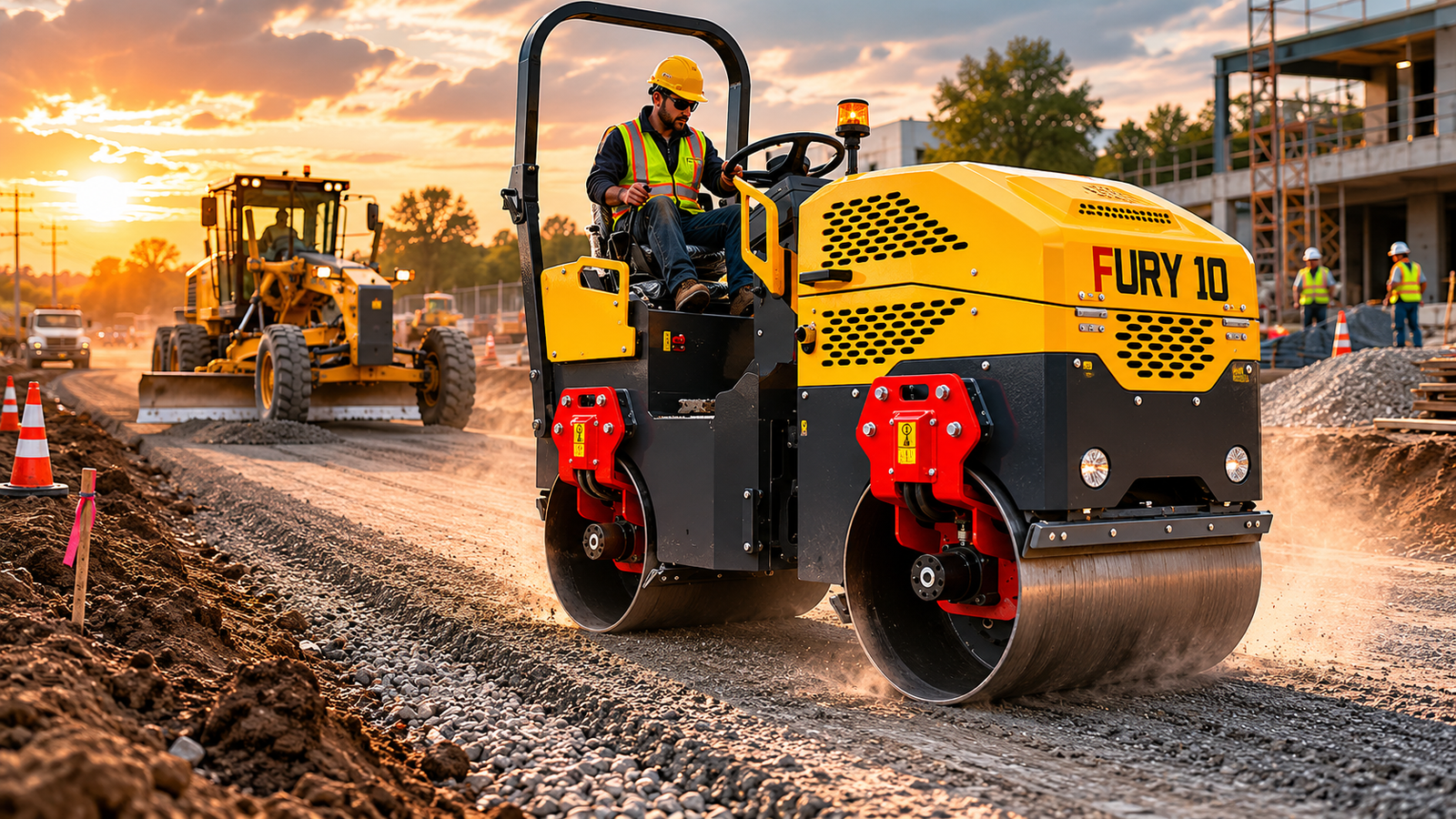
Constructing a durable gravel road requires a high level of engineering and precise execution. A poorly compacted gravel road acts as a massive liability, waiting to surface the moment heavy machinery or severe weather tests its limits. Building a surface that withstands heavy equipment, extreme weather, and continuous traffic requires much more than simply dumping and spreading aggregate across a designated path. Contractors and equipment buyers understand that the true strength of any unpaved surface lies in the invisible density of its materials. When you approach compaction as a strategic process rather than an afterthought, you deliver a final product that performs reliably under the most demanding conditions. This comprehensive guide details the critical steps to achieving optimal gravel road compaction. By mastering these foundational techniques, you guarantee superior project outcomes and establish a reputation for unparalleled reliability in the field. The foundation of any enduring road begins long before the first load of crushed rock arrives on the job site.
Mastering Subgrade and Base Preparation
Every successful infrastructure project relies entirely on the stability of its underlying foundation. Before introducing any imported aggregate to a site, contractors must address the native soil that will bear the ultimate weight of the road and its traffic. The subgrade acts as the structural anchor for the entire project, transmitting the heavy loads from the surface down into the earth. Understanding the composition and bearing capacity of this native ground remains the critical first step in professional road construction.
Contractors frequently face the temptation to rush the initial earthwork phase, treating the subgrade as merely a place to dump rock. Failing to properly clear and prepare this foundational layer guarantees severe problems later. Leaving organic matter, topsoil, or soft clay pockets in the subgrade creates hidden voids and weak points beneath the surface. When heavy vehicles eventually drive over these compromised areas, the native soil shifts and compresses unevenly. This internal movement inevitably translates upward, creating deep ruts, massive potholes, and localized structural collapses that ruin the newly placed gravel surface above.
The solution requires a rigorous, systematic approach to clearing and compacting the subgrade before any aggregate is ordered. Operators must strip away all organic material, roots, and unstable topsoil down to a firm, reliable base. Once the site is stripped, utilizing a heavy padfoot or sheepsfoot roller helps knead and compact the native soil, locking the earth together. If the subgrade proves inherently weak, integrating a geotextile fabric between the earth and the aggregate layer provides an essential stabilizing barrier that prevents the stone from sinking into the mud.
Investing time in meticulous base preparation yields an immediate and lasting business impact. A rock-solid subgrade drastically reduces the amount of expensive aggregate required to achieve the desired road elevation, keeping material costs under strict control. Furthermore, preventing premature structural failure eliminates the need for expensive, reputation-damaging warranty work and callbacks. When the base remains immovable, the entire project proceeds with greater efficiency, setting the stage for the crucial introduction of water.
Achieving Optimum Moisture Content
Water serves as both the greatest ally and the most destructive enemy in the realm of road construction. Achieving maximum density within a layer of gravel requires the precise application of moisture to lubricate the angular particles, allowing them to slide past one another and lock tightly into place. Professional contractors know that relying solely on the mechanical force of heavy machinery will never overcome improper soil hydration. Balancing this element dictates the overall success of the compaction effort.
Operating outside the narrow window of proper hydration creates immediate and severe limitations on the job site. If the gravel remains too dry, the mechanical vibration of the roller merely bounces the rocks around, generating massive clouds of hazardous dust while failing to achieve any meaningful density. Conversely, applying too much water turns the work zone into a saturated, muddy mess. Excess water fills the microscopic voids between the stones, creating hydrostatic pressure that actually pushes the aggregate apart. When a heavy roller passes over overly wet material, the gravel simply displaces and pumps outward rather than compacting downward.
To solve this challenge, crews must strictly target the Optimum Moisture Content for their specific aggregate blend. This specific percentage of water allows the material to reach its maximum dry density under compaction. Utilizing a dedicated water truck equipped with a calibrated spray bar ensures an even, controlled distribution of moisture across the entire work area. Experienced operators frequently perform field tests, taking a handful of the moistened aggregate and squeezing it tightly. The material should hold its shape firmly without leaving excessive mud or free water on the hand.
Mastering moisture control directly accelerates project efficiency and protects your bottom line. Hitting the exact moisture target allows your equipment operators to achieve passing density tests in fewer passes, significantly reducing fuel consumption and machine wear. By eliminating the wasted hours spent trying to compact dry stone or waiting for saturated mud to dry, construction business owners maximize their daily operational output. With the moisture precisely dialed in, the focus naturally shifts to managing the volume of material being processed.
Controlling Lift Thickness for Complete Consolidation
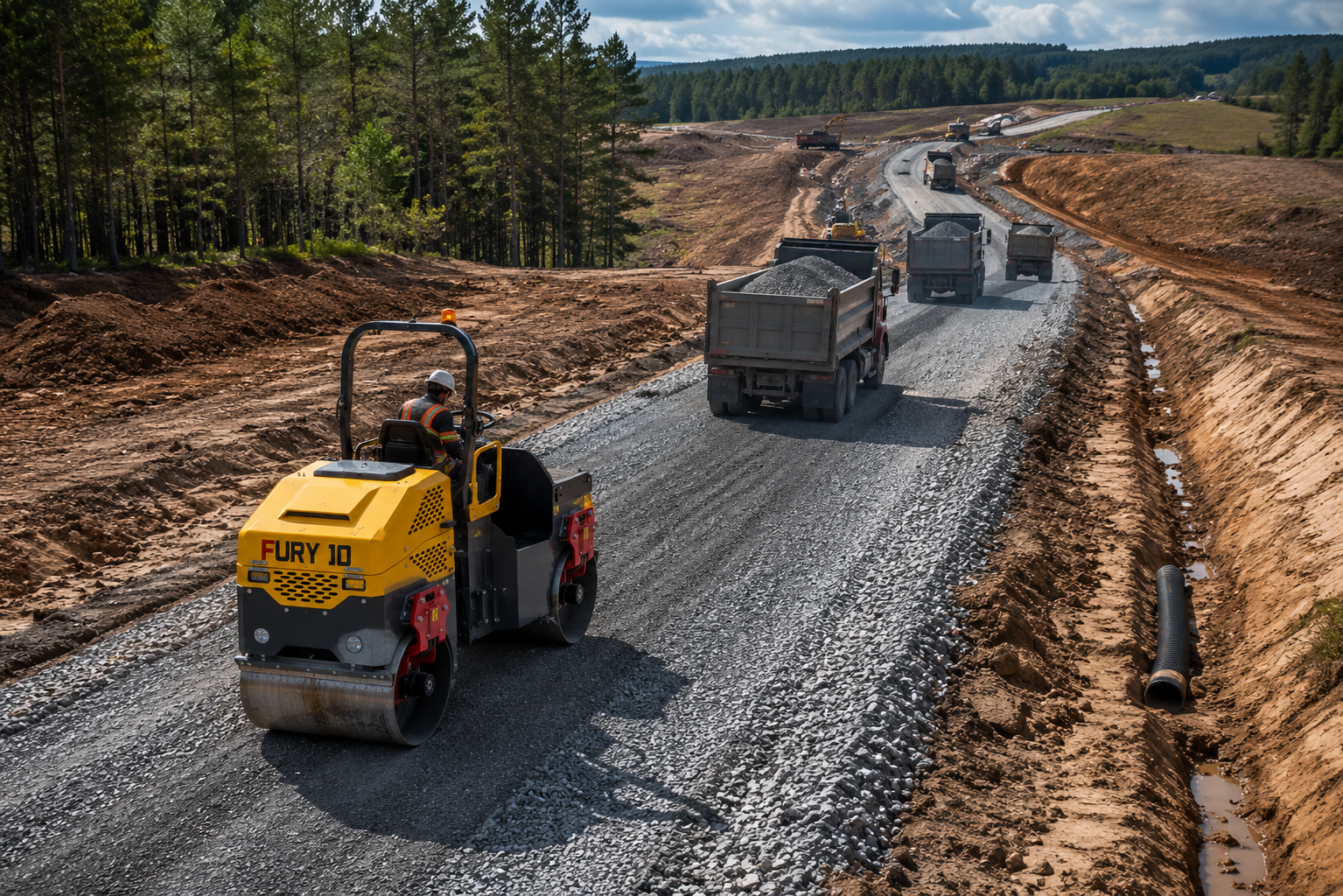
Placing the aggregate material onto the prepared subgrade is a process that requires strict discipline and precise execution. Compaction equipment, no matter how heavy or advanced, only projects its compressive force to a certain depth. Building the elevation of a gravel road requires layering the material in controlled stages to ensure that every square inch of the stone matrix receives adequate mechanical energy.
A common and highly destructive mistake involves dumping massive piles of gravel and attempting to grade and compact the entire depth all at once. When operators attempt to compact a single, excessively thick layer of aggregate, the energy from the roller dissipates long before reaching the bottom. This creates a deceptive phenomenon known as bridging, where the top few inches appear dense and hard, while the lower sections remain loose and uncompacted. The moment fully loaded logging trucks or heavy construction equipment utilize this poorly constructed road, the rigid top crust breaks through into the loose material below, causing catastrophic surface failure.
The professional standard requires placing and compacting the aggregate in measured layers, commonly referred to as lifts. For standard road base and crushed gravel, contractors should restrict the uncompacted lift thickness to no more than six to eight inches. Grader operators must carefully spread the moistened material evenly across the roadbed, ensuring a uniform depth before the roller makes its first pass. By working methodically lift by lift, the compaction energy easily penetrates the entire depth of the layer, forcefully interlocking the angular stones and the fine binder dust into a monolithic structure.
Adhering to strict lift thicknesses guarantees the long-term durability of the roadway and protects your profit margins. A road built with uniformly dense lifts easily withstands punishing traffic loads without rutting or shifting. This structural integrity drastically lowers ongoing maintenance costs for the property owner and reflects highly on the contractor’s expertise. Furthermore, getting the density right the first time prevents failed compaction tests that force crews to rip up and rework entire sections of the road. Securing this level of density naturally depends on utilizing the correct machinery for the task.
Selecting and Operating the Right Compaction Equipment
The mechanical force applied to the gravel ultimately dictates the final density and longevity of the road. Modern construction equipment offers an impressive array of compaction technologies, but applying the correct type of force to the specific material remains an essential skill. Crushed gravel relies on a specific mixture of large angular stones for strength and fine rock dust to act as a binding cement. Coaxing these diverse materials into a tightly locked matrix requires specialized machinery.
Contractors often limit their potential by relying on outdated or mismatched equipment, attempting to compact aggregate base with static weight alone. Using a standard static steel-drum roller or relying simply on the weight of a loaded dump truck fails to agitate the material sufficiently. Static weight pushes the top layer down but does not vibrate the finer particles into the voids between the larger stones. This limitation leaves the road surface vulnerable to rapid deterioration, as the loosely bound stones will quickly ravel and wash away during the first heavy rainstorm.
The definitive solution involves utilizing a heavy-duty single-drum vibratory roller designed specifically for soil and aggregate compaction. The dynamic force generated by the vibrating drum sends deep shockwaves through the gravel, temporarily reducing the friction between the particles and allowing them to settle into their tightest possible configuration. For the final finishing passes, deploying a pneumatic tire roller provides a unique kneading action that seals the surface tightly, preventing water penetration. Operators must run these machines at controlled, deliberate speeds, allowing the vibratory impacts sufficient time to work through the material.
Deploying the proper compaction machinery drastically enhances equipment longevity and overall project profitability. Using the right tool for the job prevents operators from overworking undersized machines, saving thousands of dollars in premature wear and tear on hydraulic systems and drive motors. The superior density achieved by vibratory compaction creates a pavement-like surface that significantly increases the safety and operating speeds for all subsequent vehicular traffic. However, even the most densely compacted road will fail rapidly if it lacks proper geometric design.
Establishing Precision Grading and the Road Crown
Compaction without proper geometry creates an inherent design flaw that nature will ruthlessly exploit. A gravel road must actively manage the precipitation that falls upon it, directing water away from the driving surface as quickly as possible. The physical shape of the road, established by a skilled grader operator prior to final compaction, serves as the primary defense against the erosive power of standing water.
The most frequent limitation observed in amateur road construction is the creation of a completely flat driving surface. When a gravel road lacks a defined slope, rainwater has nowhere to go and subsequently pools directly on the driving lanes. As vehicle tires pass through these puddles, the hydraulic pressure forces the fine binding materials out of the aggregate matrix. This process rapidly accelerates the formation of severe washboarding and deep, expanding potholes that can quickly render the road impassable for standard vehicles.
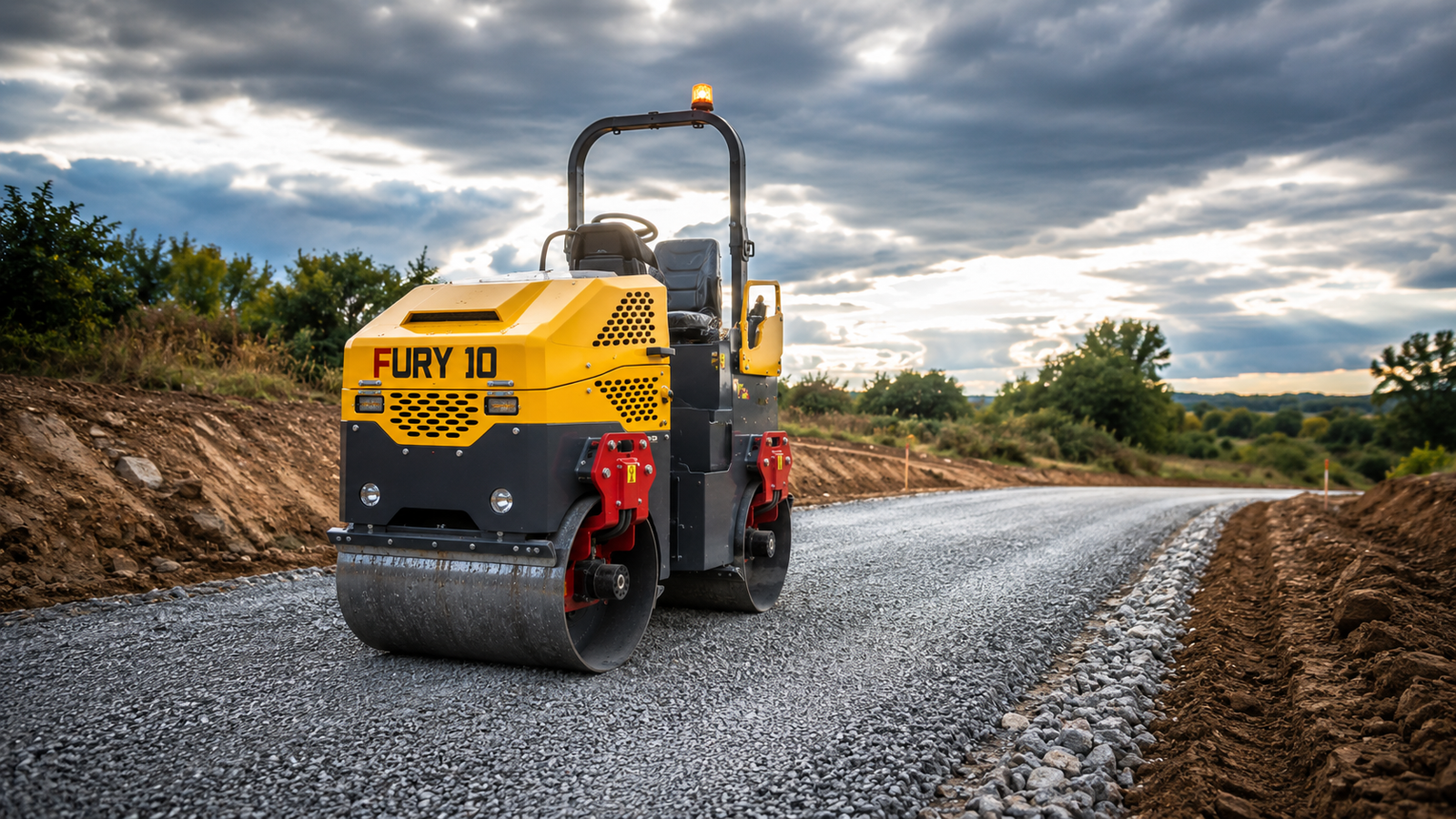
Preventing this destruction requires establishing a precise, continuous crown along the entire centerline of the roadway. A proper crown dictates that the center of the road sits noticeably higher than the outer edges, typically sloping downward at a rate of one-half inch to three-quarters of an inch per foot of width. Motor grader operators must meticulously carve this profile into the final lift of gravel before the vibratory roller locks the shape into place. This geometric design allows gravity to instantly pull surface water outward into the designated drainage ditches, keeping the structural base dry and secure.
Implementing a strict crowning strategy transforms the drainage performance and safety profile of the project. A well-drained road maintains its friction and stability during heavy rain events, keeping equipment operators and commercial drivers safe from dangerous hydroplaning or loss of control. For the construction business owner, delivering a properly crowned road drastically reduces the client’s future maintenance costs by preventing the rapid washouts that plague flat surfaces. Maintaining this pristine condition over the years requires a proactive approach to surface management.
Implementing Strategies for Long-Term Maintenance
Even perfectly compacted and properly crowned gravel roads face natural degradation over time. The constant friction of heavy commercial tires, combined with freeze-thaw cycles and severe weather events, inevitably wears away the fine binding materials that hold the surface together. Acknowledging this reality and planning for the eventual wear ensures that the initial construction investment yields maximum value over the decades.
A critical problem arises when property owners and facility managers adopt a reactive approach, waiting until the road is completely impassable before taking action. Neglecting minor surface defects allows small depressions to capture water, which quickly expands minor ruts into massive structural failures. By the time maintenance crews are finally dispatched to fix a severely neglected road, they often find that the expensive aggregate base has been completely lost to the surrounding ditches, requiring a massive and costly re-graveling operation.
The solution lies in executing a routine, proactive maintenance schedule that addresses surface wear before it compromises the base layer. Maintenance crews should utilize motor graders to lightly scarify and reshape the top few inches of the road surface during the damp spring and fall seasons. This process recaptures the displaced gravel from the shoulders, pulls it back to the centerline to reestablish the crown, and blends it smoothly before applying fresh compaction. Additionally, maintaining clear drainage ditches and managing encroaching vegetation ensures that water continues to flow away from the roadbed.
Committing to proactive maintenance secures the long-term durability of the infrastructure and provides a massive return on investment. Routine grading requires a fraction of the budget needed for a total road reconstruction, preserving the property owner’s operational capital. Consistent maintenance also ensures that heavy equipment and commercial fleets can travel the road at optimal speeds without suffering expensive suspension damage or blown tires. This commitment to ongoing excellence reflects the exact kind of reliability that builds lasting, profitable relationships in the construction industry.
Conclusion
Constructing a high-performancegravel road demands a professional understanding of soil mechanics, precise moisture control, and strategic equipment operation. When contractors abandon the simplistic approach of just dumping rock and instead focus on rigorous base preparation, controlled lift thicknesses, and proper geometric crowning, they produce infrastructure capable of withstanding the most punishing industrial environments. The science of compaction is the hidden force that transforms loose aggregate into a reliable, pavement-like surface that drives commerce and connectivity.
For construction business owners and equipment buyers, mastering these techniques translates directly into enhanced operational efficiency and dominant market reputation. By investing in the right vibratory compaction equipment and adhering strictly to established engineering principles, you eliminate costly rework and drastically lower long-term maintenance liabilities for your clients. Evaluate your current fleet capabilities today, upgrade your compaction strategies, and commit to delivering the uncompromising durability that sets your projects apart from the competition.