Currently Empty: $0.00
Road Rolling in Bridge Construction Projects
A bridge is judged by its span, its piers, and its deck, but the quality of the ride across it and the longevity of the structure often come down to something far less glamorous: how well the ground and surfaces were compacted. Road rolling is the unsung discipline that ties a bridge into the road on either side, packs the layers that carry traffic, and prevents the settlement and roughness that plague poorly built approaches. Done right, it is invisible. Done poorly, it shows up as a jarring bump at every bridge end and as premature failures that haunt a project for years.
The trouble is that compaction near bridges is more demanding than compaction on open roadways. The zones are tight, the tolerances are strict, and the structures nearby are sensitive to vibration and load. Treating bridge compaction like ordinary roadwork, or reaching for the wrong roller in a confined space, quietly undermines the very structure the crew worked so hard to build.
This guide is written for road and bridge contractors, civil engineers, construction business owners, and project managers who want to get compaction right where it matters most. We will walk through compacting approach fills and embankments near bridges, packing bridge deck surfaces and asphalt overlays, working in confined bridge construction zones, selecting the right roller for the job, hitting the density targets that protect structural integrity, and managing the cost and schedule efficiency that keep a project profitable. Get rolling right, and the whole bridge performs better for it.
Compacting Approach Fills and Embankments Near Bridges
Every bridge meets the road through an approach embankment, and that transition zone is where so many ride-quality problems begin. The fill placed behind abutments and along the approach must be compacted in controlled layers, because this material carries traffic loads directly into the structure and supports the pavement that leads onto the deck. It is foundational work, performed before anything visible takes shape, and it sets the stage for how the finished bridge will ride and last.
The complication is that approach fills are notorious for settling. When fill behind an abutment is placed too thick, compacted unevenly, or rushed, it consolidates under traffic over time and creates the dreaded “bump at the bridge,” that sharp dip where the settled approach meets the rigid structure. That settlement is not just a comfort issue; it accelerates pavement damage, stresses the abutment, and triggers costly repairs and complaints long after the crew has left the site. The rigid bridge does not settle, so any movement in the approach shows up as an abrupt, punishing transition.
Disciplined road rolling solves this from the ground up. Place fill in thin, uniform lifts and compact each layer to the specified density before the next goes down, paying particular attention to the confined zone directly behind the abutment where larger rollers struggle to reach. Matching the roller and the lift thickness to the material, and verifying density as you build, produces an approach that behaves as one with the structure. For your operation, that means fewer callbacks, a smoother ride that reflects well on your workmanship, and an approach that protects the bridge investment for decades. With the embankment built solid, attention turns to the surfaces that carry traffic across the span itself.
Compacting Bridge Deck Surfaces and Asphalt Overlays
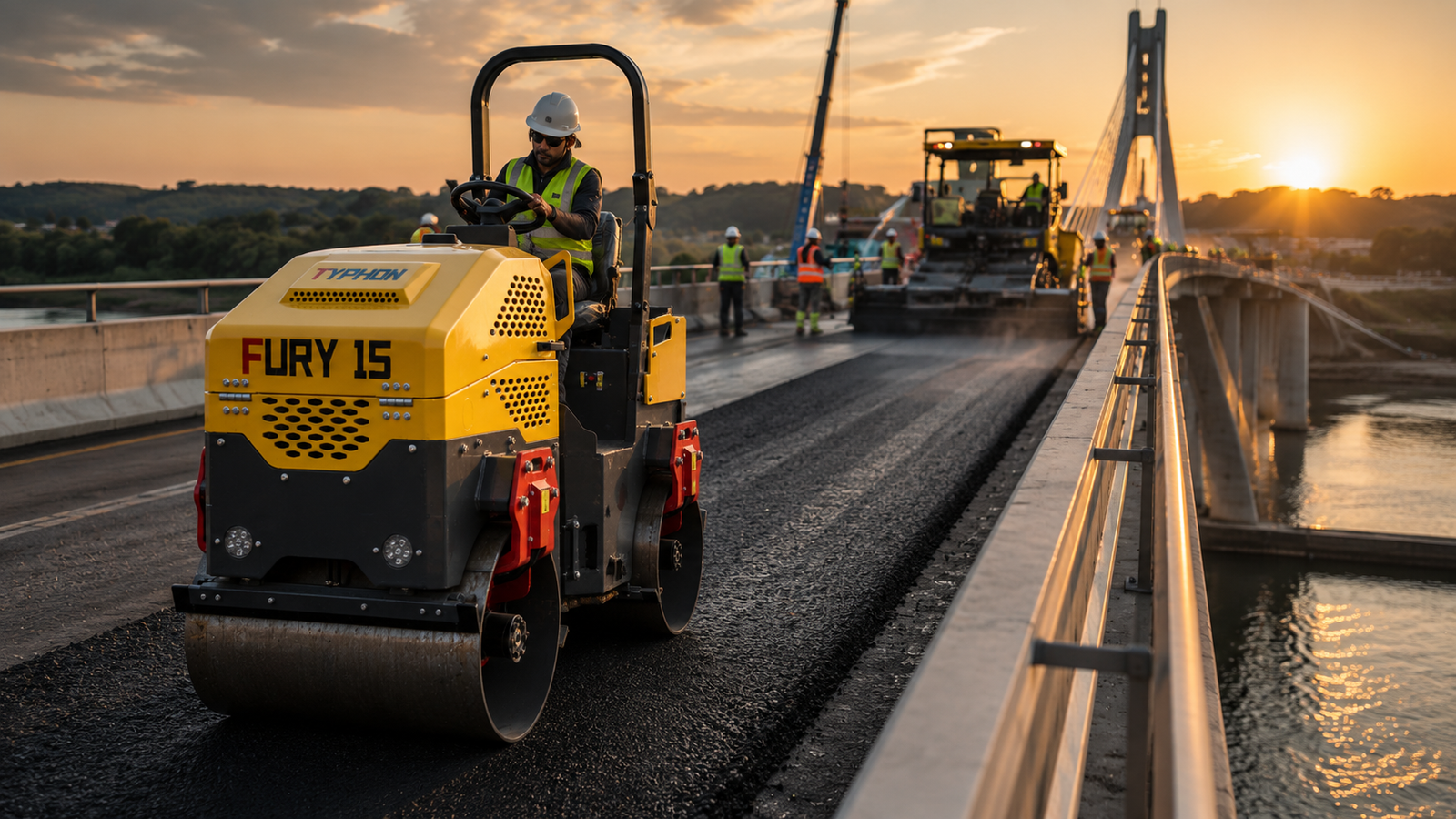
The deck is where traffic actually meets the bridge, and the surface laid across it must be compacted to perform. Whether the crew is placing an asphalt overlay on a deck, finishing a wearing course, or compacting a membrane-protected surface, proper rolling determines the smoothness, density, and waterproofing of the layer that takes the daily pounding of vehicles. This is precision work performed on top of a structure, and it leaves little margin for error.
The challenge is that a bridge deck is not the same as solid ground beneath open roadway. The deck is a relatively thin, supported structure, and heavy or aggressive compaction can transmit damaging force into it, while under-compaction leaves the asphalt porous, prone to water intrusion, rutting, and early failure. Poorly compacted overlays trap water that freezes, expands, and breaks the surface apart, and on a bridge that water can reach the deck and reinforcement below, attacking the very components that hold the span up. The stakes of getting deck compaction wrong are higher than almost anywhere else on the project.
The answer lies in controlled, appropriate compaction tuned to the deck. Select rollers and amplitude settings that achieve target density without overstressing the structure, often favoring lighter machines or reduced vibration over a supported span. Roll in consistent patterns to reach uniform density across the full width, and verify the finished mat meets specification for density and smoothness. A properly compacted deck surface sheds water, resists rutting, and rides smoothly, protecting both the traffic and the structure underneath. For your business, that means durable overlays that hold up under inspection and traffic alike, and the reputation for quality that wins the next bridge contract. Delivering that quality, though, depends on being able to work effectively in the tight spaces a bridge presents.
Working in Confined Bridge Construction Zones
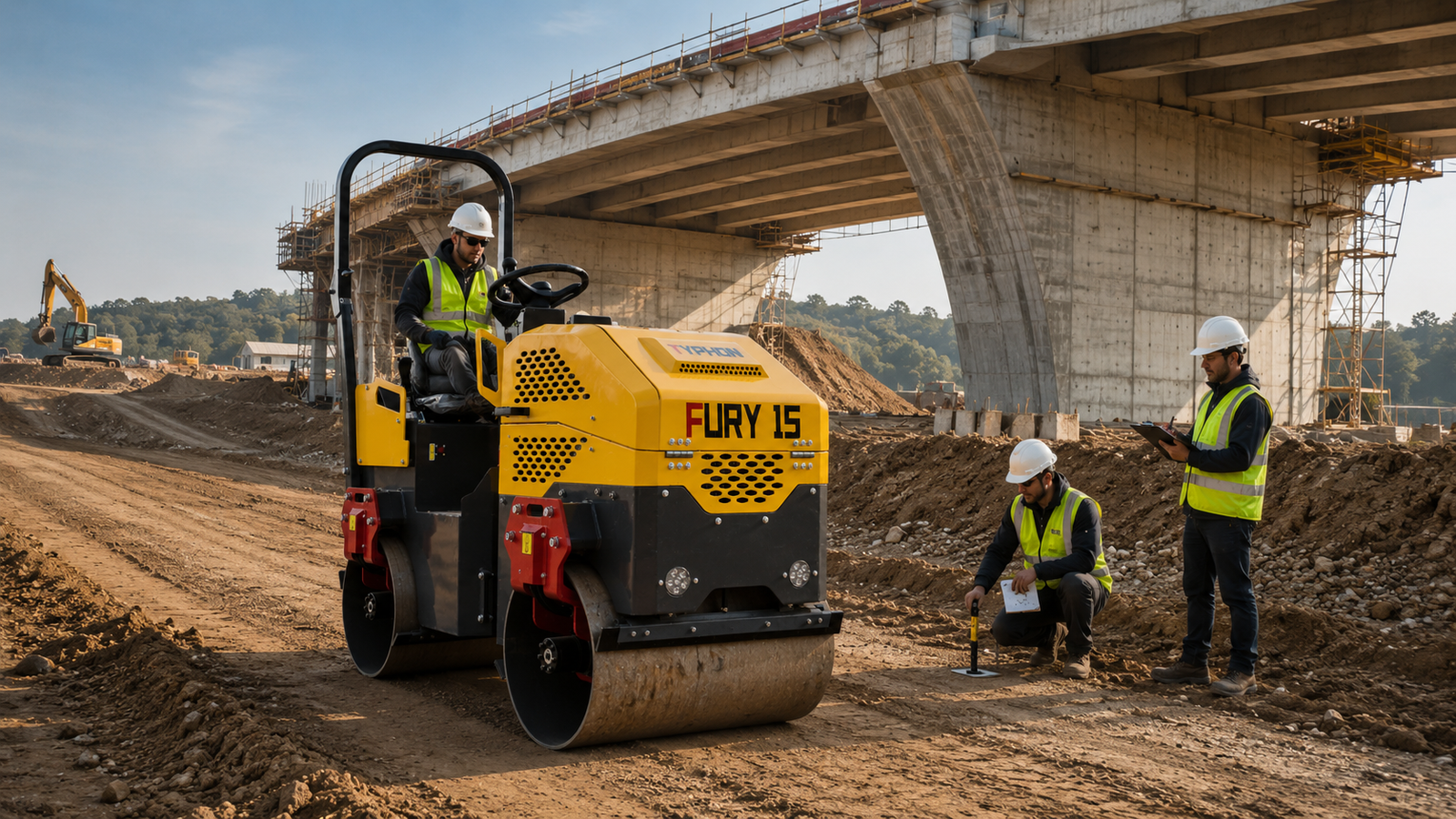
Bridge sites are among the most constrained environments in heavy construction, and compaction work has to happen within those limits. Crews contend with narrow approaches, the tight pocket directly behind abutments, work alongside parapets and barriers, phased construction beside live traffic, and the simple reality that a bridge is a fixed structure with edges that leave no room for error. The space available for rolling is often a fraction of what an open roadway offers.
The difficulty is that standard, full-size rollers cannot always reach or safely operate in these confined zones. A large drum roller cannot get tight against an abutment wall or compact the narrow strip beside a barrier, and forcing oversized equipment into cramped quarters risks striking the structure, working too close to a deck edge, or leaving critical areas under-compacted because the machine simply could not reach them. Those missed zones, behind abutments and along edges, are exactly the spots where settlement and failure tend to start.
Matching equipment to the space resolves this. Deploy smaller drum rollers, walk-behind rollers, and plate compactors to reach the confined areas a full-size machine cannot, and plan the compaction sequence so every zone, including the tight pocket behind the abutment, receives proper coverage. Working deliberately near edges and structures protects both the bridge and the crew. For contractors and project managers, this approach ensures complete compaction across the entire site, eliminates the weak spots that confined zones so often hide, and keeps phased work moving safely alongside traffic. Reaching every zone, however, is only part of the equation; choosing the right type of roller for each task is just as decisive.
Selecting the Right Roller: Static, Vibratory, and Pneumatic
Compaction is not a one-machine job, and bridge projects in particular demand that crews match the roller type to the material and the situation. The three principal categories, static, vibratory, and pneumatic, each compact in a fundamentally different way, and understanding those differences is what separates efficient, specification-meeting work from wasted passes and failed density tests.
The mistake many operations make is defaulting to whatever roller is on hand, regardless of the layer being compacted. A vibratory roller run at full amplitude on a sensitive bridge deck can damage the structure, while a static roller alone may never reach target density in a thick granular fill. Using the wrong machine, or the wrong setting, either fails to achieve the required compaction or risks harming the surface and structure, and both outcomes cost time and money to correct.
The disciplined approach is to deploy each roller where it excels. Vibratory rollers, which combine static weight with dynamic force, compact granular fills and embankment layers efficiently and are workhorses for approach work, provided amplitude is dialed back near structures. Pneumatic, or rubber-tired, rollers knead asphalt surfaces with a kneading action that seals and densifies the mat, making them valuable for finishing overlays. Static rollers offer controlled, vibration-free compaction ideal for sensitive locations and final smoothing on a deck. Selecting the right machine, and the right settings, for each layer ensures you hit density without harming the structure, reduces rework, and keeps the project on specification. The reason all of this matters so much comes down to one critical objective: density.
Achieving Proper Compaction Density to Protect Structural Integrity
Everything about road rolling on a bridge project ultimately serves a single goal: achieving the specified compaction density. Density is the measure of how tightly the soil, granular base, or asphalt has been packed, and it directly determines the strength, stability, and durability of every layer. On a bridge, where loads concentrate and structures are unforgiving, hitting the right density is not a recommendation; it is the line between a sound structure and a developing failure.
The danger of falling short is significant and often hidden until it is too late. Under-compacted fill continues to consolidate under traffic, causing settlement, voids, and the bridge-end bumps that plague so many spans. Inadequately compacted base or overlay lets water infiltrate, weakening the layers and attacking the deck and reinforcement beneath. Because these problems develop gradually beneath the surface, a job that looks finished can be quietly compromised, surfacing as expensive structural repairs and safety concerns years down the road.
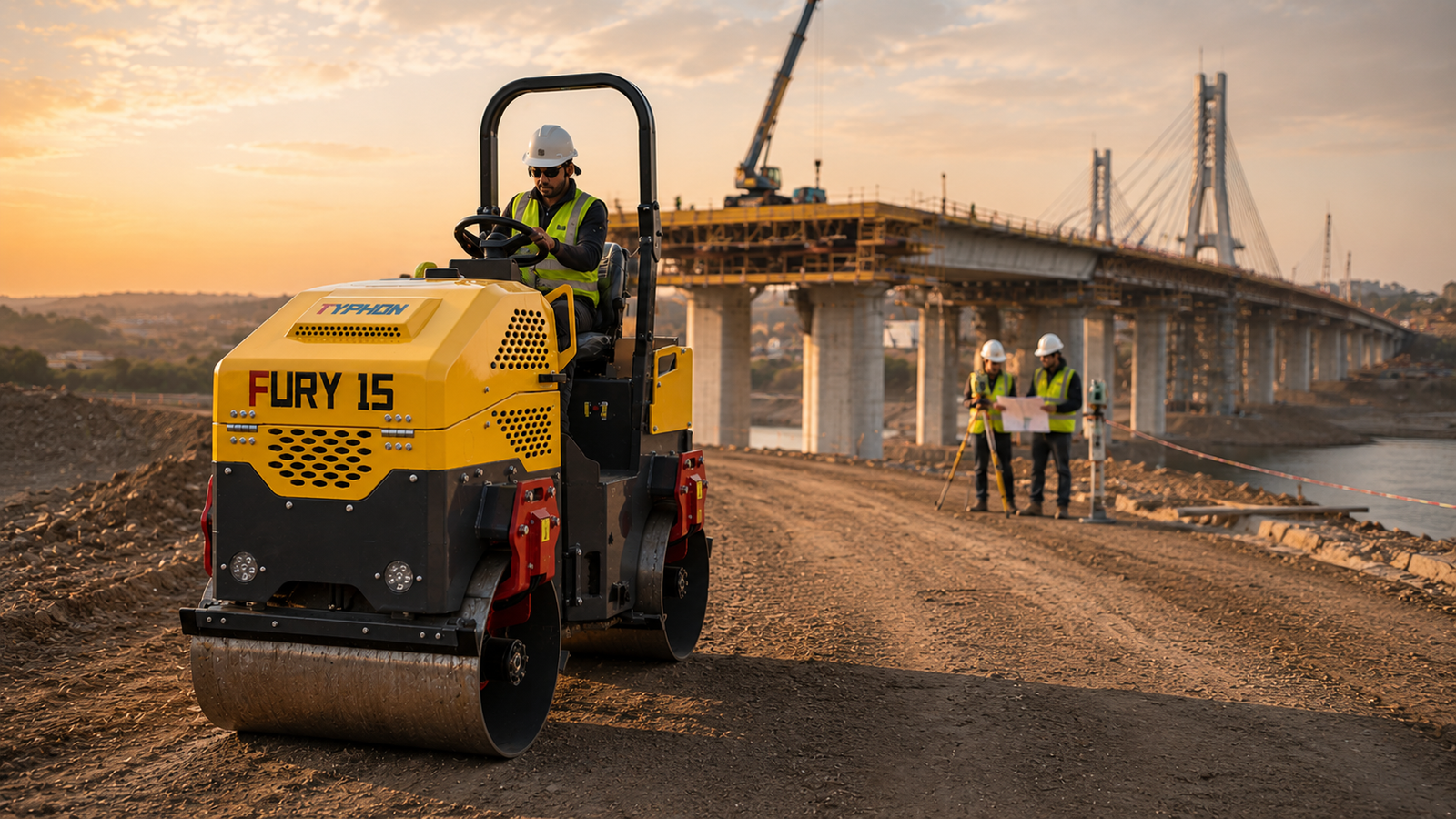
Meeting density targets reliably takes verification, not assumption. Compact each layer to the specified density and confirm it with appropriate testing, whether nuclear density gauges, sand cone tests, or other accepted methods, before moving on. Control lift thickness, moisture content, and roller passes to reach target consistently, and document the results as proof the work meets specification. Hitting proper density protects the structural integrity of the bridge and its approaches, prevents settlement and water damage, and shields your operation from the liability and rework that failed compaction invites. That same disciplined approach, beyond protecting the structure, also protects the project’s bottom line.
Managing Cost and Schedule Efficiency
Bridge projects run on tight budgets and tighter schedules, and how compaction work is planned and executed has a real effect on both. Rolling is rarely the largest line item, but inefficient compaction, wasted passes, rework after failed tests, and idle equipment quietly erode margins and push milestones, while well-managed rolling keeps the whole project flowing.
The complication is that compaction sits on the critical path more often than crews realize. Each layer must be compacted and frequently tested before the next phase can begin, so slow, disorganized, or failed compaction stalls everything downstream. Bringing the wrong equipment, making unnecessary passes, or discovering inadequate density after the fact forces crews to redo work, delays following trades, and inflates both labor and equipment costs at exactly the wrong moment.
Smart planning turns compaction into a schedule asset rather than a bottleneck. Match the right rollers to each task so density is achieved in the optimal number of passes, stage compact equipment that mobilizes easily and fits the confined bridge environment, and sequence the rolling so testing and approval keep pace with construction. Getting compaction right the first time eliminates rework, keeps following phases on track, and controls fuel, labor, and equipment expenses. For contractors and project managers, that efficiency protects the project’s profitability and reputation, delivering a sound bridge on time and on budget. That combination of quality and efficiency is the entire reason road rolling deserves a deliberate place in every bridge plan.
Conclusion
Road rolling earns a central place in bridge construction by protecting the structure where it is most vulnerable. Properly compacted approach fills and embankments prevent the settlement that creates bridge-end bumps, controlled deck and overlay compaction delivers a smooth, watertight surface that protects the span beneath, and the right equipment reaches the confined zones a full-size roller cannot. Matching static, vibratory, and pneumatic rollers to each task achieves the density that safeguards structural integrity, and disciplined planning keeps the whole effort efficient on cost and schedule. Across every phase, quality compaction is what ties a bridge to its road and makes it last.
For road and bridge contractors, civil engineers, construction business owners, and project managers, the path forward is clear. Treat compaction as a planned, verified discipline rather than a routine afterthought, match your rollers to the materials and the tight spaces a bridge demands, and confirm density at every layer before you build on it. Do that consistently, and you will deliver bridges that ride smooth, stand strong, and hold up under inspection and traffic for decades. Where on your next bridge project could better-planned compaction protect both the structure and your schedule?