Currently Empty: $0.00

How Weather Conditions Affect Road Rolling
The heavy construction industry operates on strict deadlines, precise engineering specifications, and tight profit margins. While project managers can control their equipment selection, material suppliers, and labor schedules, they remain entirely at the mercy of one uncontrollable variable: the environment. You can engineer the perfect asphalt mix and deploy the most advanced machinery on the market, but the moment the sky opens up or the temperature drops, the physics of your job site completely change.
Understanding the profound weather effects on road rolling is an absolute necessity for any serious contractor or infrastructure professional. Environmental factors dictate exactly how materials behave under pressure and directly influence the operational limits of your heavy equipment. This comprehensive guide explores how rain, extreme cold, intense heat, and high winds impact your daily paving operations. By mastering the relationship between weather and material science, your crew can adapt their strategies, safeguard compaction quality, and deliver exceptionally durable infrastructure regardless of the forecast.
The Critical Balance of Soil Moisture
Every reliable roadway begins with a stable, deeply compacted foundation, and the success of that foundation depends entirely on moisture control. Natural soil and crushed gravel require a very specific percentage of water, known as the optimum moisture content, to lock together tightly under the weight of a road roller. When the weather behaves predictably, contractors use water trucks to dial in this exact moisture level. However, unexpected rainstorms completely destroy this delicate balance, introducing massive volumes of uncontrollable water into the subgrade.
When rain saturates the base materials, the earth loses its structural stability and turns into a highly fluid matrix. If an operator attempts to run a heavy vibratory roller over a wet subgrade, the water physically pushes the soil particles apart, making target density impossible to achieve. Instead of compacting the earth, the roller simply pushes the mud forward in a destructive wave, creating deep ruts and ruining the foundational grade. The machine loses its necessary traction, the ground pumps under the weight of the drums, and all forward progress on the job site grinds to an expensive halt.
The real-world consequences of ignoring saturated ground are severe scheduling delays and massive required rework. Contractors must halt their rolling operations and allow the sun and wind to naturally dry the earth, or aggressively till the soil to accelerate evaporation. Forcing compaction on wet ground guarantees that the moisture will remain trapped beneath the final pavement, inevitably leading to sinkholes, uneven settlement, and catastrophic early pavement failure.
The Shrinking Window in Cold Environments
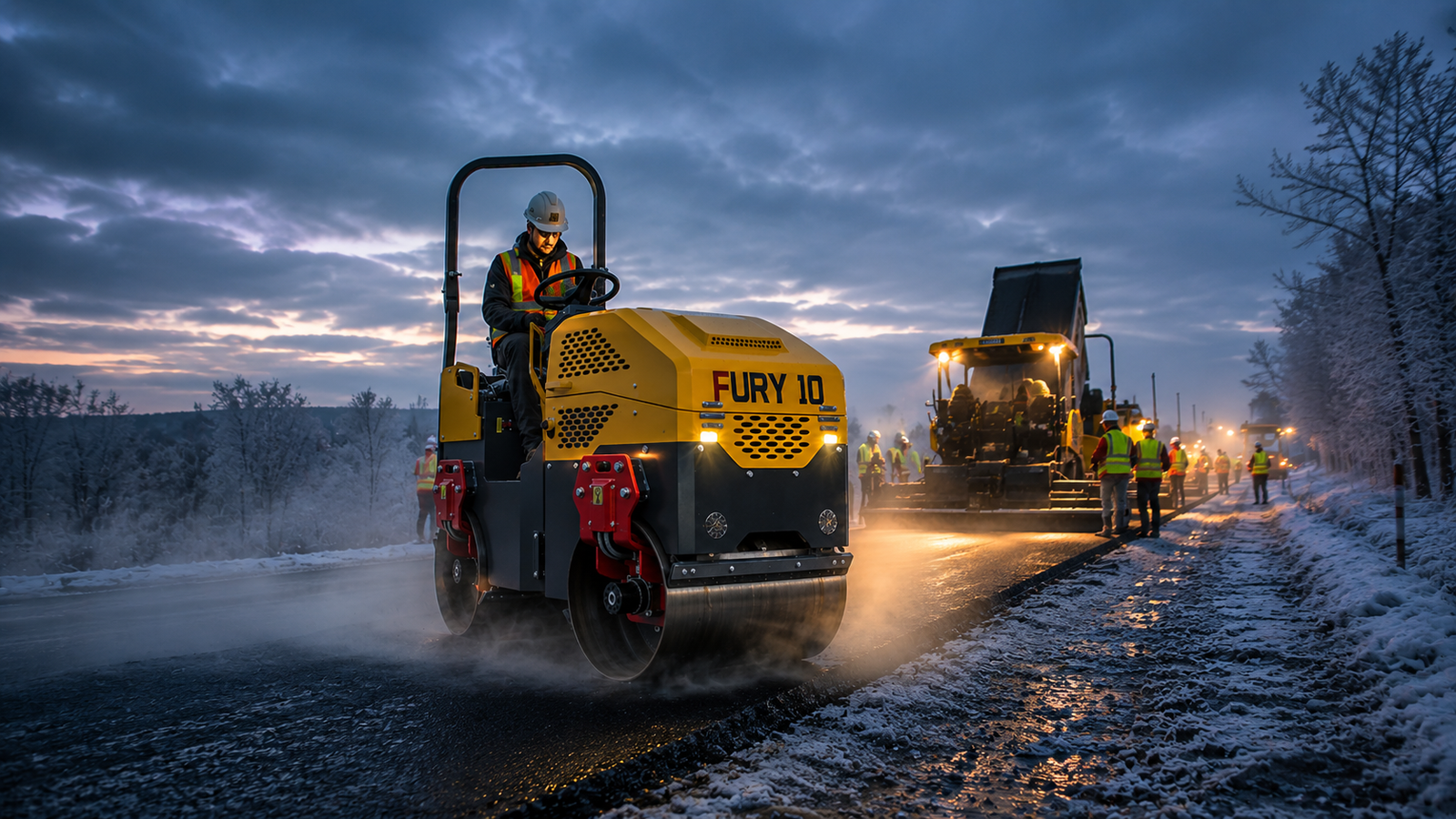
While rain destroys the foundational dirt, plummeting temperatures wage war directly on the asphalt surface. Hot-mix asphalt relies entirely on retained heat to remain pliable enough for proper compaction. When the material leaves the paver, the clock immediately starts ticking. Road rolling in cold weather presents a severe logistical challenge because the freezing ambient air and the frigid base layer aggressively pull heat out of the fresh pavement.
This rapid heat loss drastically shortens the compaction window—the specific amount of time operators have to achieve target density before the asphalt becomes too stiff to manipulate. If the asphalt cools below its minimum compaction temperature, the bitumen physically hardens and locks the aggregate in place. When operators attempt to continue rolling past this point, the immense downward pressure of the steel drums will physically shatter the crushed stone rather than shifting it into a tighter formation. This over-rolling creates micro-fractures throughout the surface, destroying the structural integrity of the mat.
Failing to adapt to these freezing conditions results in exceptionally poor density and devastating surface defects. Because the material was not properly compacted while hot, the resulting road will suffer from a high percentage of air voids, making it highly susceptible to water infiltration and winter freeze-thaw damage. Overcoming cold weather requires operators to keep their breakdown rollers positioned tightly behind the paver, ensuring the initial passes happen immediately while the core temperature remains at its peak.
Wind as the Silent Disruptor of Density
Most contractors instinctively watch the radar for rain and monitor the thermometer for freezing temperatures, but they frequently overlook the destructive power of a steady breeze. Wind acts as a silent, invisible disruptor on the paving site, drastically altering how weather affects asphalt compaction. A strong, continuous wind causes rapid convective cooling across the top surface of the freshly laid asphalt, pulling the heat away from the mat significantly faster than cold, stagnant air.
This rapid top-down cooling creates a dangerous phenomenon known as surface crusting. While the core of the asphalt mat remains boiling hot and pliable, the top half-inch instantly cools and forms a stiff, rigid crust. When the heavy road roller passes over this unevenly heated material, the rigid surface crust violently stretches and tears. These surface tears ruin the smooth, glass-like finish required for highway projects and act as open channels for future water damage.
To combat this aggressive surface cooling, paving crews must drastically alter their standard operational workflow. Operators must increase their machine speed slightly and utilize the heavier vibration settings earlier in the process to force density before the crust fully develops. Understanding how wind steals your compaction time allows project managers to deploy more rollers to the site, ensuring the required pass counts are completed before the weather permanently compromises the material.
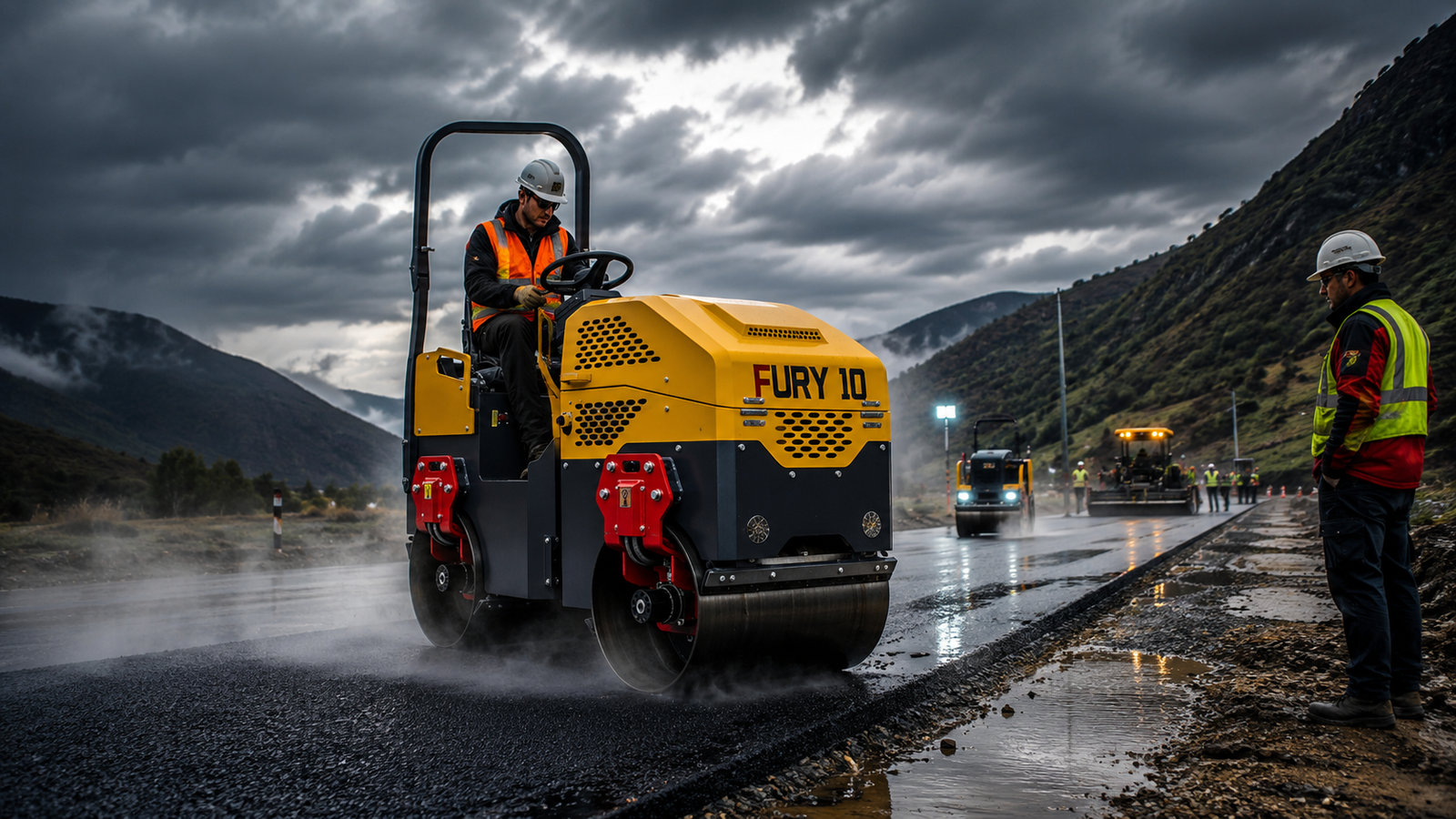
Battling Extreme Heat on the Job Site
While cold weather and wind steal heat from the asphalt, working in the middle of a brutal summer heatwave presents the exact opposite set of challenges. When the ambient air temperature soars and the sun beats down on a black asphalt surface, the pavement retains its heat for an incredibly long time. While this creates a massively extended compaction window, it also keeps the asphalt in a soft, tender state that easily deforms under the weight of heavy machinery.
If an operator rolls tender asphalt too aggressively, the material simply shoves and displaces horizontally beneath the steel drums rather than packing downward into a dense formation. The heavy road roller can easily sink into the soft mat, leaving deep, permanent drum marks and severe ruts that ruin the final ride quality of the road. Furthermore, extreme summer heat heavily impacts overall road roller performance. The intense thermal load puts a massive strain on the machine’s engine and hydraulic cooling systems, increasing the risk of overheating and unexpected breakdowns.
Beyond the machinery and materials, intense heat presents a severe safety concern for the operators themselves. Sitting inside a glass cab positioned directly over three-hundred-degree asphalt accelerates physical fatigue and cognitive strain. Contractors must ensure their equipment features premium, climate-controlled operator stations and strictly monitor the tender zone of the asphalt, allowing the material to properly cool and stabilize before initiating the final static finishing passes.
Strategic Adjustments for Paving Crews
Achieving flawless compaction density is not about forcing the environment to submit to your schedule; it is about intelligently adapting your schedule to the environment. True infrastructure professionals do not cancel projects at the first sign of difficult weather; they deploy strategic adjustments to mitigate the risks. When you understand exactly how temperature and moisture dictate material behavior, you can manipulate your job site variables to maintain absolute quality control.
Contractors must dynamically adjust their equipment use, pass count, and roller proximity based entirely on real-time site conditions. On a freezing, windy morning, project managers might deploy three vibratory rollers directly behind the paver to guarantee density in a shortened time frame. During a humid, scorching afternoon, that same crew might spread their rollers out, utilizing pneumatic tire rollers to knead the tender asphalt gently without shoving it.
Mastering these weather-driven operational shifts protects your profit margins by drastically reducing the need for expensive rework. Your crews remain highly productive, your operators stay safe, and your equipment performs efficiently regardless of the climate. Embracing this level of environmental awareness builds a powerful reputation for your business, proving that you can deliver unyielding quality under the most demanding conditions.
Elevating Planning and Equipment Value
The fundamental strength of any infrastructure network relies on the intelligence and adaptability of the professionals building it. Weather conditions will always remain an unpredictable adversary on the job site, constantly threatening your compaction quality, pavement durability, and project timelines. However, when you treat the weather as a known engineering variable rather than a frustrating surprise, you completely neutralize its destructive power.
Understanding exactly how the climate impacts material behavior helps contractors make vastly superior decisions regarding project planning and equipment procurement. Take a highly strategic look at your upcoming paving season and demand reliable, high-performance machinery capable of conquering these environmental extremes. By investing in premium compaction equipment and training your operators to read the weather accurately, you guarantee that your company will consistently deliver fiercely reliable, long-lasting roads that stand the test of time.