Currently Empty: $0.00
What’s the Difference Between a Skid Steer and a Wheel Loader?
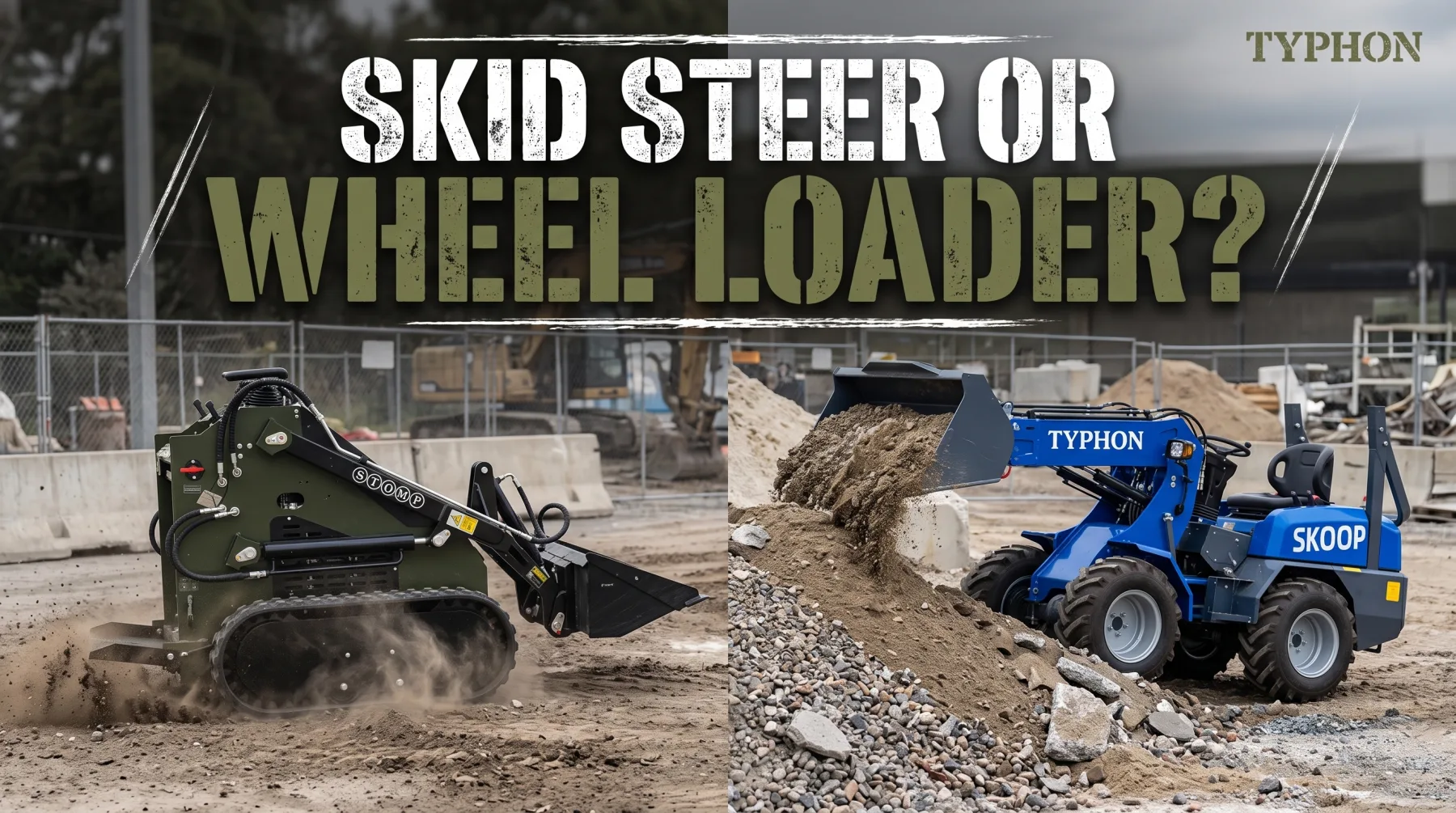
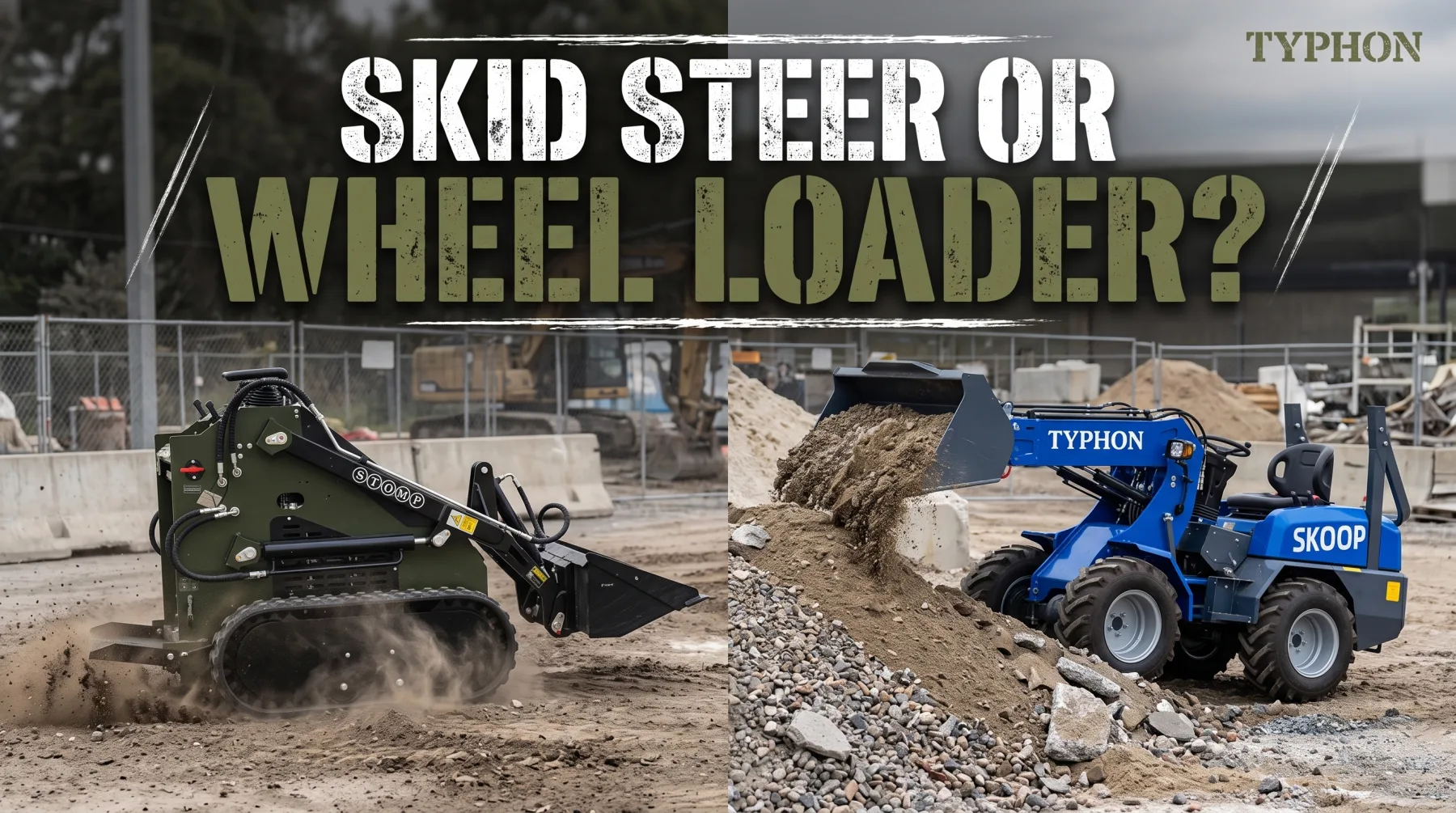
You’re standing on a job site with a pile of material to move, some grading to finish, and a tight corner to work around. Two machines could handle parts of the work: a skid steer and a wheel loader. They both scoop, lift, and carry, so at a glance they seem to do the same thing. Then you put them to work and the differences show up fast. The skid steer spins in place to dodge obstacles but tires quickly on long carries across the yard. The wheel loader plows through material by the bucketful but can’t squeeze into the spots the skid steer reaches without thinking. Pick the wrong one for the bulk of your work, and you spend the whole project fighting the machine instead of finishing the job. That confusion costs contractors real money. A skid steer and a wheel loader look like cousins, but they’re built for different missions. One is a compact, agile do-everything machine that thrives in tight quarters and switches tasks in minutes. The other is a heavy-hauling material mover that eats through loading, stockpiling, and long carries where the smaller machine would struggle. Buy or rent the wrong one and you either wear out an undersized machine or pay for muscle you rarely use. The right call comes down to matching the machine to your actual work: the space you operate in, the material you move, the attachments you run, and the volume you handle each day. Get that match right and the machine becomes an extension of your crew. Here’s how these two differ by design, where each one earns its keep, how they stack up on capacity and versatility, and how to decide which one belongs on your site.
Separating the Two by Design and Size
At their foundation, these machines are engineered around opposite priorities, and that shapes everything about how they perform. One is built small and nimble; the other is built large and powerful. Recognizing what sets them apart mechanically is the first step toward knowing which one fits your work.
Steering and How They Move
The clearest divide is how each machine turns. A skid steer steers by driving its wheels or tracks at different speeds, letting it pivot in place within its own footprint. That zero-radius turning is what makes it a master of tight spaces, spinning to face a new task without needing room to swing around. A wheel loader steers through an articulated frame that bends in the middle, so the front and rear sections pivot against each other. This gives smooth, stable turns and steady handling under a heavy load, but it needs far more room to maneuver. The difference in compact equipment turning radius between the two is often what decides which machine can even operate in your space.
Size, Weight, and Reach
Skid steers are compact by design, light enough to trailer easily and small enough to work in confined areas, doorways, and crowded sites. That smaller frame keeps them agile, but it also limits how high they lift and how much they carry in a single pass. Wheel loaders are considerably larger and heavier, with greater lift height, longer reach, and the mass to push into dense material without losing traction. That size delivers muscle and stability, but it costs mobility, transport ease, and access to tight areas. Takeaway: the skid steer trades size for agility while the wheel loader trades agility for size and power, so the machine’s basic build tells you where it belongs before you ever load a bucket.
Across Different Sites and Terrain
Where the work happens matters as much as what the work is, and these two machines suit very different environments. The ground you operate on and the space you have to move in often make the decision for you. Reading your site honestly points you straight at the right machine.
Tight Spaces and Mixed Tasks
Skid steers shine on sites where space is scarce and the work keeps changing. On residential lots, landscaping jobs, indoor demolition, and crowded urban projects, their compact size and pivot steering let them work where a larger machine simply can’t fit. They weave between obstacles, work close to structures, and switch tasks without leaving the site. That agility fits the rhythm of jobs with lots of small, varied work. A crew that grades in the morning, moves pallets midday, and clears debris in the afternoon gets more from a nimble machine that adapts than from a big one that only excels at one task. When the site is tight and the work is mixed, the skid steer earns its spot.
Open Ground and Heavy Hauling
Wheel loaders come into their own on open sites with serious material to move. Quarries, large construction sites, bulk material yards, and agricultural operations play to their strengths, giving them room to maneuver and plenty of volume to justify their capacity. Across open ground, their larger wheels and higher clearance keep them steady and fast.
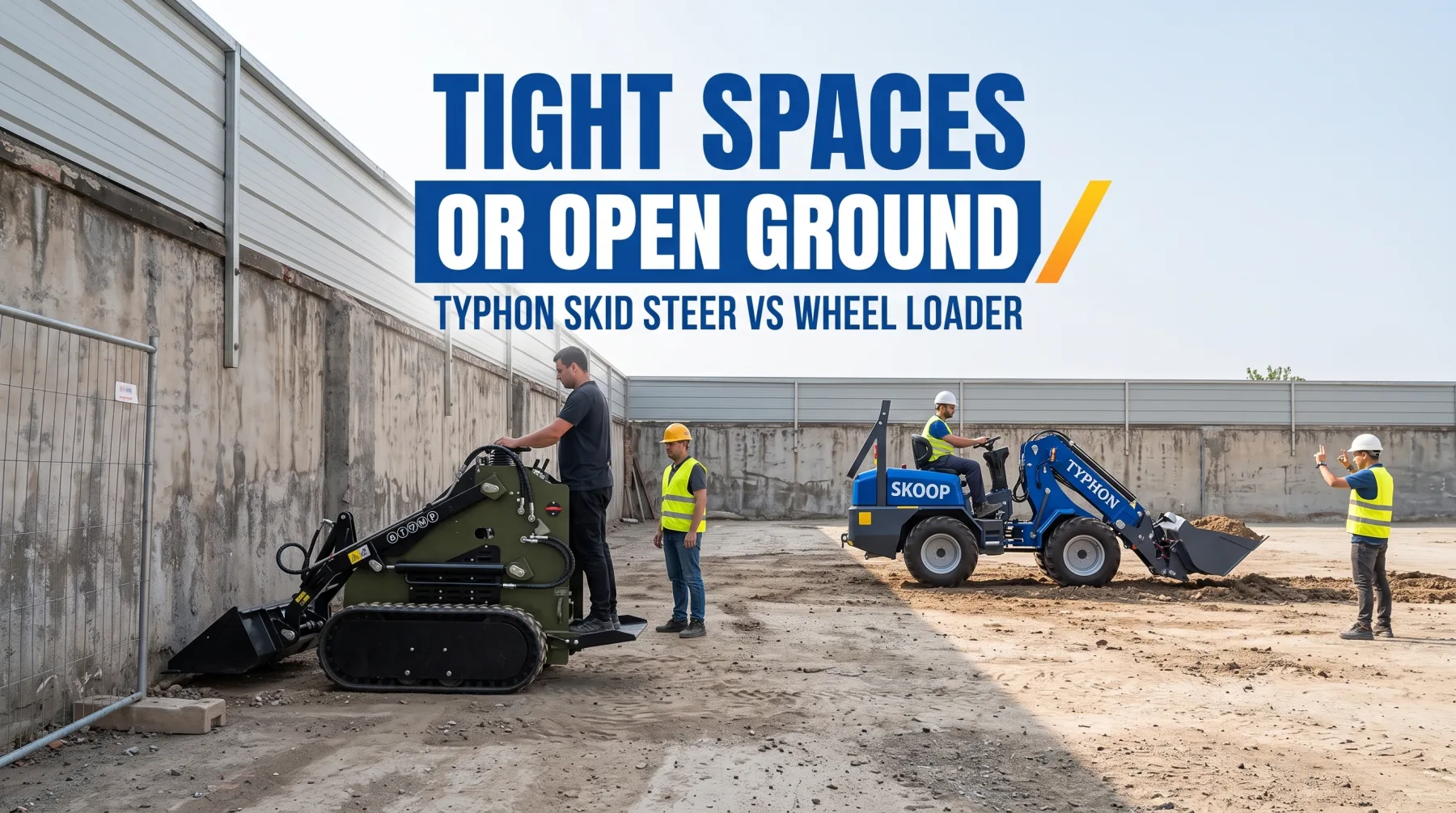
Rougher, longer-distance work favors the loader too. When you’re carrying full buckets across a big yard or loading trucks all day, the wheel loader covers ground efficiently and handles the pace without strain. The skid steer would manage the same tasks in short bursts but wear itself thin over distance. Takeaway: tight, mixed-task sites call for the skid steer’s agility while open, high-volume sites reward the wheel loader’s reach and stability, so let your terrain and space steer the choice.
Comparing Load Capacity and Attachment Range
Beyond size and steering, the two machines diverge sharply in how much they carry and what they can become with different tools. This is where the daily productivity difference really lives. Weighing capacity against versatility shows you which machine multiplies your crew’s output.
How Much Each One Moves
Wheel loaders win decisively on raw capacity. Their larger buckets and higher lift let them move far more material per cycle, so loading trucks, feeding hoppers, and clearing stockpiles go faster with fewer passes. When your day is measured in tons moved, that capacity translates straight into finished work. Skid steers carry less per scoop, which is the trade-off for their compact size. For lighter, more varied loads, that’s rarely a problem, but pushing a skid steer to move high volumes of heavy material all day strains it and slows you down. Checking the skid steer bucket capacity against your typical load tells you quickly whether the smaller machine can keep pace or whether you need the loader’s muscle.
Versatility Through Attachments
Attachments are what make a skid steer one of the most versatile machines on the jobsite. Thanks to its quick-attach system, it can switch between a wide range of tools, including augers, breakers, trenchers, grapples, brooms, pallet forks, and mulchers. This flexibility allows a single machine to handle digging, material handling, demolition, land clearing, and many other tasks. Instead of relying on multiple specialized machines, operators can complete a variety of jobs by simply changing attachments, making the skid steer a practical and cost-effective solution for worksites with diverse daily demands. Wheel loaders accept attachments too, and their wheel loader load handling strength suits heavier tools like large buckets, forks, and material handling arms. But their range is narrower and swaps are less casual than the skid steer’s rapid changeovers. Takeaway: the wheel loader carries far more per pass while the skid steer transforms into dozens of tools, so choose capacity when volume rules the day and versatility when varied tasks define the work.
Choosing the Right Machine for Your Work
With the differences clear, the decision narrows to an honest look at what your work actually demands. Neither machine is better overall; each is better for specific jobs. Answering a few direct questions about your operation reveals which one belongs in your fleet.
Weigh Space, Transport, and Volume
Space is often the deciding factor. Measure the tightest areas you work in and the access to your sites, since a wheel loader that can’t fit or turn in your space is the wrong machine no matter how much it carries. Tight, confined work strongly favors the skid steer; open room gives the loader its advantage.
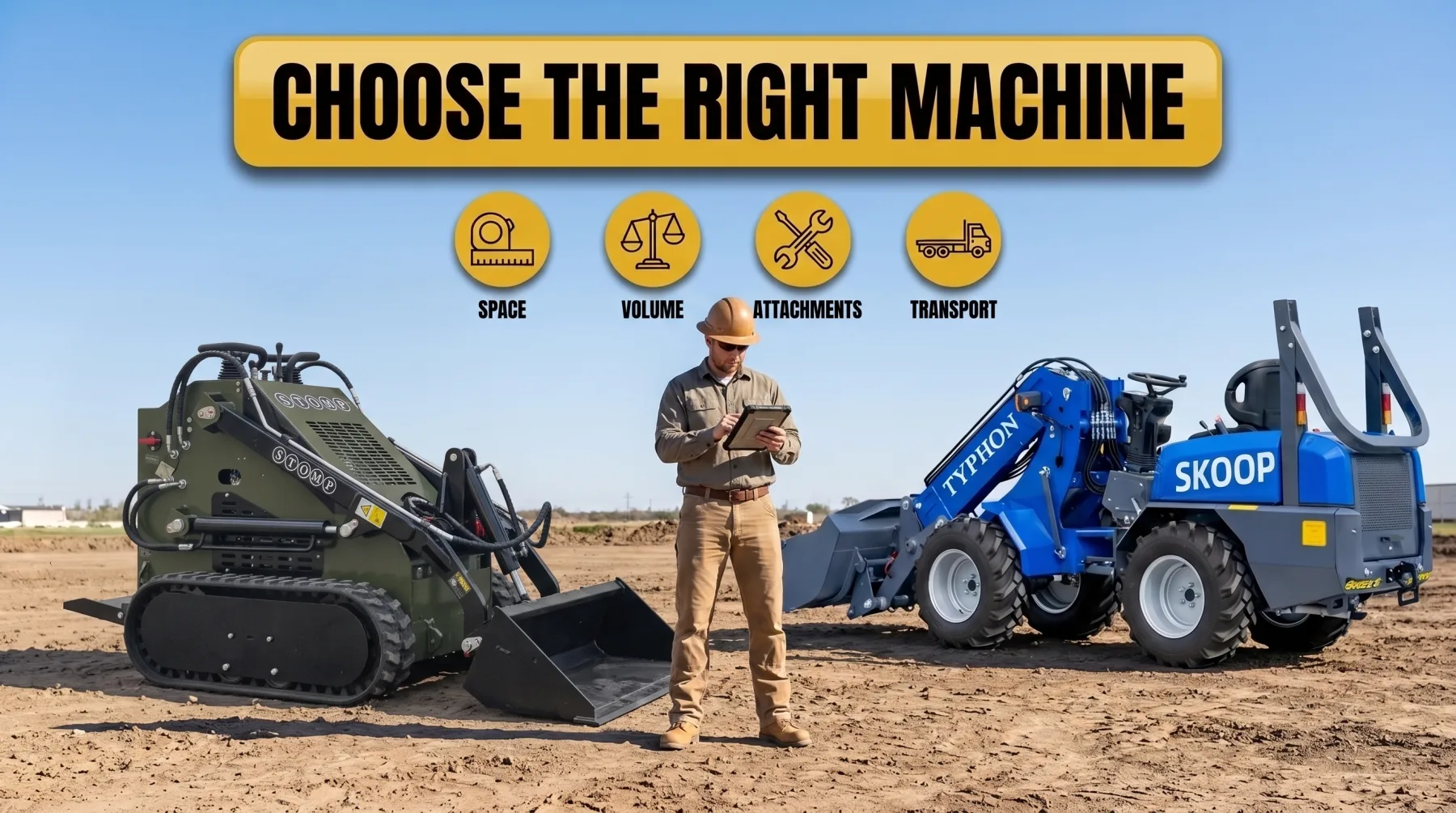
Factor in transport and volume too. A skid steer trailers easily and moves between jobs without special hauling, while a wheel loader demands more to relocate but rewards you with throughput on high-volume days. Match the machine to how you actually move it and how much you actually lift. Takeaway: read your dominant workload, measure your space, and weigh transport against volume, so you land on the machine that fits the majority of your work rather than the exception.
Frequently Asked Questions
What’s the main difference between a skid steer and a wheel loader?
The core difference is size and steering. A skid steer is compact and pivots in place by running its wheels or tracks at different speeds, making it ideal for tight spaces and frequent attachment changes. A wheel loader is larger, steers through an articulated frame, and carries far more material per pass. In short, the skid steer favors agility and versatility, while the wheel loader favors capacity and hauling muscle.
Which machine is better for moving large volumes of material?
The wheel loader wins on volume. Its bigger bucket and higher lift move much more material per cycle, so loading trucks, clearing stockpiles, and feeding hoppers go faster with fewer passes. A skid steer can handle these tasks in short bursts, but pushing it to move heavy material all day strains the machine and slows your pace. For sustained high-volume work, the loader is the efficient choice.
Can a skid steer do everything a wheel loader can?
Not quite. A skid steer’s huge range of attachments lets it tackle a wide variety of tasks, but it can’t match a wheel loader’s raw carrying capacity, lift height, or efficiency on long carries and heavy material. The two are built for different jobs. A skid steer excels at varied work in tight spaces, while a wheel loader excels at moving large volumes across open ground.
Which is easier to transport between job sites?
The skid steer is far easier to move. Its compact size and lighter weight let you trailer it behind a standard truck and relocate it quickly without special hauling arrangements. A wheel loader’s larger frame and heavier weight usually require more substantial transport equipment. If you move machines between sites often, the skid steer’s easy transport is a real day-to-day advantage.
How do I decide which one my business needs?
Look at your typical work. If most of your jobs involve small, varied tasks in tight spaces with frequent tool changes, choose a skid steer for its agility and attachment range. If your work centers on moving large volumes of material across open ground, choose a wheel loader for its capacity and efficiency. Then confirm the machine fits your space, transport, and daily volume before committing.
Conclusion
The difference between a skid steer and a wheel loader comes down to the type of work you perform most often. A skid steer is built for agility, making it ideal for tight spaces, frequent attachment changes, and a wide variety of tasks. A wheel loader, on the other hand, is designed to move large volumes of material efficiently across open worksites with greater lifting capacity and stability. Instead of asking which machine is better overall, evaluate the conditions you work in every day. Consider the available space, the amount and type of material you handle, the attachments your jobs require, and how often you need to transport the machine between sites. Matching these factors to the machine’s strengths will help you invest in equipment that delivers better productivity, lower operating costs, and long-term value. When you’re ready to make a decision, consult a trusted equipment specialist who can recommend the right machine for your specific workload and jobsite requirements.