Currently Empty: $0.00
Troubleshooting Common Hydraulic Leak Points in Road Rollers
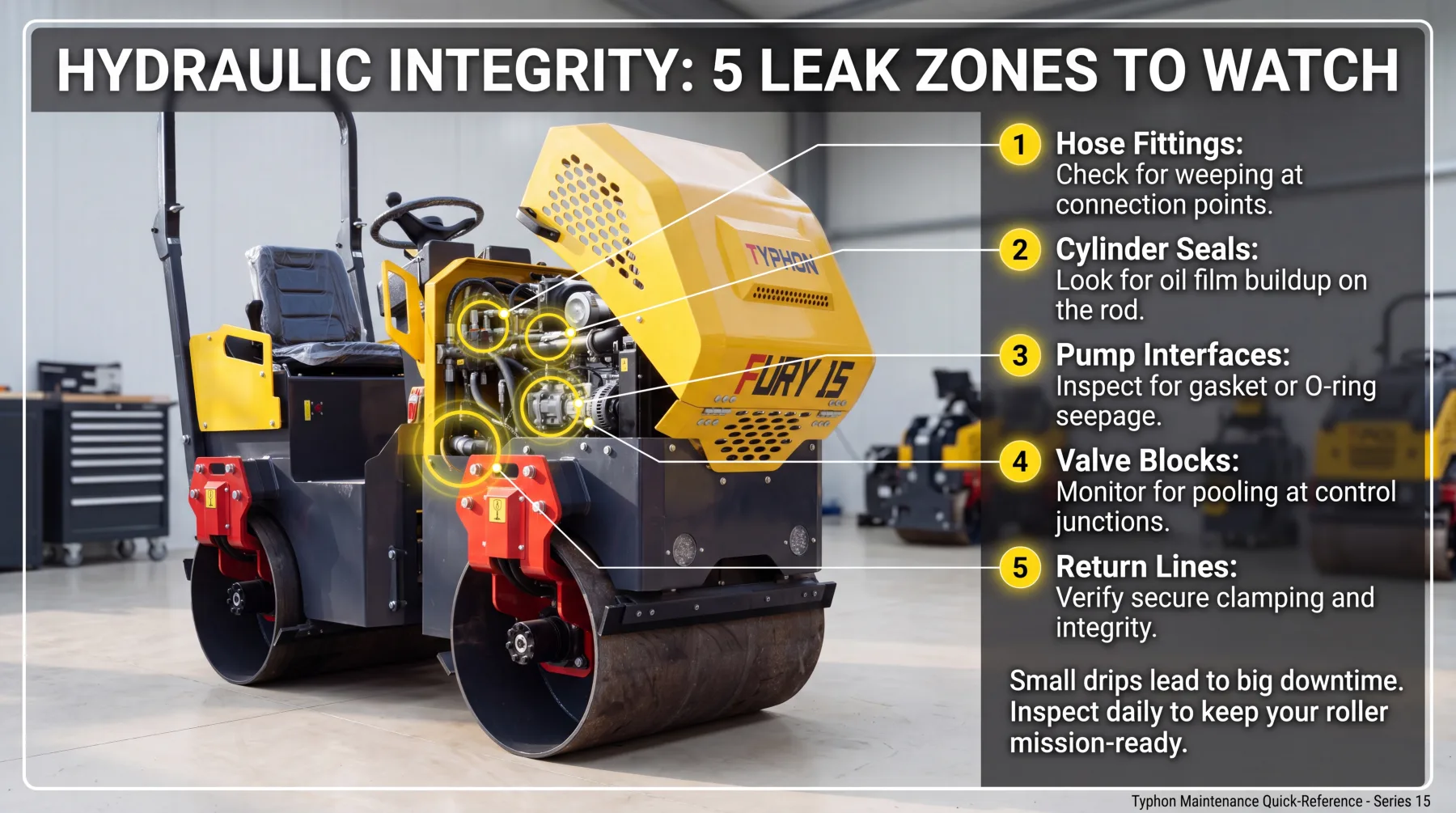
Hydraulic leaks are among the most common problems you will face with a road roller, and left unchecked, they can quietly drain performance, safety, and profit from your operation. A small drip today can become a high-pressure failure tomorrow, pulling the machine off the job at the worst possible moment. The good news is that most leaks start at a handful of predictable points, and you can catch them early with a careful eye and a regular inspection routine. Knowing where to look and what to look for turns a potential breakdown into a quick, manageable fix. This guide walks you through the five most common hydraulic leak points on a road roller, explaining what causes trouble at each one, how to inspect it properly, and the practical steps that keep your machine running strong. Use it as a troubleshooting reference your whole crew can rely on.
Inspecting Hydraulic Hose Fittings
Hose fittings are one of the first places a hydraulic leak shows up, and for good reason. A road roller generates constant vibration as it compacts, and that steady shaking works connections loose over time. A fitting that was tight when the machine left the shop can gradually back off after weeks of operation, opening a small gap where fluid begins to escape. Because this happens slowly, the early signs are easy to miss unless you know to look for them. Start your inspection by checking every connection point for moisture, dampness, or the telltale weeping that signals fluid is starting to seep past a loosening fitting.
Weeping is your early warning, and catching it at this stage saves you real trouble. A fitting that merely weeps today can fail under full pressure tomorrow, and a high-pressure burst is far more than an inconvenience. It sprays hot fluid, drops the machine’s power instantly, and creates a genuine safety hazard for anyone nearby. The moment you spot moisture around a connection, address it before it escalates.
Fortunately, the fix is often simple. Many minor fitting leaks resolve with nothing more than tightening the connection back to the correct specification. Work through the fittings methodically during your routine checks:
Wipe each fitting clean so you can spot fresh moisture accurately
Feel for dampness around threads and connection points
Tighten loose fittings to the proper torque, taking care not to overtighten
Recheck after operation to confirm the connection holds under vibration
Building this quick inspection into your regular maintenance keeps small problems small. A few minutes spent checking and snugging fittings protects you from the far larger cost of a burst line and lost production time.
Examining Hydraulic Hoses for Wear
The hoses themselves carry high-pressure fluid throughout the machine, and they take a beating over the working life of a road roller. Unlike fittings, hoses fail from wear rather than loosening, so your inspection here focuses on the condition of the hose itself along its entire length. Scan every hose carefully for cracks in the outer casing, bulges that signal internal weakness, and worn spots where the protective covering has been rubbed thin. Do not rush this step, because damage often hides in the sections that run close to the frame or bend around tight corners.
Abrasion is one of the most common causes of hose failure on a roller. When a hose rubs against the machine frame, a bracket, or another component during operation, the constant contact wears away the outer casing until the reinforcement underneath is exposed. Vibration accelerates this process, grinding the hose against whatever it touches shift after shift. Even a small abraded patch is a serious warning, because once the outer layer is compromised, the pressure inside can rupture the hose without much notice.
Treat any sign of structural degradation as a reason to replace the hose right away rather than waiting to see if it holds. A cracked, bulging, or badly abraded hose is a catastrophic failure waiting to happen, and the cost of a replacement hose is trivial next to the downtime, cleanup, and safety risk of a full burst under load. When you do replace a hose, look for what caused the wear in the first place. Rerouting the line, adding protective sleeving, or securing it away from sharp contact points prevents the same failure from returning. Consistent hose inspection keeps your hydraulic system dependable and your crew safe.
Checking Cylinder Seals and Rods
The hydraulic cylinders do the heavy work of lifting and applying compaction force, and their seals are a primary source of leaks as a machine ages. To check them, watch the cylinder rods closely while the machine is working under load. A healthy cylinder keeps its fluid contained, so any oil film, sheen, or dripping on the rod as it extends and retracts points to worn internal seals letting fluid slip past. Because this leak often shows up only under pressure, inspecting the rods during actual operation gives you a far more accurate picture than a quick look at a machine sitting idle.
A thin oil film on the rod is the earliest sign, and it deserves attention before it becomes a steady drip. As internal seals wear, they lose their ability to hold back the high-pressure fluid, and what starts as a faint sheen gradually turns into visible leaking. Keep an eye on the rods over several shifts so you can tell whether a small trace is stable or steadily getting worse.
Seal leaks cost you more than the fluid on the ground. When oil bypasses the seals inside a cylinder, the machine loses some of the force it should be delivering, which shows up directly as reduced lifting capacity and weaker compaction. A roller that cannot maintain full compacting power leaves you with substandard results and the risk of rework, so a seal leak is both a maintenance problem and a performance problem. It also creates a mess that attracts dirt and makes further inspection harder. When you notice oil bypassing the seals, plan to have the cylinder resealed promptly. Addressing worn seals early restores full power, keeps the work area clean, and protects the quality your jobs depend on.
Monitoring Hydraulic Control Valves
The control valves are the command center of your roller’s hydraulic system, directing fluid where it needs to go so operators can steer, lift, and compact with precision. Because these valves manage high-pressure fluid through a complex assembly, they are a leak point you cannot afford to overlook. Inspect the area around the control valve bank regularly for any fluid accumulation, pooling, or dampness. Leaks here usually trace back to damaged O-rings or worn seals within the valve assembly, and even a small amount of fluid gathering around the valves is a signal worth investigating right away.
Valve leaks demand quick attention for two reasons. First, these components sit under high pressure, so a minor seal failure can worsen rapidly once it begins. Second, the valves are complex and precise, and a leak often means the machine is losing the tight, responsive control that safe operation depends on. When a valve cannot hold pressure properly, operators may notice sluggish or inconsistent response, which makes accurate compaction harder and raises the risk of mistakes on the job.
Because of that complexity, valve repairs are less of a simple field fix than tightening a fitting. Still, your inspection role is straightforward and valuable:
Clean the valve bank so fresh leaks are easy to identify
Watch for pooling or dampness around the base and connections
Note any change in control response that might point to internal leakage
Act quickly on dampness rather than letting it persist
Catching a valve leak early lets you address damaged O-rings or seals before they compromise control or lead to a larger failure. Maintaining these components protects the precise handling that makes road rollers both productive and safe.
Verifying Hydraulic Tank and Filter Housing

The hydraulic tank and filter housing store and clean the fluid that powers the entire system, and they hold a large volume of oil at any given time. That makes them an important leak point to verify, even though the leaks here tend to be slow and easy to miss. Examine the reservoir seams and the filter housing gasket carefully, looking for weeping, staining, or a slow buildup of fluid that suggests a seal is not holding. A loose filter or a damaged gasket can produce a persistent, low-level leak that never sprays or drips dramatically, so it often slips past a quick visual check.
Timing your inspection matters more here than anywhere else on the machine. A slow leak from a tank seam or filter gasket frequently shows itself only once the machine has been running and the hydraulic fluid is hot. Warm fluid is thinner and flows more easily, so it finds gaps that stay sealed when the oil is cold and thick. Check these areas after the roller has been working, while everything is up to temperature, and you will catch leaks that a cold morning inspection would completely hide.
When you find fluid around the filter housing, start with the simplest cause. A filter that was not seated or tightened correctly during the last service is a common culprit and an easy fix. If the housing gasket or a reservoir seam is damaged, plan to replace the gasket or repair the seam to stop the leak at its source. Keeping the tank and filter housing sealed protects your fluid level, which in turn protects every other part of the system from running low. A few minutes verifying these areas after operation prevents the gradual fluid loss that quietly undermines performance over time.
Conclusion
Hydraulic leaks rarely announce themselves loudly, but they almost always start at the same predictable points on a road roller. By checking hose fittings for vibration-loosened connections, scanning hoses for cracks and abrasion, watching cylinder rods for seal leaks under load, monitoring the control valves for fluid buildup, and verifying the tank and filter housing while the fluid is hot, you can catch nearly every leak before it becomes a costly failure. The common thread is regular, deliberate inspection rather than waiting for a problem to force your hand. Build these checks into your routine maintenance and daily walk-arounds, and you will spot small issues while they are still cheap and quick to fix. Train your crew to recognize the early signs and respond without delay, and your road roller will reward you with dependable power, precise control, and consistent compaction shift after shift. When a leak runs deeper than a simple field repair, trust a qualified technician to restore your machine to peak condition.