Currently Empty: $0.00
Why Compaction Is Critical in Road Construction
A perfectly smooth highway feels effortless to drive on, offering a seamless journey for thousands of heavy commercial vehicles every single day. Most casual observers look at a freshly paved road and admire the dark, flawless surface layer of asphalt. However, trusting visual appearance over foundational engineering is a dangerous approach that frequently leads to catastrophic pavement failure. The actual strength of any infrastructure project lies buried deep beneath the surface, heavily dependent on the mechanical pressure applied long before the final paving train arrives.
Road construction compaction is arguably the single most important process in building durable, reliable infrastructure. When contractors rush this critical phase, the resulting roadways suffer from severe structural weaknesses that quickly drain municipal maintenance budgets. This comprehensive guide explores the deep engineering principles that dictate why compaction matters so much to your bottom line. By understanding the physics of material density, the variables of environmental conditions, and the capabilities of modern machinery, you can empower your construction business to deliver uncompromising quality and secure highly profitable contracts.
The Hidden Danger of Surface-Level Thinking
The general public, and even some inexperienced contractors, frequently underestimate the importance of deep compaction because they focus entirely on the visible surface layer. The immediate problem with this surface-level thinking is that asphalt is inherently flexible and reliant on the structural support of the materials beneath it. If a paving crew applies a thick layer of premium hot-mix asphalt directly over a loose, uncompacted gravel base, the immense weight of commercial semi-trucks will immediately compromise the road. The foundational layers will shift and collapse, causing the rigid surface above to violently tear apart.
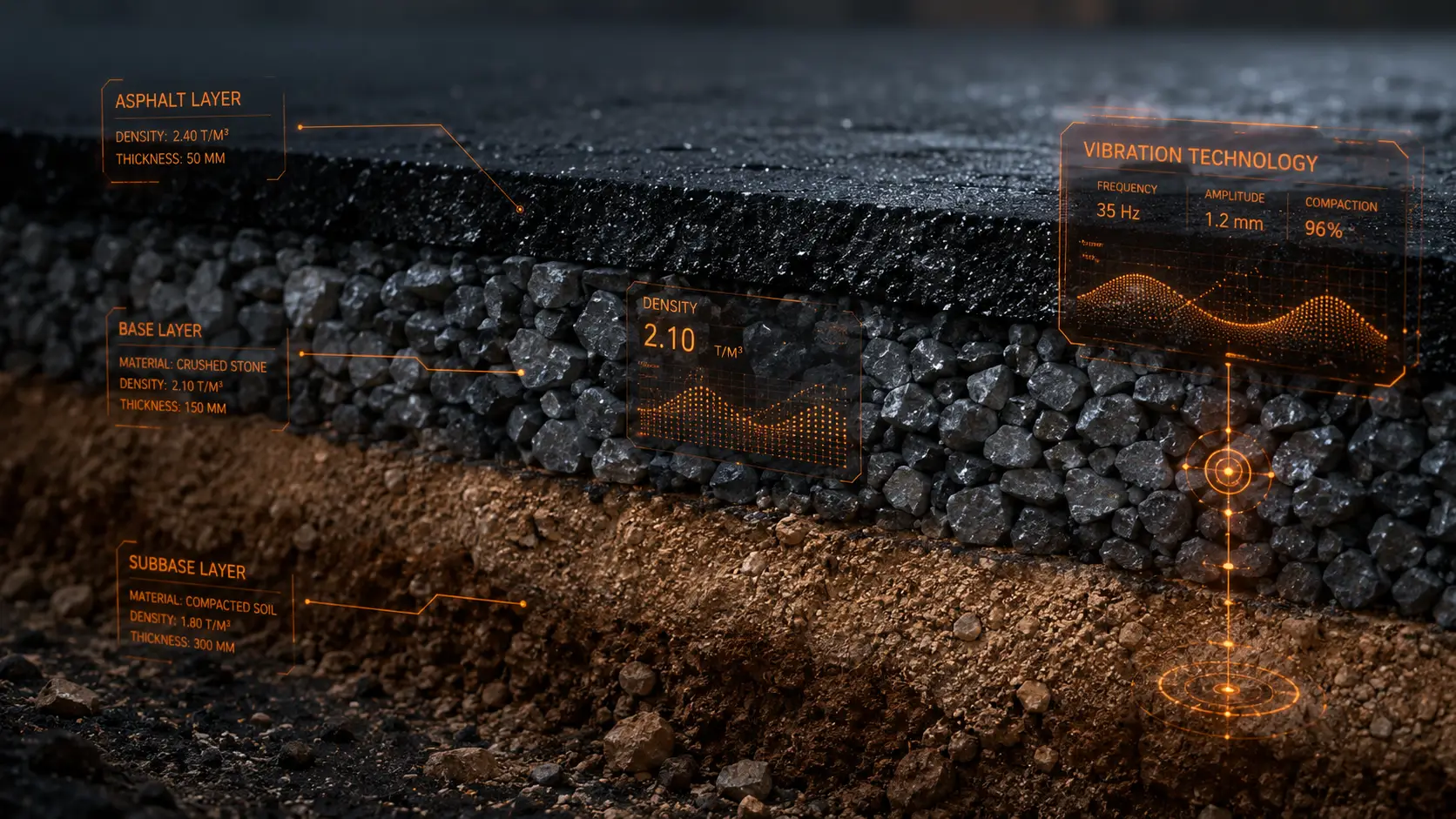
Proper soil and asphalt compaction provides the definitive solution to this foundational vulnerability. As heavy machinery passes over the loose aggregate, it applies immense downward pressure that physically forces the jagged particles to lock tightly together. This aggressive mechanical action systematically removes hidden air voids from the soil, gravel, and asphalt layers, creating an incredibly dense and unyielding structural matrix. The individual aggregate particles effectively bridge together, sharing the physical load of the heavy traffic rather than buckling beneath it.
The real-world impact of achieving this elite level of material density is a massive increase in the road’s overall load-bearing strength. You deliver a premium infrastructure asset that actively resists premature cracking, deep rutting, and destructive foundation settlement. Your clients secure a structurally sound roadway that dramatically lowers their long-term maintenance liabilities. To fully appreciate this strength, we must examine how modern equipment achieves these demanding engineering standards.
Mastering Density With Road Roller Compaction
Historically, achieving structural density relied entirely on massive, static-weight iron rollers slowly crushing materials through sheer gravitational force. The severe limitation of static weight is that the compaction energy only penetrates the top few inches of the material being rolled. When laying deep lifts of base gravel or thick asphalt, the bottom layers remain completely loose and unstable, creating a hidden weak point that will eventually cause the entire road to fail. Attempting to compact deep utility trenches using only static weight forces your crew to work in incredibly thin, time-consuming layers that destroy your daily production schedule.
Modern road roller compaction overcomes this depth limitation by introducing highly controlled vibration technology into the heavy steel drums. Inside the drum, rapidly spinning eccentric weights generate dynamic striking forces that travel deep into the ground. Engineers carefully calculate the specific vibration frequency and drum weight depending entirely on the soil type and exact project conditions. High-frequency, low-amplitude vibration is perfectly suited to seal delicate hot asphalt, while low-frequency, high-amplitude settings are used to violently shake and compact deep trenches of heavy clay.
This dynamic vibration briefly breaks the natural friction between the aggregate particles, allowing them to rapidly slide into the tightest possible formation. The immediate operational advantage is maximum stability achieved in a fraction of the time with fewer controlled passes. Your operators complete their target density requirements much faster, allowing the entire paving operation to advance aggressively ahead of schedule. While mastering vibratory technology drastically accelerates production, your equipment remains entirely at the mercy of the surrounding environment.
Navigating Moisture Conditions and Material Timing
Earthmoving and asphalt paving are heavily dictated by the physical state of the materials, which shift dramatically based on local weather patterns and ambient temperatures. A persistent challenge on any infrastructure job site is managing the extreme variables of water and heat. Excessive moisture quickly turns cohesive soils into a soupy mud that simply pushes away from the roller drum without ever gaining density. Conversely, severely dry conditions prevent granular soils from binding together, leaving the base material loose and prone to shifting.
Overcoming these severe climate conditions requires strict material management and highly disciplined operational timing. Contractors must actively condition their soil bases, utilizing heavy water trucks to introduce exact moisture percentages to dry dirt, or aggressively discing wet clay to allow excess water to evaporate. When working with asphalt, the breakdown roller must operate immediately behind the paver while the mix remains at its peak core temperature. The intermediate and finishing passes must be perfectly timed as the material cools through its ideal compaction zones before the bitumen physically hardens.
Executing this precise environmental timing prevents severe foundational weakness and ensures the pavement cures flawlessly. You completely avoid the devastating financial penalty of failing a municipal density test because the material was rolled too cold or too wet. Your crew leaves behind a beautifully sealed, resilient surface that meets the absolute highest engineering standards. Guaranteeing this level of perfection no longer relies on operator guesswork, thanks to a massive leap in digital validation.
Validating Performance With Advanced Monitoring
For decades, determining when a base layer or asphalt mat reached its maximum density relied entirely on the trained eye and physical feel of an experienced roller operator. The danger of this subjective approach is that humans cannot physically see the microscopic density of the earth beneath them. If an operator under-compacts the material, the road will inevitably sink under traffic. If the operator over-compacts the material, the aggressive vibration will actually begin to shatter the crushed stone and fracture the asphalt, completely destroying the structural integrity they just worked so hard to build.
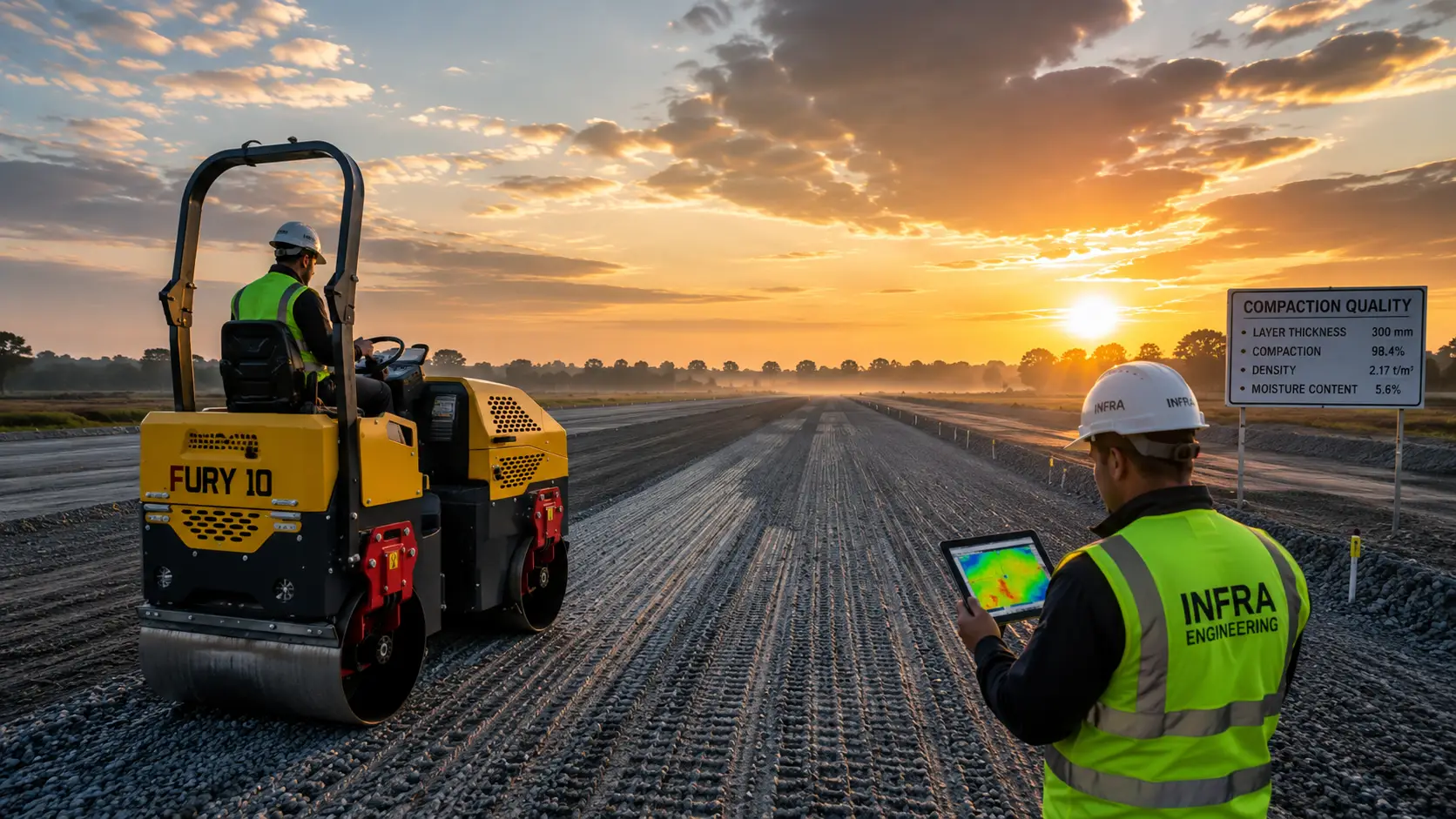
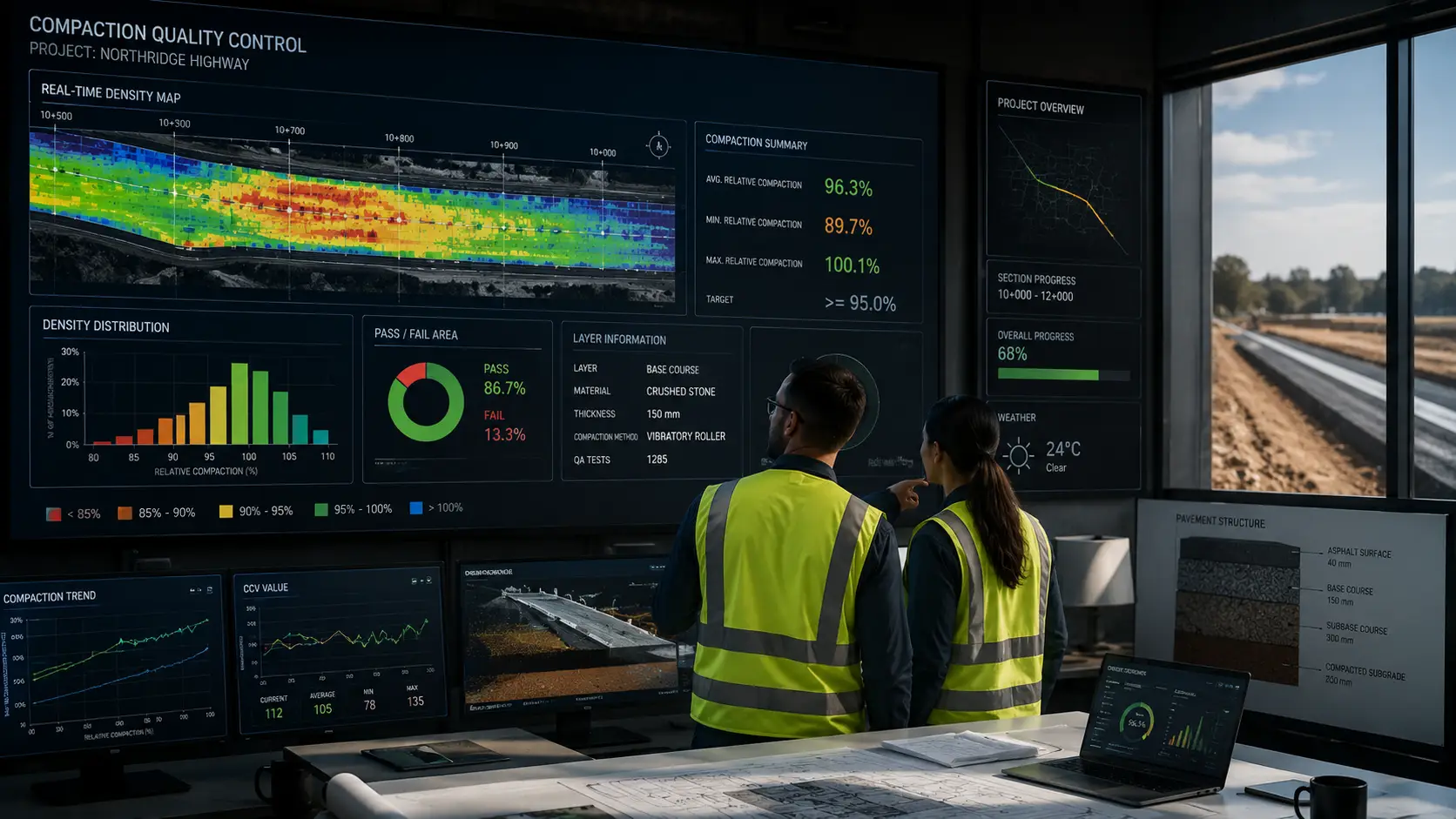
Contractors increasingly rely on advanced testing and monitoring tools to validate their compaction performance in real time. Sophisticated intelligent compaction systems integrate sensors directly into the machine’s dashboard to continuously measure material density and ground stiffness. These systems feed real-time data to an onboard computer that maps the entire job site using precision GPS tracking. The operator references a digital color-coded map on their monitor, instantly seeing exactly which areas require another pass and which areas have successfully achieved the target density.
This digital validation guarantees total quality control across the entire job site while actively preventing destructive over-compaction. You optimize your machine’s fuel consumption by completely eliminating unnecessary, redundant passes, capturing massive savings on your daily operating overhead. This level of precise, verifiable execution is rapidly becoming a mandatory requirement as government agencies demand strict accountability for their infrastructure investments.
Delivering Safer Roads and Maximizing Profitability
The absolute foundation of modern society rests upon the strength, safety, and reliability of the ground we pave. Smooth, indestructible roads do not happen by accident; they are the direct result of applying precise physics, advanced technology, and professional discipline to the earth. When compaction is executed perfectly, the entire community benefits from an infrastructure network that can safely support decades of heavy commercial and civilian traffic.
Strong compaction directly supports safer roads, significantly longer pavement life, and dramatically lower municipal maintenance costs. Take a highly strategic look at your current equipment fleet and demand absolute excellence from your earthmoving and paving operations. Embrace the deep science behind road construction compaction, utilize digital density monitoring, and invest in the premium machinery required to dominate modern contracts. By partnering with trusted equipment experts and deploying the right technology, you guarantee that every highway and commercial foundation your company builds will stand as a fiercely reliable testament to your professional capability.