Currently Empty: $0.00
How Does Drum Weight Affect Road Roller Compaction
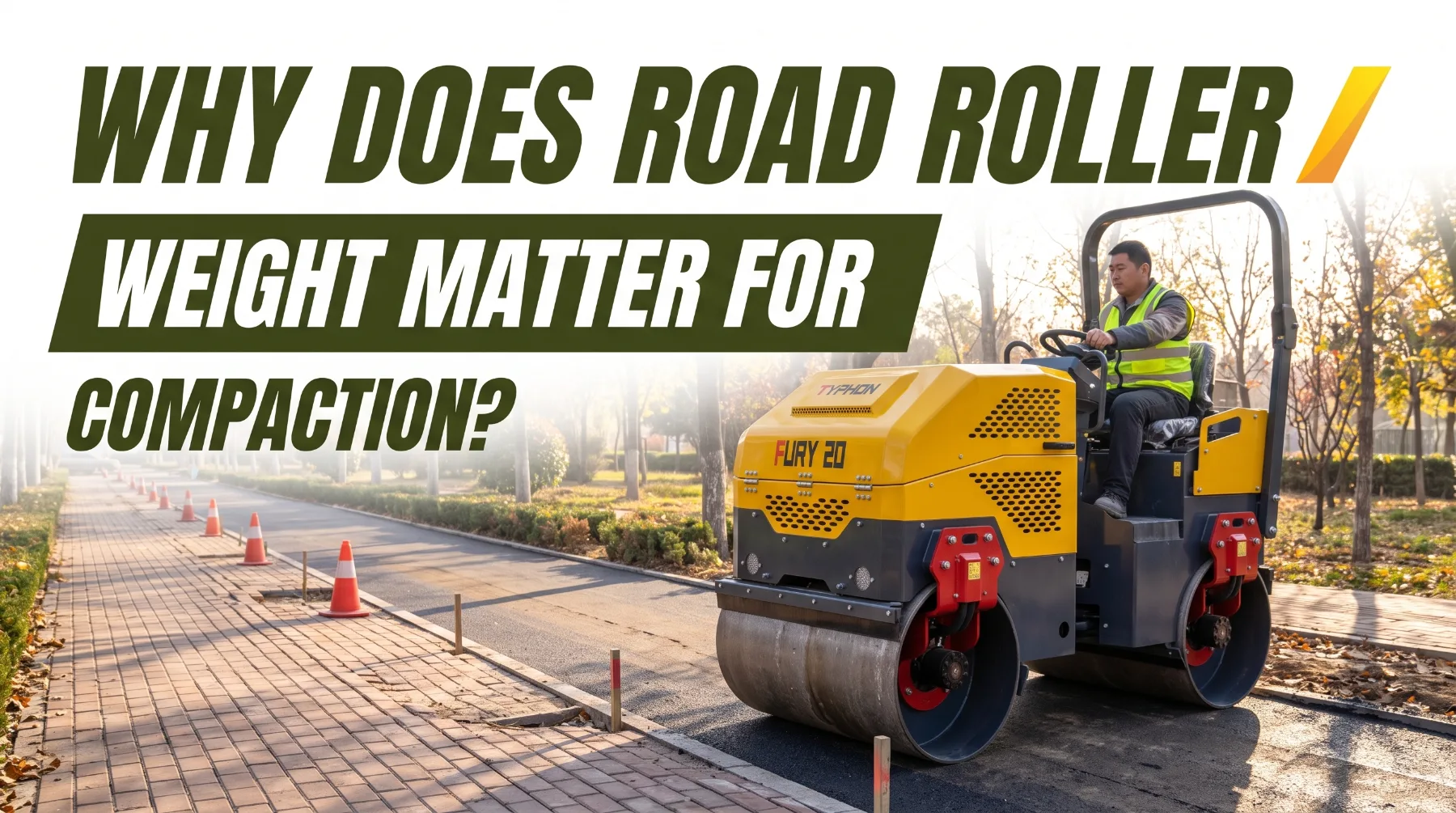
A road roller’s drum weight determines how much static load is transferred into the material during each pass. This load, commonly expressed through static linear load, affects the contact pressure applied to soil, aggregate, and asphalt and influences how effectively the material densifies under the drum. A heavier drum can penetrate and compact deeper layers by applying greater static force, while a lighter drum may be better suited to applications where excessive surface stress could damage or distort the material. Drum weight therefore affects more than the machine’s operating weight because the distribution of that weight across the drum determines the actual load imposed on the compacted surface. Drum weight also works together with vibration, drum width, material type, moisture content, and layer thickness to determine final density. Vibration adds dynamic force that reduces internal friction between particles, while static drum load provides continuous downward pressure as the roller passes over the material. Increasing drum weight beyond what the material and lift thickness require can cause excessive deformation, crushing, or surface damage, particularly on asphalt or weak granular layers. The correct drum configuration is therefore the one that provides sufficient static linear load for the material and layer thickness while allowing the vibration system to deliver the required dynamic compaction without excessive passes or surface stress.
What Drum Weight and Static Linear Load Mean
Drum weight is the portion of a roller’s mass carried by the drum itself, and it’s the static force the machine presses into the material before any vibration comes into play. Because a drum spreads its weight across a width rather than a single point, the figure that matters most is static linear load, the drum weight divided by its width, usually expressed in kilograms per centimeter or pounds per inch. That number tells you how much force each strip of the drum applies to the ground beneath it. Static linear load is the truest measure of a roller’s baseline compaction power. Two machines can share an operating weight yet apply very different linear loads if their drum widths differ, so the wider drum spreads its force thinner while the narrower one concentrates it. When you compare rollers, this figure, not raw operating weight alone, tells you how hard the drum genuinely presses into your material on every pass. Key takeaway: Drum weight is the static force the drum applies, and static linear load, weight per unit of drum width, is the truest measure of a roller’s baseline compaction power.
How Heavier Drums Deliver Greater Force and Depth
Compaction works by pressing air and voids out of a material so its particles pack tightly together. The force driving that process comes directly from the weight pressing down, so a heavier drum applies more static pressure and squeezes the material harder on every pass. That added pressure is what turns a loose lift into a dense, load bearing layer. Weight also governs how deep that compaction reaches. A light drum firms up only the top of a lift, leaving the material below loosely packed. A heavier drum drives its force further down, compacting a thicker layer in fewer passes and reaching the depth that thick lifts demand. This matters most on deep soil and subbase work, where you need real force carrying down through the layer rather than skating across the surface. More drum weight means more pressure, more depth, and fewer passes to reach target density. Key takeaway: A heavier drum applies greater static pressure and drives compaction deeper, reaching target density in thicker lifts and fewer passes.
Matching Drum Weight to Material: Asphalt, Soil, and Gravel
The right drum weight depends heavily on what you’re compacting, because each material responds to force differently.
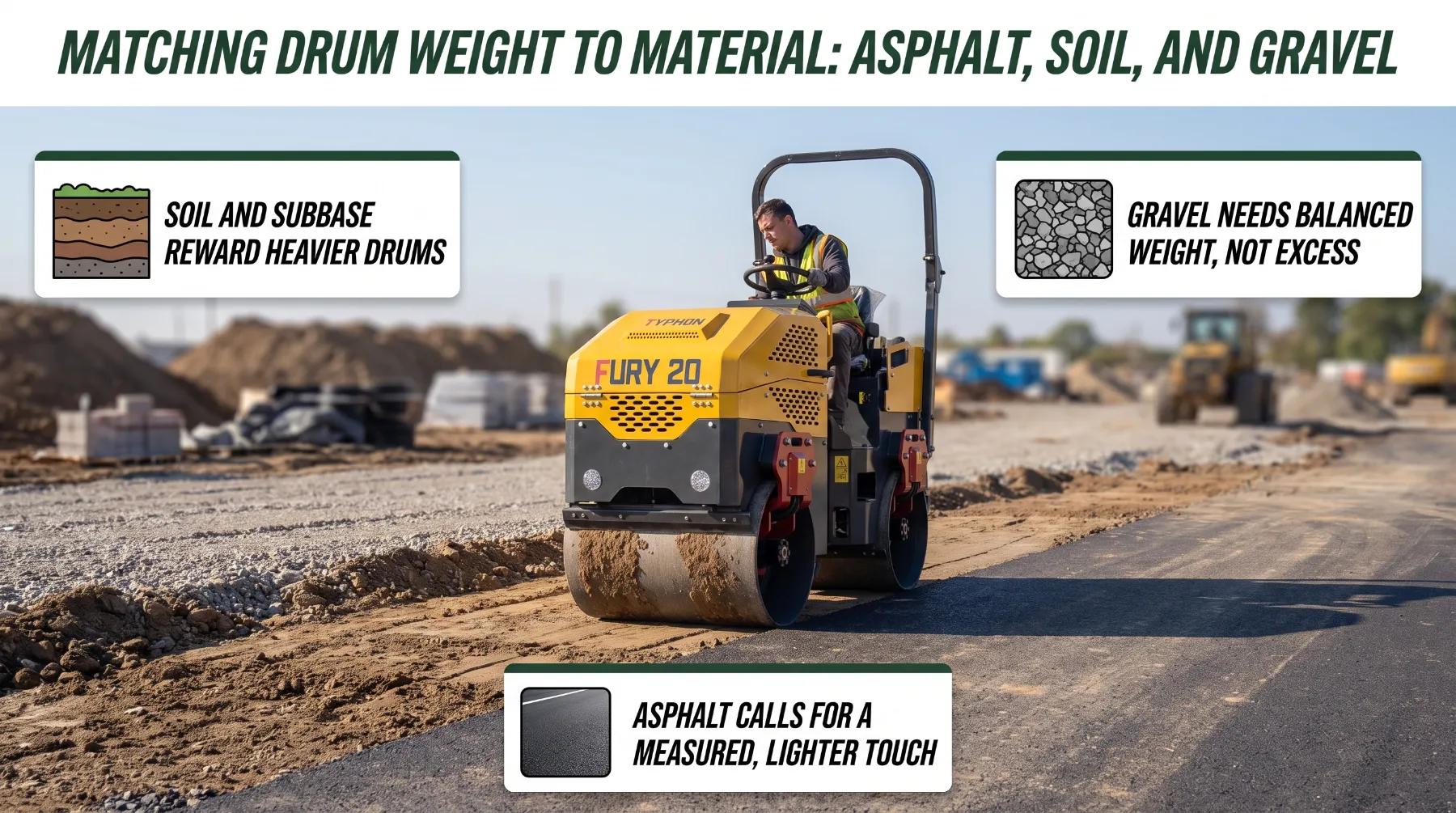
Soil and subbase generally reward heavier drums. Deep lifts of clay, fill, and granular subbase need substantial static force to compact all the way through, so heavy single drum rollers earn their keep here. The thicker and deeper the layer, the more drum weight the job demands to reach density below the surface, not just at the top. Gravel and aggregate base sit in a middle ground. They need enough weight to lock the particles tightly together and build a stable platform, but excessive force on certain aggregates can fracture the stone and weaken the very interlock you want. A well matched drum weight, usually paired with vibration, compacts the base firmly without crushing it. Asphalt calls for a more measured hand. The goal is smooth, uniform density without displacing or crushing the mat, so asphalt rollers are typically lighter and rely on a careful balance of static weight and vibration. Too much drum weight on a hot mat can push material, crack aggregate, and mar the surface. Here, control matters as much as raw force. Key takeaway: Soil and deep subbase reward heavy drums, gravel needs firm but measured force to avoid crushing, and asphalt demands lighter, controlled weight for a smooth, uniform mat.
How Drum Weight and Vibration Work Together
Static drum weight is only half of a modern roller’s compaction power. Most machines add vibration, a rotating eccentric weight inside the drum that makes it strike the material rapidly many times per second. That dynamic force dramatically raises the total compaction energy the drum delivers, letting a given machine compact deeper and faster than static weight alone ever could. The two forces play complementary roles. Static weight provides the steady baseline pressure that holds the drum against the material, while vibration adds the high frequency impacts that shake particles into tighter arrangement. Amplitude, how far the drum moves per vibration, pairs with weight to set how deep the energy reaches: high amplitude with solid drum weight drives compaction well down into thick lifts, while low amplitude with lighter pressure finishes surfaces gently. This is why static linear load and vibration specs deserve to be read together. A drum needs enough weight to keep the vibrating force coupled to the ground and working, rather than bouncing off the surface. Key takeaway: Static drum weight provides steady baseline pressure while vibration adds high frequency impact, and the two combine, tuned by amplitude, to set how deep and fast a roller compacts.
The Risk of Over Compaction
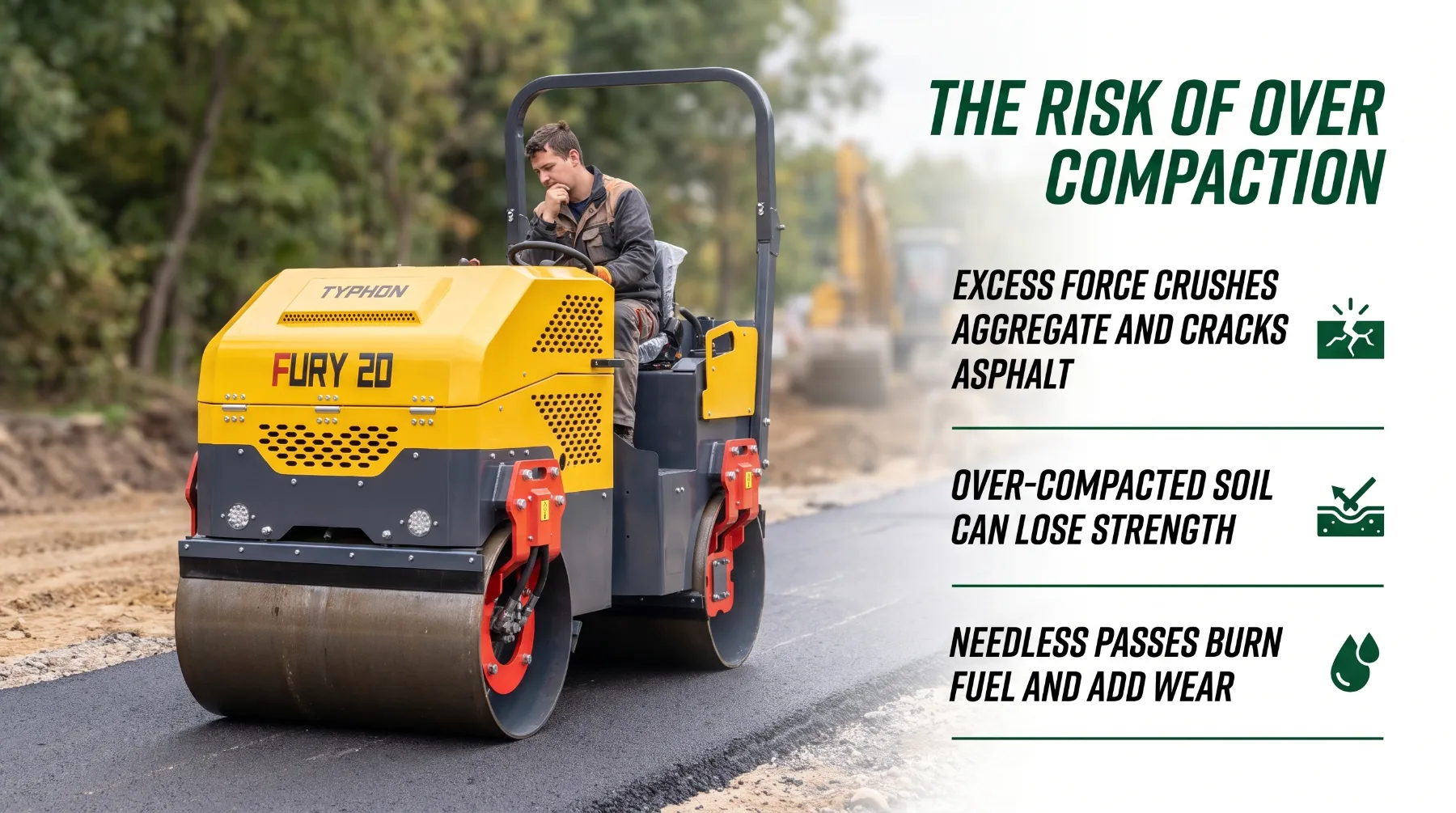
More force is not automatically better, and a drum too heavy for the material causes real damage. Over compaction happens when a roller keeps driving energy into a layer that has already reached its target density, and the material has nowhere left to densify. On asphalt, that surplus force crushes aggregate, pushes and displaces the mat, and can crack or check the surface, leaving a weaker pavement than a lighter, controlled pass would have produced. Soils suffer too. Over compacting certain soils, especially some clays, can shear the structure and actually reduce strength and stability rather than build it, undoing the work you set out to do. Excessive weight on aggregate fractures the stone and weakens the particle interlock that gives a base its strength. There’s a cost in wear as well, since needless extra passes with an oversized drum burn fuel, add hours, and accelerate machine wear for no gain. The goal is never maximum force, it’s the right force to reach target density and then stop. Matching drum weight to the material, and knowing when compaction is complete, protects both the work and the machine. Key takeaway: Too much drum weight crushes aggregate, displaces asphalt, and can weaken soils, so the aim is the right force to hit target density, not the maximum force available.
Conclusion
Drum weight is a primary factor in road roller compaction performance because the drum applies static load to the material and contributes to the contact pressure required to reduce air voids and increase density. Static linear load expresses the drum’s applied force relative to its contact width, making it a useful parameter for comparing the compactive effect of different drum configurations. Increasing drum mass generally increases static loading and can improve penetration into suitable soils and granular materials, particularly when compacting thicker lifts, but the required load depends on material properties, moisture content, lift thickness, and target density. Soil and deep subbase applications may benefit from higher static loading, while granular aggregate and asphalt require controlled force to prevent excessive crushing, displacement, or surface deformation. Vibratory systems supplement static loading by generating dynamic force through the eccentric mechanism, with amplitude and frequency influencing the depth and intensity of compaction. Excessive static or dynamic force can damage aggregate structure, push asphalt laterally, or create unstable soil conditions, while insufficient energy can result in inadequate density and additional passes. Roller selection should therefore consider operating mass, drum mass, static linear load, drum width, vibration amplitude and frequency, material type, moisture condition, lift thickness, and required density. Matching drum loading and vibratory energy to the material and lift depth allows the machine to achieve the required compaction with an efficient number of passes while limiting unnecessary surface damage and component loading. Field testing and density measurements should be used to confirm the selected combination because actual compaction results depend on material conditions and site characteristics rather than drum weight alone.
Frequently Asked Questions
What’s the difference between drum weight, operating weight, and static linear load? They measure different aspects of a roller’s weight. Operating weight is the total machine mass, while drum weight is the portion carried by the drum and transferred to the ground. Static linear load divides drum weight by drum width, showing how much force is applied along each unit of drum width. It is useful for comparing compaction pressure because two rollers with similar operating weight can produce different linear loads. Look beyond total machine weight and check static linear load when comparing compaction performance. Is a heavier drum always better for compaction? No. The correct drum weight depends on the material and lift depth. Heavier drums can provide greater static force for deep soil and subbase compaction, but excessive weight can damage aggregate, displace asphalt, or weaken certain soils. An oversized drum can also increase fuel use and machine wear without improving results. The goal is to use enough force to reach the required density without applying unnecessary weight. How do drum weight and vibration work together on a road roller? Drum weight provides steady pressure against the material, while vibration adds rapid force that helps particles move into a denser arrangement. Amplitude also affects how deeply the vibration works. Higher amplitude combined with sufficient drum weight suits thicker lifts, while lower amplitude is better for finishing and surface work. Adequate drum weight keeps the vibrating force properly coupled to the ground, so weight, frequency, and amplitude should be evaluated together.